



Otralectura: “The third renaissance in Uzbekistan: a path of development rooted in knowledge and enlightenment”
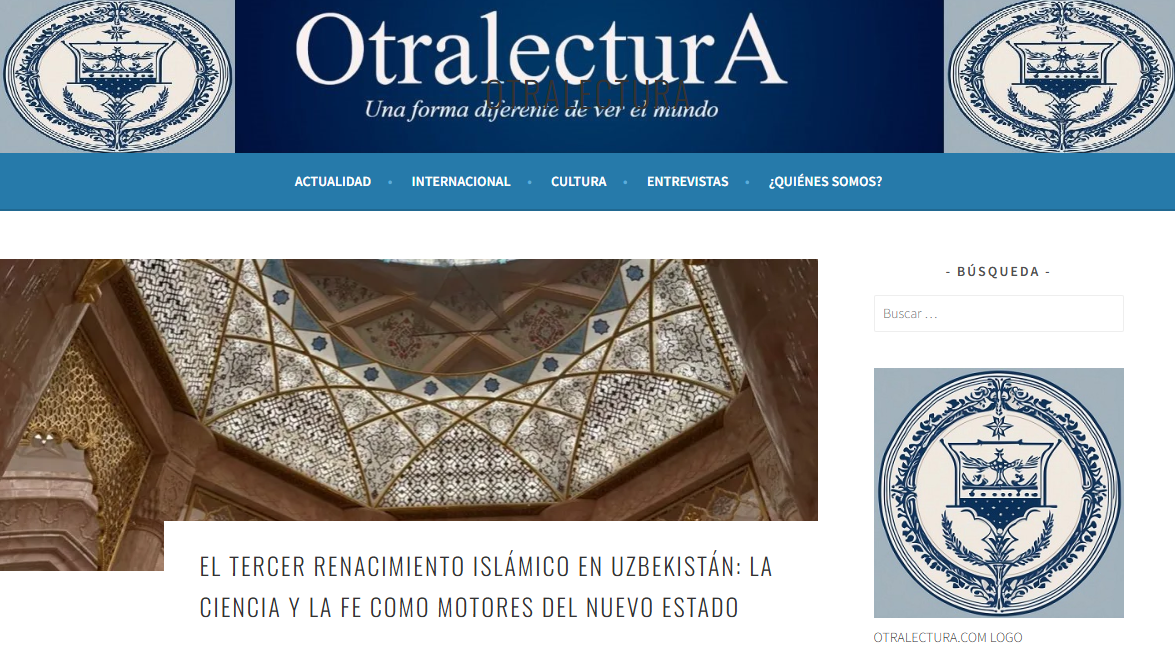 Spain’s Otralectura has analyzed Uzbekistan's Third Renaissance initiative as a strategic model for the country's development, emphasizing that the Islamic Civilization Center in Uzbekistan stands at the heart of this vision. According to the publication, the complex is not merely a museum dedicated to preserving Islamic heritage, but a modern institution that integrates science, education, academic research, and international dialogue, serving as a practical embodiment of the Third Renaissance. The article highlights the Center's pivotal role in combining Uzbekistan's rich scholarly heritage with modern technologies, promoting the concept of Enlightened Islam, and strengthening the country’s cultural, academic, and tourism potential on the international stage.
Tashkent. At the historic crossroads where the Great Silk Road meets the geopolitics of the twenty-first century, Uzbekistan is undertaking one of Eurasia’s most ambitious cultural and intellectual renewal projects. President Shavkat Mirziyoyev has established the concept of the Third Renaissance as a bold new model for national development. This initiative is aimed not only at reviving religious values but also at restoring the traditions of scientific thought, economic openness, and advanced education that once made this region one of the world's foremost centers of knowledge.
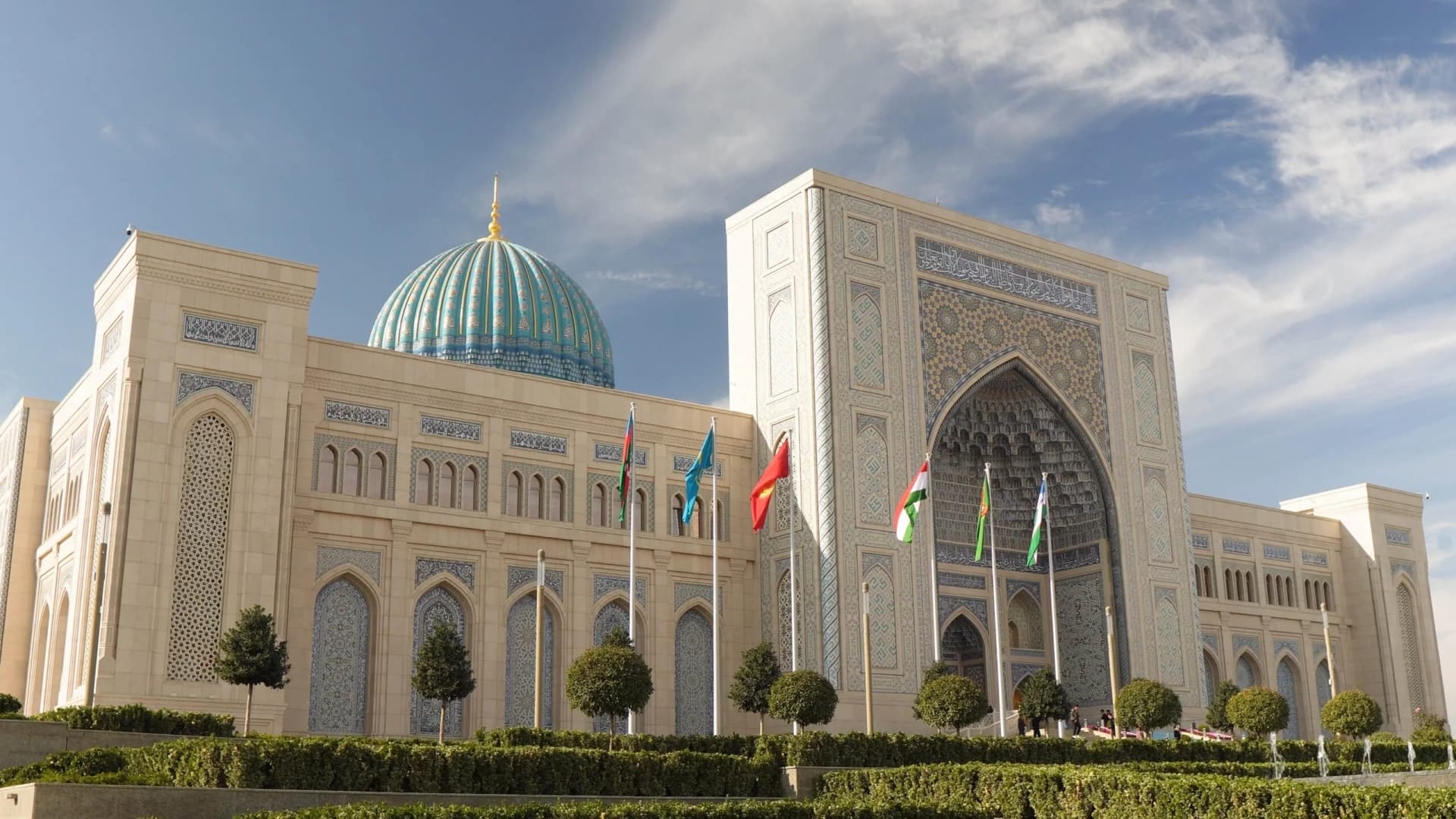
The architectural and ideological centerpiece of this strategy is the Islamic Civilization Center in Uzbekistan, which has opened its doors in Tashkent. It is a monumental complex that is redefining the very concept of the modern museum.
I. The Islamic Civilization Center — the heart of knowledge and enlightenment
Located beside the Hazrati Imam Complex in Tashkent’s historic Olmazor district, the Center occupies an area of 10 hectares with a total floor space of 42,000 square meters. It stands as one of the most significant manifestations of Uzbekistan's efforts to express its national identity through cultural heritage.
Recognized with the prestigious international Prix Versailles award for its outstanding architecture, the building harmoniously combines the iconic turquoise domes of Samarkand with cutting-edge engineering solutions.
The complex fulfills three major functions:
A Sacred Historical Landmark. The Center’s main hall houses the Uthman Mushaf, a seventh-century Qur’an manuscript regarded as one of the world's oldest surviving copies of the Holy Qur’an. Displayed beneath a magnificent 65-meter-high dome, the manuscript is illuminated by a monumental chandelier weighing 50 tons and adorned with 1.6 million Swarovski crystals.
A Center of Knowledge and Learning. In addition to exhibition halls equipped with holographic displays and immersive 3D mapping technologies, the Center features advanced laboratories dedicated to the restoration and preservation of ancient manuscripts. Its library has the capacity to accommodate more than one million scholarly and philosophical works.
An Academic and Institutional Hub. The complex also serves as the headquarters of the International Islamic Academy of Uzbekistan and the Council of Scholars, bringing together academic research and religious scholarship within a single institution.
II. The Philosophy of the Third Renaissance
To fully appreciate the significance of the Center, it is essential to understand the philosophy of the Third Renaissance, introduced by President Shavkat Mirziyoyev.
According to the President, the stability and future development of modern Uzbekistan should be built upon the experience of the two great periods of intellectual flourishing that once emerged on the country's territory.
The First Renaissance (9th–12th centuries). This was the era of great polymaths who transformed world civilization. It was during this period that such outstanding scholars as Khwarizmi, the founder of algebra; Abu Ali ibn Sina (Avicenna), one of the founding figures of modern medicine; and Abu Rayhan Beruni, the renowned astronomer and polymath who accurately calculated the Earth's radius, made their enduring contributions.
The Second Renaissance (14th–15th centuries). This period marked the intellectual zenith of the Timurid era, characterized by the scientific achievements of Mirzo Ulughbek and the literary brilliance of Alisher Navoi.
The Third Renaissance seeks to connect the legacy of these great scholars with the technologies and scientific advances of the future. Accordingly, the government is developing the Islamic Civilization Center in close synergy with national digitalization initiatives, the establishment of artificial intelligence centers, and comprehensive reforms in higher education and scientific research.
III. Geopolitics and “Enlightened Islam”
The Third Renaissance project also plays an important role in Uzbekistan's foreign policy and national security strategy.
Internationally, Uzbekistan promotes the concept of Enlightened Islam, drawing upon its rich historical heritage. This approach seeks to counter radical extremism through education and enlightenment while demonstrating that the authentic essence of Islamic civilization in Central Asia has always been rooted in scholarship, tolerance, and humanism.
At the same time, the Islamic Civilization Center is becoming an important driver of the country's economic development. By positioning Tashkent as a leading cultural destination along the Great Silk Road, Uzbekistan is attracting investors and scholars from Europe, as well as increasing flows of cultural and pilgrimage tourism from Arab and Asian countries.
In this way, Uzbekistan demonstrates that its policy of economic openness to international markets goes hand in hand with the revival of its rich historical heritage. The Third Renaissance is not an exercise in nostalgia; rather, it is a strategic roadmap designed to secure the country’s place among the leading participants in contemporary global development.