



A project from the heart of Central Asia that has captured global attention
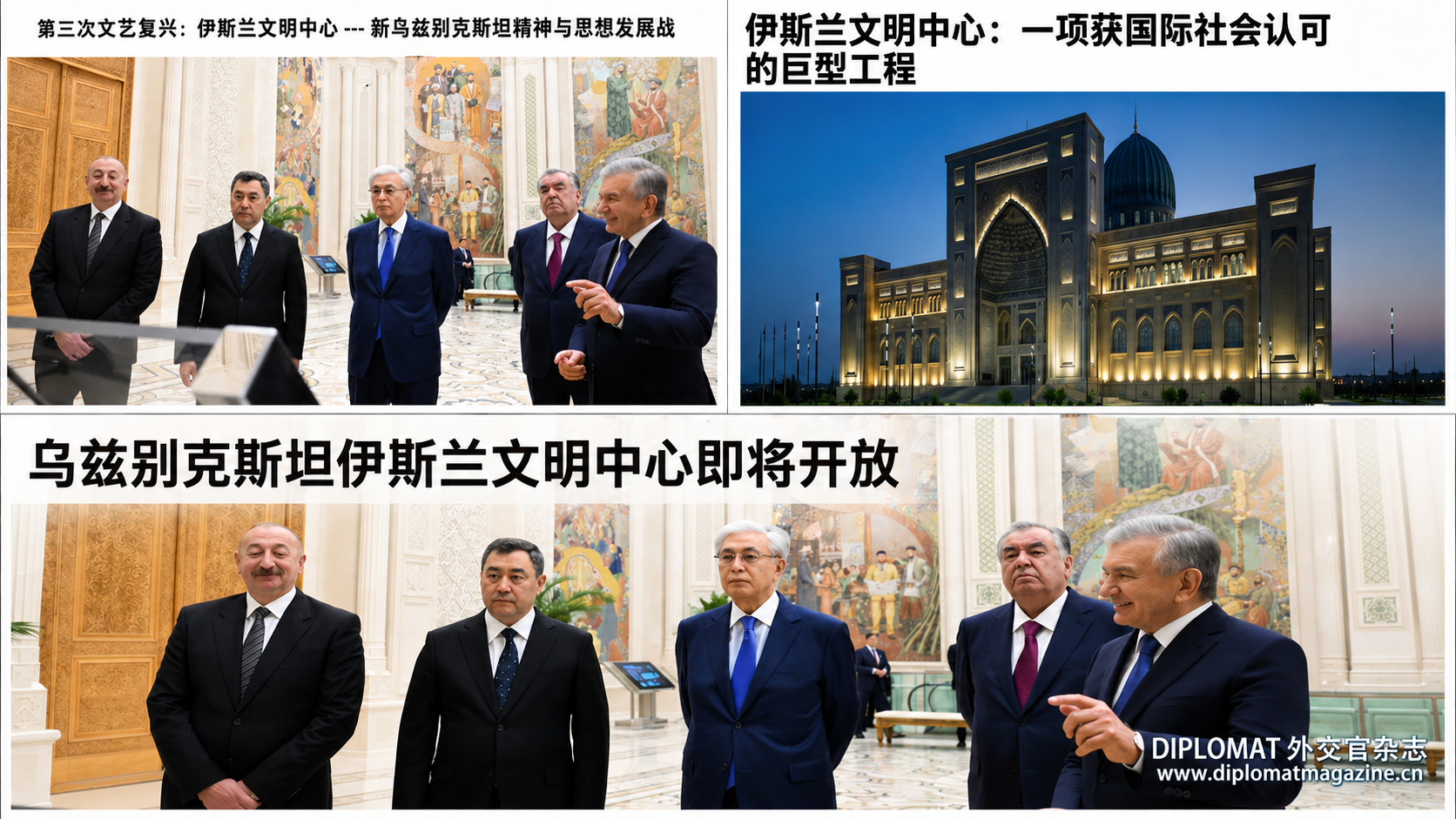 International recognition of the Islamic Civilization Center in Uzbekistan continues to grow. China’s diplomatic and tourism-focused publications Diplomat and VICTWO, along with Travel & Leisure magazine, have described the complex as one of New Uzbekistan’s most significant spiritual and educational projects, recognizing it as a unique institution that combines the humanitarian values, scientific achievements, and cultural heritage of Islamic civilization with cutting-edge technologies. According to these publications, the Islamic Civilization Center is not merely a museum but is evolving into a global intellectual platform that promotes international scientific cooperation, education, and intercultural dialogue.
A project from the heart of Central Asia that has captured global attention
Introduction. Rising from the heart of Central Asia, the Islamic Civilization Center in Uzbekistan is an ambitious project of exceptional significance that has captured worldwide attention. More than an architectural masterpiece, it serves as a spiritual and educational bridge connecting the region’s past, present, and future. Scheduled to open its doors in March 2026, the complex is widely recognized by international media outlets and prestigious organizations as one of the most influential cultural projects of New Uzbekistan.
The project was initiated in 2017 when the President of the Republic of Uzbekistan, Shavkat Mirziyoyev, presented the initiative during the 72nd Session of the United Nations General Assembly. In his address, the President emphasized the importance of demonstrating to the international community the true humanitarian essence of Islam its principles of enlightenment, peace, and constructive development. His vision represented not only a political initiative but also a program for reconnecting the nation with the roots of a land that had served for centuries as a cradle of science and culture.
The implementation of the project coincided with a period in which the world increasingly recognized the need for spiritual renewal. At a time marked by the rise of Islamophobia and extremism, Uzbekistan proposed a model for addressing these challenges through science, education, and enlightenment.
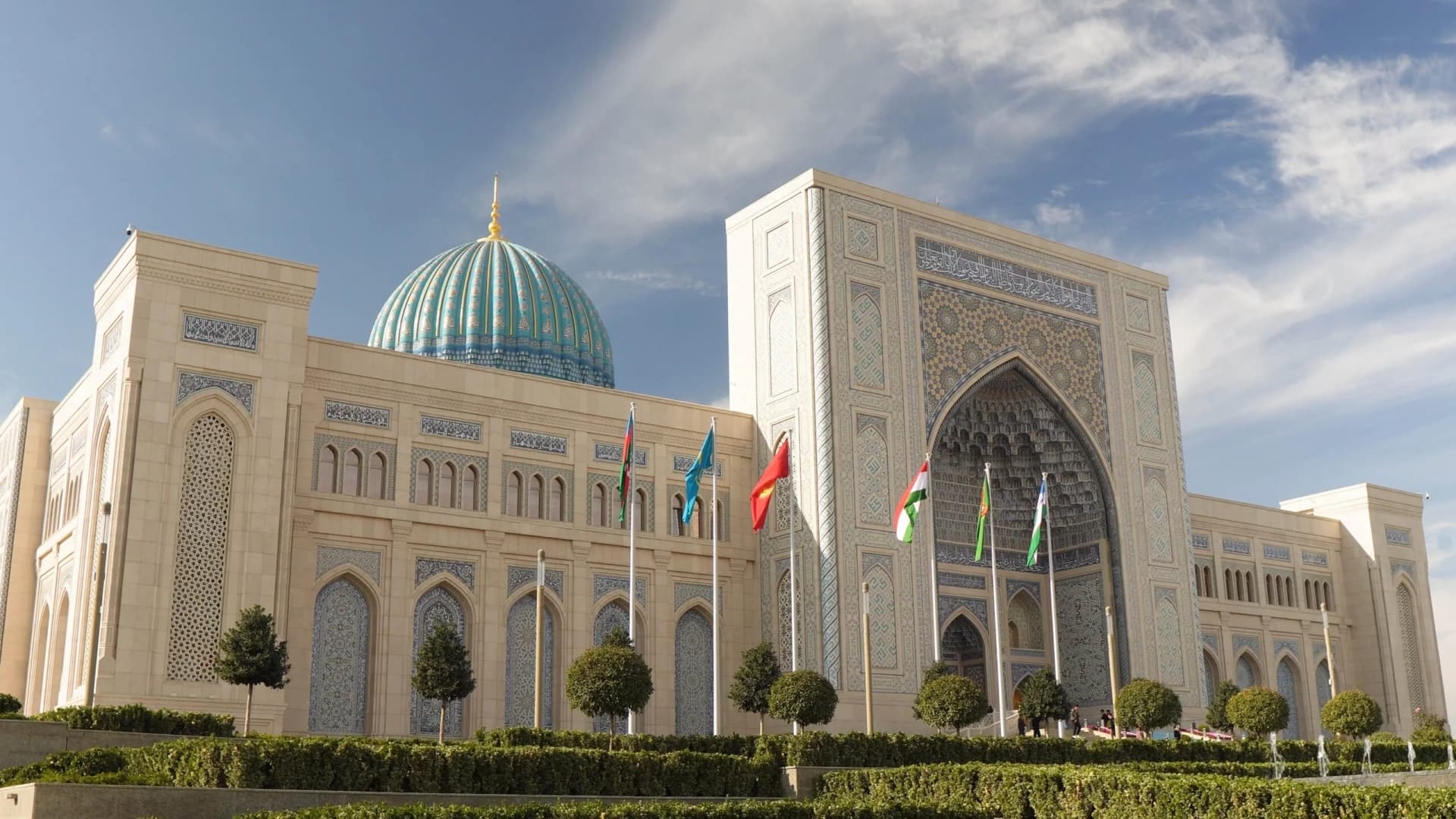
Today, that vision has become reality. A magnificent architectural complex now stands in the historic center of Tashkent, covering an area of 10 hectares. Its 65-meter-high turquoise dome and four golden gateways symbolize the unity and solidarity of all regions of the country. The architecture harmoniously combines the artistic traditions of the Timurid era with contemporary engineering and technology.
The Center represents the perfect harmony between faith and knowledge. Its main building is designed in the architectural style of the Mirzo Ulugbek Madrasah, while its decorative elements feature the first revealed Qur’anic command, “Iqra” (“Read”), elegantly inscribed in calligraphy. This serves as a timeless reminder that the pursuit of knowledge is among humanity’s highest spiritual responsibilities.
The most treasured exhibit of the Center is the seventh-century Uthman Mushaf, one of the world’s oldest Qur’anic manuscripts. This sacred manuscript is inscribed on UNESCO’s Memory of the World Register.
The complex is distinguished not only by its monumental architecture but also by its full compliance with modern urban planning and environmental standards. Every element, from its foundation to its dome, has been constructed with profound respect for historical heritage while ensuring durability for generations to come. The surrounding landscaped gardens transform the Center into not only a scientific institution but also an open cultural and educational space for both local residents and international visitors.
The exhibition concept departs entirely from the traditional museum model. Based on President Shavkat Mirziyoyev’s principle of “Civilization – Personality – Discovery,” historical events are not simply displayed but are presented in a way that immerses visitors in the intellectual atmosphere of scientific inquiry and discovery.
The exhibition is organized chronologically, covering the pre-Islamic period, the First and Second Renaissances, the era of New Uzbekistan, and the stages of development that have laid the foundation for the vision of the Third Renaissance.
One of the Center’s most remarkable features is the “Wall of Civilization.” It illustrates the continuous evolution of human thought, demonstrating how the groundbreaking achievements of great scholars such as Muhammad Khwarizmi, Ahmad Farghani, Abu Ali ibn Sina, Abu Rayhan Beruni, and Mirzo Ulugbek are directly connected with today’s advanced technologies.
Through virtual reality, augmented reality, holographic technologies, and artificial intelligence, ninth-century manuscripts are brought to life, ancient observatories are digitally reconstructed, and historic scientific achievements are presented in an engaging and accessible way for new generations.
The extensive integration of digital technologies transforms the Center into a museum of the future. Intelligent systems allow visitors not only to access information but also to engage in virtual interactions with great scholars and participate in simulations of their scientific experiments. Meanwhile, the specially designed “1001 Inventions” laboratory for children fosters an early interest in engineering and the natural sciences. In this way, the Center serves not only as a treasury of knowledge but also as an interactive educational environment dedicated to developing the country’s intellectual potential.
President Shavkat Mirziyoyev has repeatedly emphasized that the nation's true strength lies in its historical memory and cultural roots. Accordingly, he instructed that museum exhibitions be enriched with authentic cultural treasures and that unique artifacts reflecting the history and spiritual heritage of the Uzbek people be repatriated to their homeland.
To fulfill this noble mission, a delegation led by Firdavs Abdukhalikov, Director of the Islamic Civilization Center, together with a special commission of scholars, Orientalists, and art historians, conducted extensive scientific research. One of the Center’s principal objectives has been the repatriation of Uzbekistan’s cultural heritage preserved abroad, supported through systematic cooperation with international auction houses and private collectors.
As a result of many years of dedicated efforts, more than one thousand rare manuscripts and historical artifacts have been returned to Uzbekistan. In addition, the World Society for the Study, Preservation and Popularization of the Cultural Legacy of Uzbekistan (WOSCU) has transferred numerous valuable works relating to Mawarannahr and Khorasan to the Center’s collections.
Thanks to scientific expeditions and diplomatic initiatives organized by the Government of Uzbekistan, high-quality copies of manuscripts preserved in the world's leading museums and libraries have also been produced. This process has once again demonstrated that the rich cultural heritage of the Uzbek people constitutes an integral part not only of Central Asia but of the entire Islamic civilization and the cultural heritage of humanity. Every unique artifact returned to its homeland has become a powerful symbol of New Uzbekistan’s unwavering commitment to restoring and preserving its national identity.
The Islamic Civilization Center is far more than a conventional museum it is an international scientific and educational platform. It houses a library with a collection of more than 200,000 volumes for researchers, a manuscript restoration laboratory, a school of calligraphy, and a digital archive. The Center also accommodates representative offices of leading international organizations, including ICESCO, IRCICA, and the Oxford Centre for Islamic Studies (OCIS).
More than 1,500 specialists from over 40 countries participated in the construction and development of the Center. International experts, including Khaled El-Enany, have described it as “a unique civilization complex that brings together a next-generation museum, a research center, a modern library, the archives of Central Asian civilization, digital humanities technologies, and a global network of scientific cooperation.”
President of Finland Alexander Stubb described the Center as a new global hub of knowledge and enlightenment, comparing it to such historic centers of learning as the Bayt al-Hikma, the Ma’mun Academy, and the Mirzo Ulugbek Madrasah.
During the international conference “Central Asia: Common Spiritual and Educational Heritage - Common Future” the heads of state of five countries visited the Center and recognized it as a source of pride for the entire region. The conference brought together more than 300 scholars and cultural figures from the Central Asian countries and Azerbaijan.
In February 2026, news from Paris further enhanced the project's international prestige. The Versailles Prize International Committee included the Center for Islamic Civilization in Tashkent among the World’s Most Beautiful Museums of 2026.
The Center has also received extensive coverage from internationally renowned publications, including Smithsonian Magazine, BBC Travel, BBC History, and National Geographic, which have ranked it alongside some of the world’s most distinguished museum projects, such as the Lucas Museum of Narrative Art in Los Angeles, the National Geographic Exploration Museum in Washington, D.C., and the London Museum.
These international recognitions have significantly strengthened the Center’s scientific and tourism potential, establishing it as a world-class destination that deserves a place on every traveler's itinerary. They also demonstrate New Uzbekistan’s remarkable capacity for nation-building and its commitment to innovative development that meets the highest international standards.
The timing of the Center’s opening during the holy month of Ramadan carries profound symbolic significance. It was during this blessed month, in 2018, that the foundation stone of this landmark project was laid. Eight years later, the Islamic Civilization Center now stands on the threshold of opening its doors, ready to serve as a lasting symbol of the restoration, preservation, and celebration of Islamic cultural heritage for generations to come.