



From Samarkand to St. Petersburg: a new interpretation of the historical ties that united the Muslim world in the 19th century
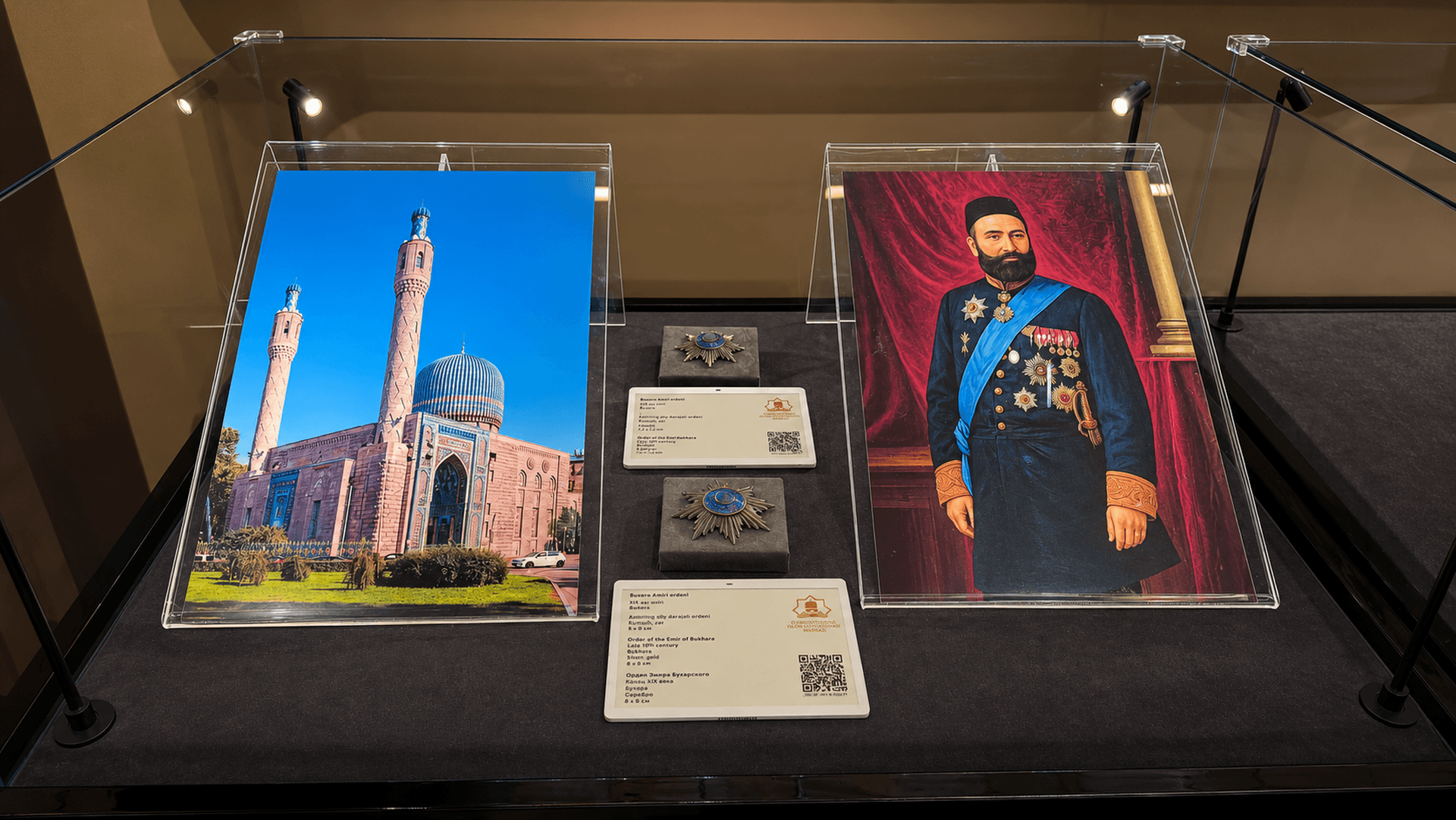
The exhibition presents three key exhibits the history of the St. Petersburg Grand Mosque, the State Order of the Emirate of Bukhara, and materials dedicated to the renowned Azerbaijani industrialist and philanthropist Haji Zeynalabdin Taghiyev not as isolated historical episodes, but as interconnected elements of the multifaceted cooperation between Central Asia, the Caucasus, and Russia.
This approach encourages visitors to view history not within the confines of national borders, but as part of a shared civilizational process.
 How did Samarkand’s architecture inspire the North?
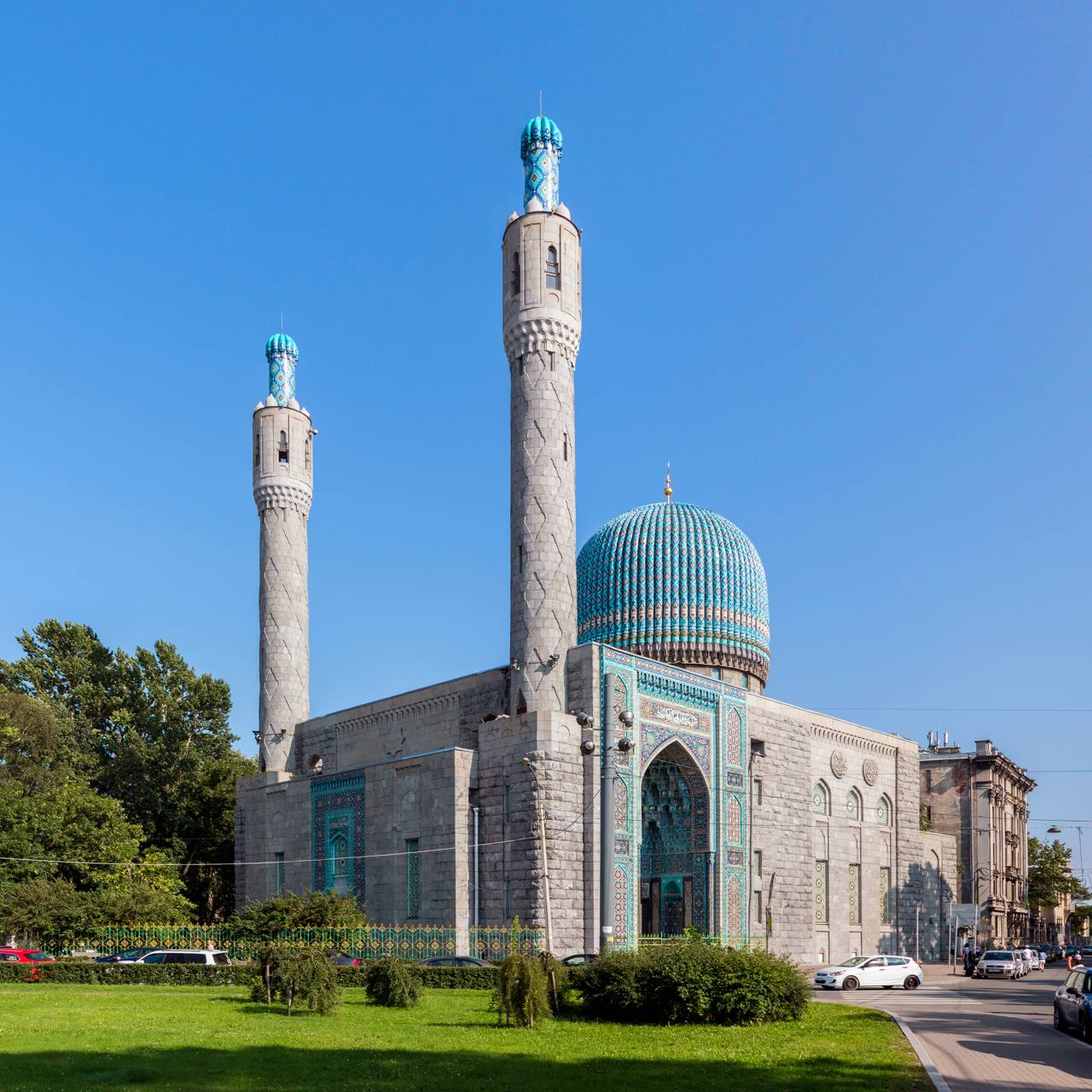
Located in the heart of St. Petersburg, the city’s iconic blue-domed Grand Mosque is regarded as one of the most significant examples of Islamic architecture in Russia. Its exterior was designed under the strong influence of Timurid architecture in Samarkand, with its main dome drawing particular inspiration from the mausoleum of Amir Temur.
Until the beginning of the twentieth century, Muslims living in the capital of the Russian Empire did not have a proper congregational mosque. Although fundraising efforts had begun, the collected funds were insufficient even to purchase the land.
At this crucial moment, Emir Sayyid Abdulahad Khan of Bukhara stepped forward and personally financed the purchase of the site on which the mosque would be built.
On 3 February 1910, the mosque’s foundation stone was laid in his presence. Although the Emir did not live to witness the completion of the project, the initiative he launched was successfully brought to fruition.
The mosque was officially inaugurated in 1913, with the participation of the last Emir of Bukhara, Sayyid Alim Khan, and the Khan of Khiva, Asfandiyar Khan. The event became one of the most significant diplomatic gatherings of Central Asian rulers within the Russian Empire.
During the Soviet era, the mosque was closed and remained unused for religious purposes for several decades. It was returned to the Muslim community only in 1974 and today stands as one of St. Petersburg/s most recognizable historical landmarks.
How did Baku’s philanthropy connect with Central Asia?
Another focal point of the exhibition is dedicated to the life and legacy of the distinguished Azerbaijani entrepreneur and philanthropist Haji Zeynalabdin Taghiyev.
Having amassed considerable wealth through the oil industry, Taghiyev invested his fortune in education, publishing, science, and social welfare. The first Muslim girls’ school in the Caucasus, along with numerous schools, publishing houses, and charitable institutions, was established through his generous patronage.
However, his influence extended far beyond the Caucasus.
Historical sources indicate that Taghiyev maintained close relations with the Emirate of Bukhara. He held regular meetings with Emir Sayyid Abdulahad Khan and later with Sayyid Alim Khan, discussing economic cooperation, trade, cultural exchange, and charitable initiatives.
During their visits to Baku, the Emirs of Bukhara were hosted at Taghiyev’s residence. Even today, the Azerbaijan National Museum of History preserves a number of valuable gifts presented by the rulers of Bukhara.
The Uzbek Jadids including Mahmudkhoja Behbudi, Cho‘lpon, and Haji Abdulaziz Abdurasulov also maintained intellectual ties with Taghiyev, demonstrating that the relationship between Central Asia and the Caucasus extended beyond economic cooperation and fostered a shared environment of enlightenment and educational reform.
International cooperation behind the construction of a mosque
The history of the St. Petersburg Grand Mosque is far more than the story of an architectural monument.
It reflects the collaboration between two distinguished patrons Emir Sayyid Abdulahad Khan of Bukhara and the renowned Azerbaijani philanthropist Haji Zeynalabdin Taghiyev who worked together in pursuit of a common noble cause.
Their partnership illustrates how, at the turn of the nineteenth and twentieth centuries, Muslim communities were united not by national borders but by shared spiritual values and a common sense of purpose.
The state order: a symbol of historical trust
Another significant exhibit is the State Order of the Emirate of Bukhara, which serves as further evidence of these historic relationships.
According to historical records, Emir Sayyid Abdulahad Khan awarded Haji Zeynalabdin Taghiyev one of the Emirate’s highest state honors in recognition of his contributions to the advancement of the Muslim community, his philanthropic endeavors, and his efforts to strengthen friendly relations with Bukhara.
Designed in the form of a radiant star, the order symbolizes statehood, mutual trust, and respect. Its presentation alongside materials dedicated to Taghiyev underscores the close historical ties between the two figures.
History reinterpreted for the modern world
Vohidkhon Muhitdinov, Junior Research Fellow, Pilgrimage Tourism Department, Islamic Civilization Center in Uzbekistan:
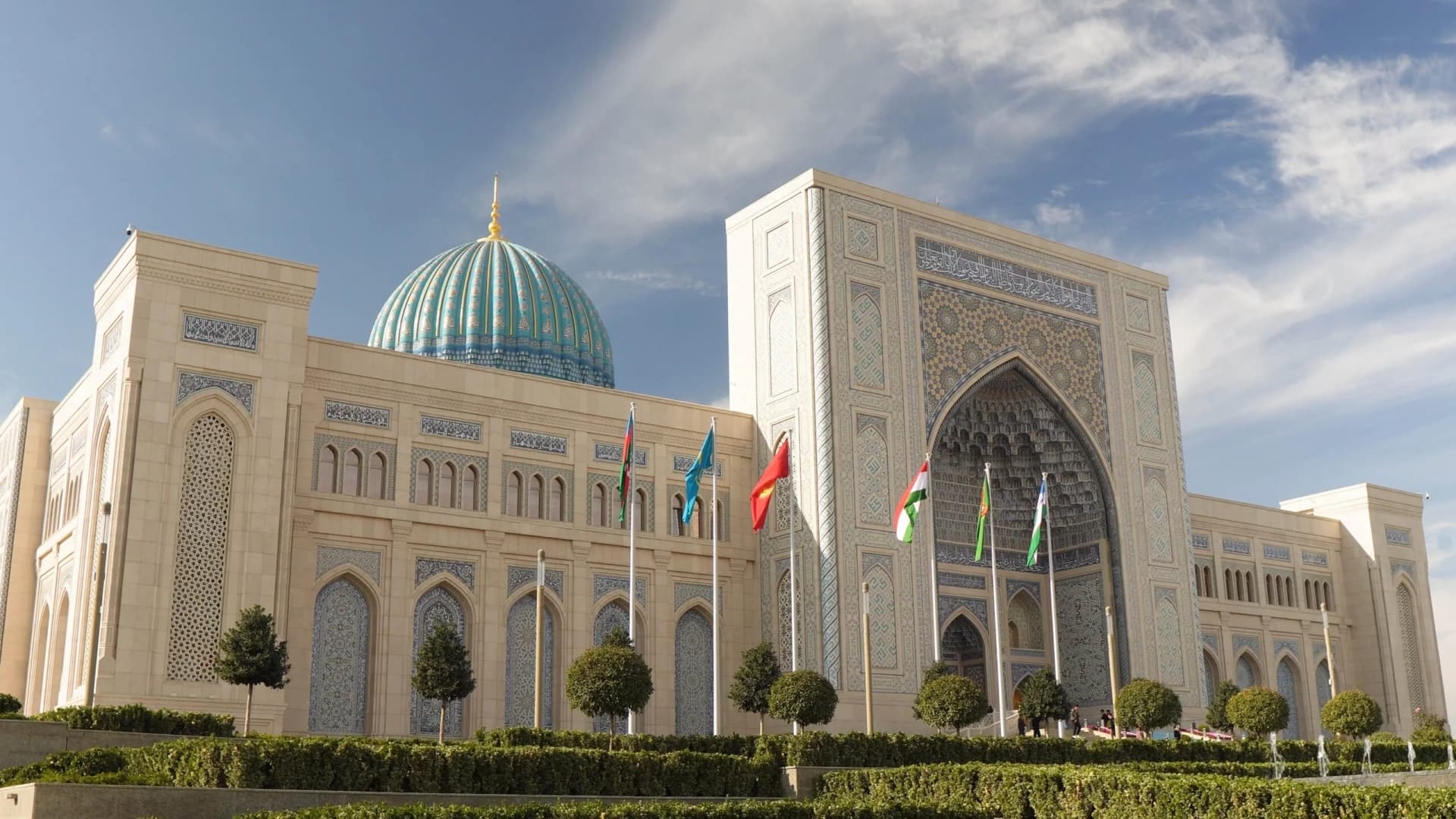
“The Khanates Period exhibition at the Museum of the Islamic Civilization Center in Uzbekistan is far more than a conventional museum display. It is a scholarly concept designed to present Central Asia's place in the history of Eurasia from a new perspective.
At a time when shared cultural heritage, dialogue among civilizations, and historical memory are becoming increasingly important worldwide, this exhibition revives the historical connections between Bukhara, Samarkand, Baku, and St. Petersburg, demonstrating that Islamic civilization constituted an intellectual and cultural sphere that transcended political borders.
Every exhibit presented here tells more than the story of the past. It reminds visitors how universal values such as knowledge, philanthropy, diplomacy, and humanity have united peoples across centuries.
In this sense, the exhibition at the Islamic Civilization Center in Uzbekistan goes beyond preserving history it transforms it into an essential part of today's global dialogue.”
From 7 to 11 July this year, the First International Islamic Forum will bring together nearly 300 distinguished guests, including scholars, religious leaders, experts, and representatives of international organizations from more than 40 countries, in Tashkent, Samarkand, and Termez. The forum will showcase innovative projects such as this exhibition while promoting new scholarly and cultural initiatives.
The forum’s principal objective is to present to the international community the true essence of Islam as a religion founded upon peace, tolerance, knowledge, enlightenment, and humanitarian values. Through academic discussions, international exhibitions, presentations of rare manuscripts, and a wide range of cultural and educational events, participants will have the opportunity to explore the rich and enduring legacy of Islamic civilization.