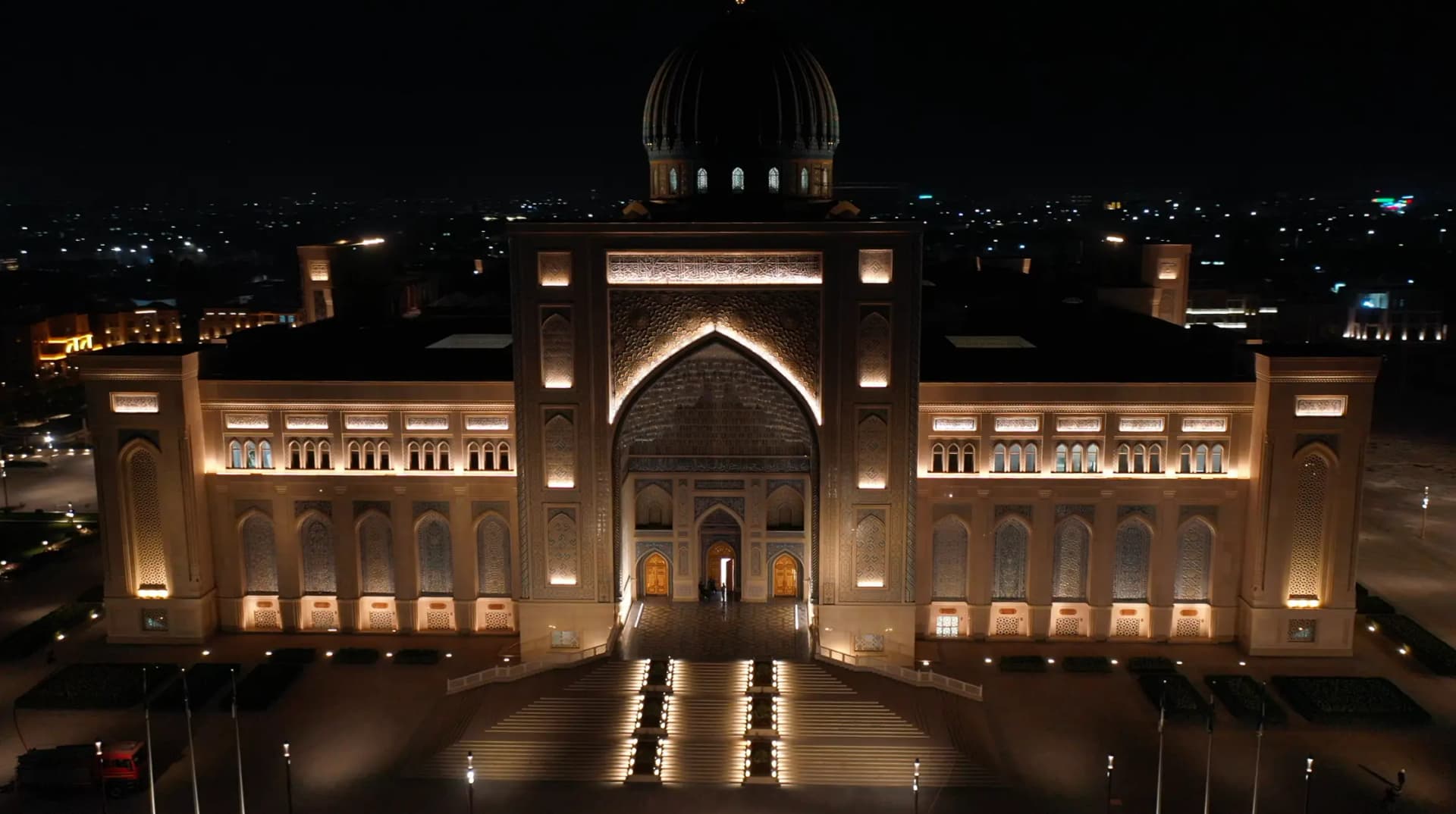
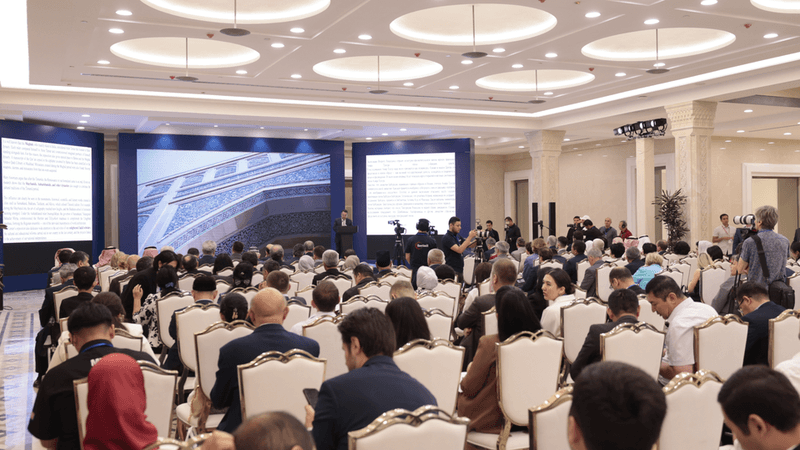
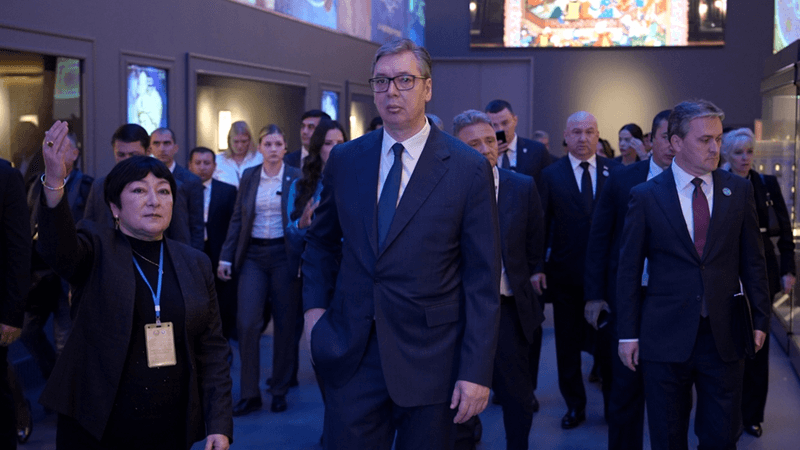
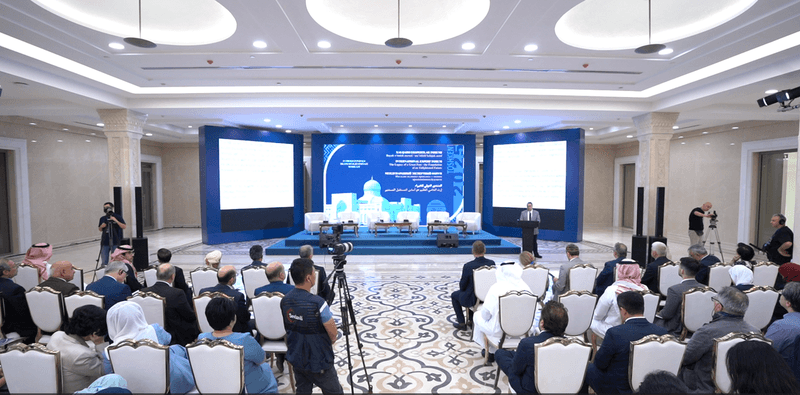
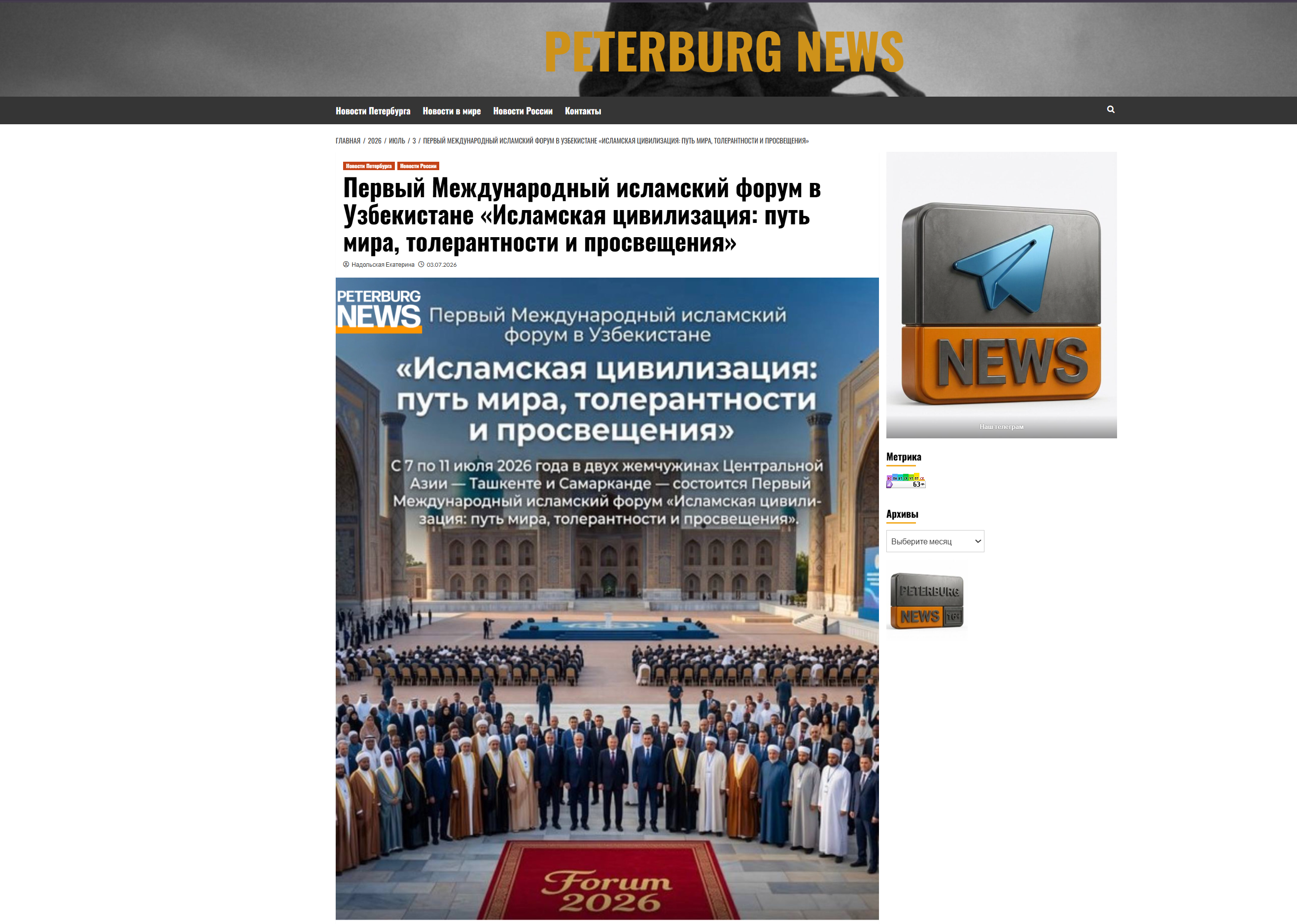
 The Russian publication Peterburg News has described the First International Islamic Forum, to be held in Uzbekistan under the theme “Islamic Civilization: The Path of Peace, Tolerance and Enlightenment,” as an important platform for global academic and spiritual dialogue. According to the publication, the forum, which will take place in Tashkent and Samarkand, will provide a broad platform for discussing the contribution of Islamic civilization to the advancement of science, education, and culture, while promoting the ideals of peace, tolerance, and cooperation among nations.
There are sacred places in the world where every inch of land preserves the breath of centuries of history. Samarkand and Tashkent are among those remarkable cities. They are far more than ordinary urban centers they stand as living witnesses to eras in which knowledge and enlightenment played a decisive role in the progress of humanity.
From 7 to 11 July 2026, these two historic cities will once again capture the attention of the world. They will become a prestigious international venue bringing together scholars, thinkers, and religious leaders from many countries.
In Arabic, there is the concept of ijtihad, which refers to independent reasoning the pursuit of truth through critical reflection, deep understanding, and thoughtful inquiry rather than the mere repetition of established views. The First International Islamic Forum, held under the theme “Islamic Civilization: The Path of Peace, Tolerance and Enlightenment,” is being organized in precisely this spirit.
This is not simply an academic gathering or an official conference. It is an important platform where representatives of different countries can deepen mutual understanding, exchange ideas, and engage in open dialogue on shared values.
The forum will bring together prominent Islamic scholars, religious leaders, heads of international organizations, representatives of higher education institutions, museums, libraries, and leading humanitarian centers from around the world. For them, hikmah (wisdom) is not merely a concept but a guiding principle in both life and professional endeavor.
The discussions will focus on the immense contribution of Islamic civilization to the development of world science, philosophy, education, culture, and the arts. Indeed, it is difficult to imagine modern civilization without this rich intellectual and cultural heritage.
Relations between Russia and Uzbekistan have likewise been built over centuries on the foundations of mutual respect and cooperation.
The history of these ties began long before the Soviet era. Trade caravans, Sufi schools, and traveling scholars transformed the vast region stretching from the Volga to the banks of the Amu Darya into a shared spiritual and cultural space. In the Islamic tradition, this is embodied in the concept of the Ummah a spiritual community that transcends national and territorial boundaries.
Today, millions of Muslims live in Russia. The scholarly legacy of such great thinkers as Farabi, Ibn Sina (Avicenna), and Biruni is studied in educational institutions from Moscow to Vladivostok. The rich intellectual and spiritual heritage created in Central Asia has become not only a regional treasure but a shared legacy of all humanity.
Speaking of this forum, it is impossible not to acknowledge the individual whose vision has played a pivotal role in making it a reality.
The President of the Republic of Uzbekistan, Shavkat Mirziyoyev, has made openness, dialogue, and mutual trust the cornerstones of the country’s foreign policy. Under his leadership, Uzbekistan has entered a new stage of spiritual and diplomatic development.
The country has become increasingly open to international cooperation. Dozens of joint projects in education, culture, the economy, and other fields have been implemented between Russia and Uzbekistan, accompanied by the signing of important bilateral agreements. Regular meetings between the leaders of the two countries have consistently produced practical results.
It is precisely this policy of openness and constructive engagement that has enabled Uzbekistan to become a host for international gatherings of such significance. For this reason, the decision to hold the First International Islamic Forum in Uzbekistan is both natural and historically meaningful.