



Haber7: “The pursuit of a third renaissance suits Uzbekistan perfectly”
 Turkish journalist and Haber7 columnist Mursel Gündoğdu emphasized that Uzbekistan’s vision of building a Third Renaissance is fully aligned with the country’s rich intellectual, spiritual, and civilizational heritage. He described the Islamic Civilization Center in Uzbekistan and the First International Islamic Civilization Forum as tangible expressions of this vision, praising Uzbekistan’s initiatives to restore its historical heritage, promote science and enlightenment, and introduce the legacy of the Turkic and Islamic civilizations to the international community.
After spending two meaningful days in Tashkent, the capital of our brotherly nation of Uzbekistan, we continued our journey to the ancient city of Samarkand. When speaking of Uzbekistan, time itself seems to lose its ordinary meaning. The country is undergoing a remarkable period of progress and renewal. It is evident that government institutions, academic circles, young people, and the broader public are united in pursuit of the nation’s noble aspirations. Across all segments of society, there is a strong sense of optimism and confidence in the future.
Uzbekistan is steadily advancing toward the realization of the Third Renaissance. This noble vision and the efforts devoted to achieving it are entirely consistent with the country’s profound historical legacy and intellectual potential.
At a time when Türkiye is reinforcing its international standing by hosting the NATO Summit, it is equally significant that Uzbekistan is entering a new stage of development through a civilizational approach. The advancement of the Turkic states through cooperation and healthy competition in the fields of science, technology, diplomacy, culture, and spirituality is of great importance for the entire Turkic world.
Uzbekistan is one of the foremost spiritual and intellectual centers of the Turkic-Islamic civilization.
This sacred land gave rise to such outstanding scholars as Imam Maturidi, Imam Bukhari, Imam Tirmidhi, Abu Rayhan Beruni, Ibn Sina, Muhammad Khwarizmi, Mirzo Ulugbek, Mahmud Zamakhshari, Abu Muin Nasafi, and Ahmad Farghani, whose unparalleled contributions have profoundly shaped world civilization. The rich scholarly and spiritual heritage they left behind is a shared treasure not only of the Islamic world but of all humanity.
Today, Uzbekistan is placing special emphasis on studying, preserving, and safeguarding this great legacy while integrating it with the demands and opportunities of modern development.
It is well known that the first great center of learning in the Muslim world was Baghdad. Thanks to the activities of the Bayt al-Hikma (House of Wisdom), the city reached an extraordinary level of intellectual and scientific achievement. However, as Baghdad gradually lost its prominence due to various historical developments, Samarkand emerged as a new center of scholarship. Under the wise governance of the Samanid dynasty, the city rapidly became one of the most distinguished centers of learning and culture in the Muslim world. Alongside the religious sciences, mathematics, astronomy, and the natural sciences flourished there, laying the foundation for one of the greatest periods of intellectual and spiritual advancement in human history.
Today, Uzbekistan is working to revive these glorious traditions. National and spiritual heritage sites that had long been neglected or forgotten are being restored and returned to public life.
The Imam Bukhari Memorial Complex in Samarkand is a vivid example of these large-scale restoration efforts. Reconstructed with remarkable architectural excellence, a beautifully landscaped environment, and modern infrastructure, the complex provides visitors with a deeply inspiring spiritual atmosphere. At the same time, extensive restoration and reconstruction work is also underway at the Mausoleum of Imam Maturidi.
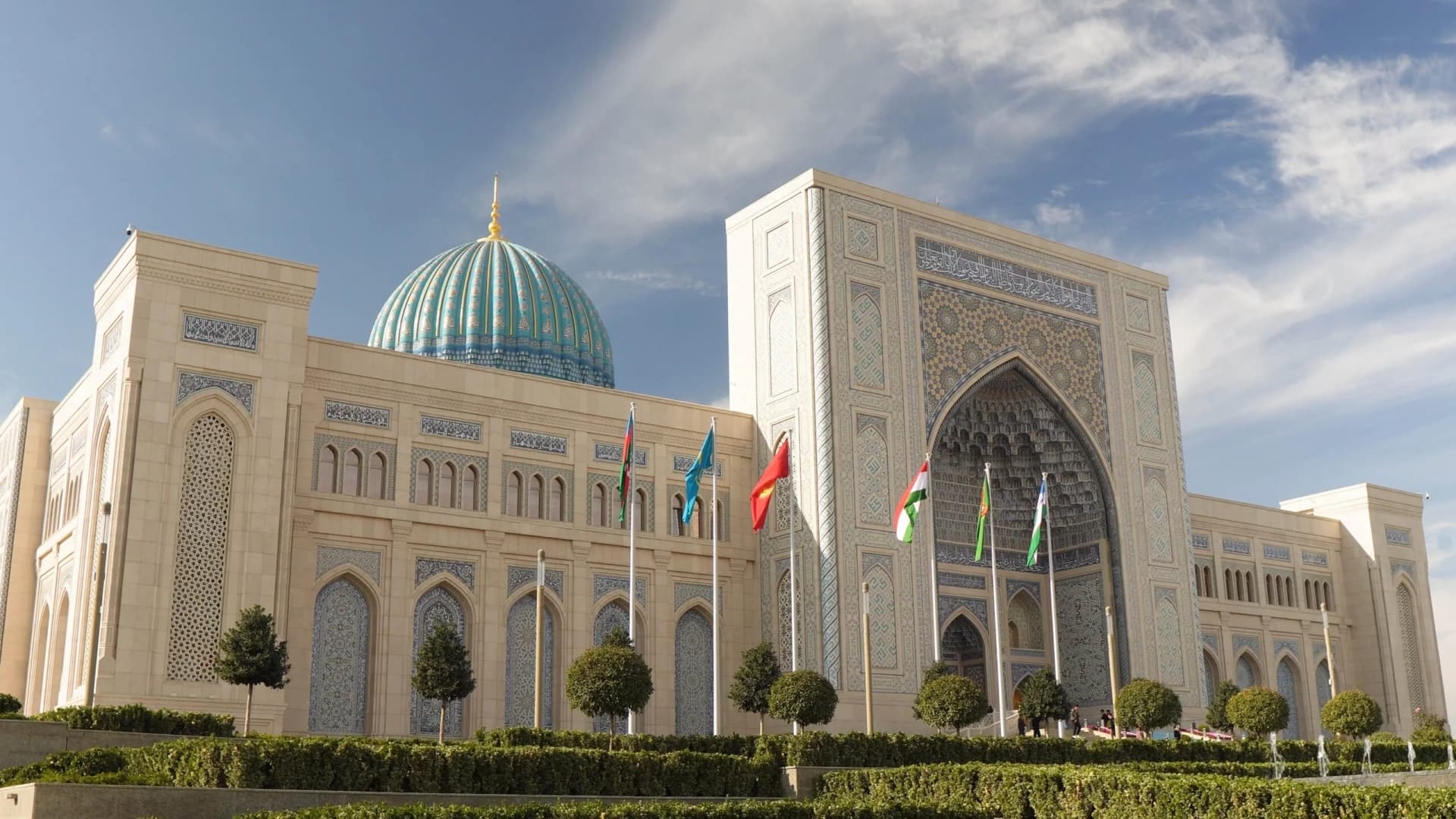
The Islamic Civilization Center in Uzbekistan occupies a special place in the practical realization of the vision of the Third Renaissance.
Established at the initiative of President Shavkat Mirziyoyev, the Center is evolving not only as a magnificent architectural landmark but also as a major intellectual institution that showcases the country's scientific, educational, and cultural potential.
The Center is also organizing internationally significant events. Most notably, from 7 to 11 July 2026, it hosted the First International Islamic Civilization Forum as its principal organizer, bringing together more than 300 participants from the Middle East, North Africa, Central and South Asia, Europe, and other regions of the Islamic world. We also had the opportunity to participate in the forum by presenting a scholarly paper.
Held under the theme “Islamic Civilization: The Path of Peace, Tolerance and Enlightenment,” the forum took place in the cities of Tashkent, Samarkand, and Termez.
Uzbekistan’s strong commitment to preserving its civilizational heritage and passing it on to future generations is evident at every step. While historical and cultural monuments are being carefully restored, systematic efforts are also being undertaken to instill an appreciation of this rich heritage in the younger generation.
While exploring the museum exhibitions being prepared at the Islamic Civilization Center in Uzbekistan, one cannot help but admire the deep respect that the young professionals working there demonstrate for their history, culture, and homeland.
The forum was organized in cooperation with a number of prestigious international organizations, including WOSCU, IRCICA, TÜRKSOY, the Al-Furqan Foundation, the Turkic Culture and Heritage Foundation, the International Turkic Academy, the Turkish Academy of Sciences, the Institute of Turkic Manuscripts, and the Oxford Centre for Islamic Studies. National partners included the Committee on Religious Affairs under the Cabinet of Ministers of the Republic of Uzbekistan, the Muslim Board of Uzbekistan, the Ministry of Foreign Affairs, and the Imam Bukhari, Imam Tirmidhi, and Imam Maturidi International Scientific Research Centers. ICESCO served as the forum’s principal international partner.
The address of the President of the Republic of Türkiye, Recep Tayyip Erdoğan, to the forum participants was delivered by Professor Dr. Kürşad Zorlu, Deputy Chairman of the Justice and Development Party (AK Party) and Head of Relations with the Turkic States.
At the same time, it was noteworthy that, despite the participation of leading religious and academic representatives from across the Muslim world, the Presidency of Religious Affairs of Türkiye was not represented at a high level. Given that the forum focused on the legacy of such eminent scholars as Imam Maturidi, Imam Bukhari, and Imam Tirmidhi, while promoting the true essence of Islam as a religion of peace, tolerance, enlightenment, and constructive development, participation in such a distinguished gathering would have been of considerable importance for any religious or academic institution.
As a country whose influence extends from regional leadership to the global stage, Türkiye’s close attention to major developments in its fellow Turkic states and its support for them within the scope of its capabilities would undoubtedly contribute to further strengthening mutual cooperation.