



The enlightening power of independence
Over the past 10 years in particular, the approach to cultural heritage has taken on a new dimension. Simply preserving a historical monument, studying a manuscript, or displaying a museum exhibit is no longer sufficient. The principal objective is to demonstrate, on a scholarly basis, the contribution our people have made to the development of world civilization over the centuries, to promote this legacy through modern approaches, and, most importantly, to pass it on accurately and authentically to future generations.
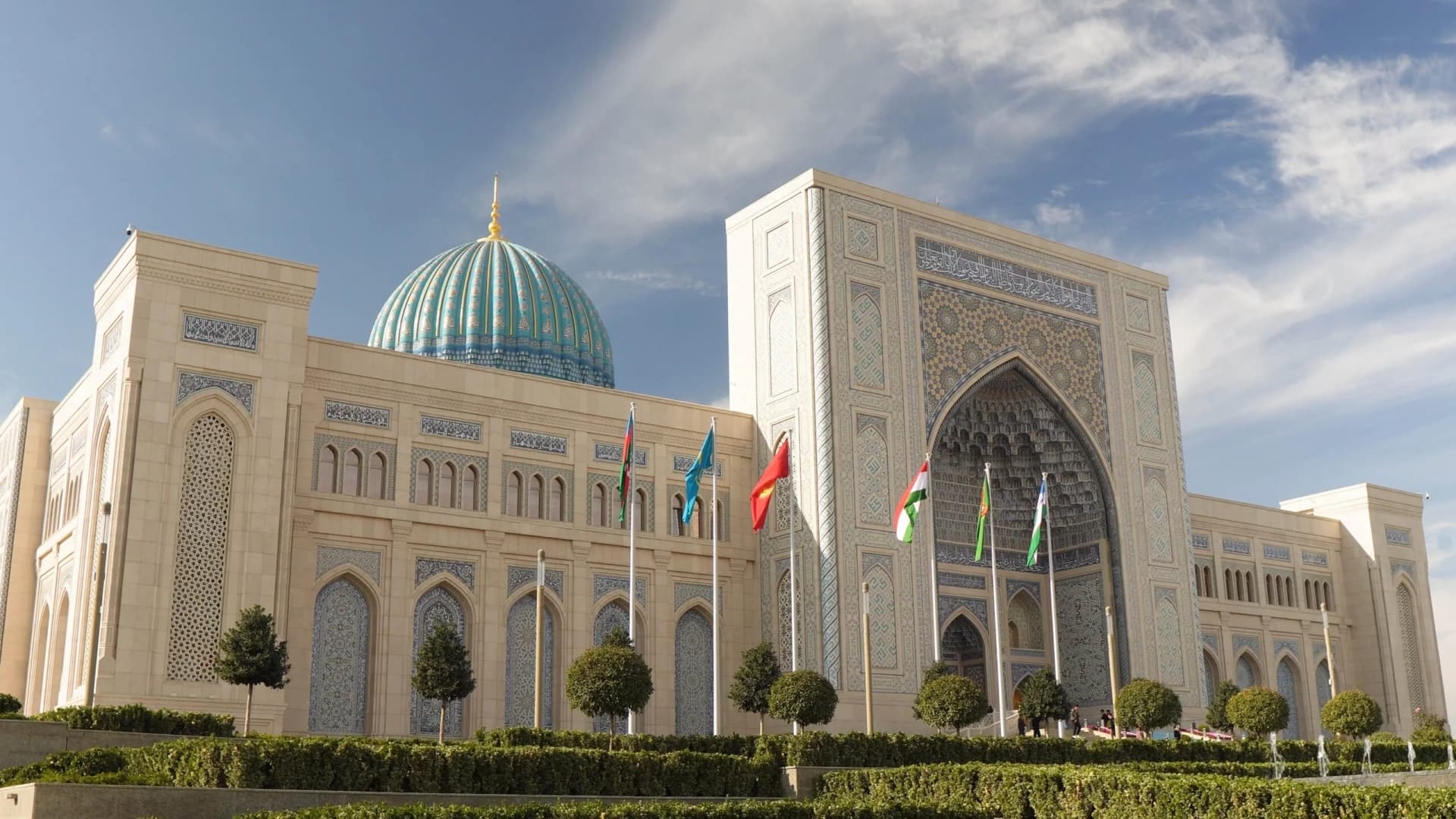
The Islamic Civilization Center in Uzbekistan, established at the initiative of President Shavkat Mirziyoyev, is one of the practical embodiments of these noble aspirations.
From preserving heritage to introducing it to the world…
The mission of the Center goes far beyond creating a museum exhibition. It is developing as a modern scholarly and educational platform that brings together museums, science, education, digital technologies, and international cooperation.
Among its key priorities are the in-depth study of the rich scholarly and cultural heritage of Islamic civilization; research into the lives and works of our great scholars; the identification of rare manuscripts, historical artifacts, and works of art; their introduction into scholarly circulation; and their presentation to the wider public through modern technologies.
Such an ambitious mission cannot be accomplished within the boundaries of a single country. Thousands of manuscripts, works of art, archaeological finds, and other rare objects related to the history of Uzbekistan and the heritage of our ancestors are currently preserved in museums, libraries, and private collections around the world. For this reason, international cooperation has become one of the Center’s key areas of activity.
In accordance with the instructions of the President, systematic efforts are being undertaken to widely promote the Center’s activities abroad, establish direct relations with leading museums and academic institutions, and identify and study sources related to the history of Uzbekistan held in their collections.
Each of these visits is driven by specific objectives: conducting scholarly research, identifying new sources, establishing cooperation between museums, and launching joint exhibitions, publications, and research projects.
China: building a new bridge between museums
The visit of a delegation led by Firdavs Abdukhalikov, Director of the Islamic Civilization Center in Uzbekistan, to the People’s Republic of China on July 19–25 of this year marked another important stage in these wide-ranging efforts.
During the visit, which covered Hong Kong, Beijing, and Xi’an, talks were held with the heads of China’s leading museums, research institutions, and cultural organizations.
One figure alone illustrates the scale of the potential cooperation: today, China has more than 7,000 museums, attracting over 600 million visitors annually. Cooperation with China in the museum sector therefore offers significant opportunities to introduce Uzbekistan’s cultural heritage more widely not only to Chinese audiences, but also to the broader Asian public.
During the visit, a memorandum of cooperation was signed with the Hong Kong Palace Museum. It covers key areas such as cultural heritage preservation, restoration, joint exhibitions, scholarly research, professional development for museum specialists, and the exchange of expertise.
Prospects for practical cooperation were also discussed with the Shaanxi History Museum, the Palace Museum in Beijing (Gugong), the National Museum of China, the Emperor Qinshihuang’s Mausoleum Site Museum, and the National Archaeological Museum under the Chinese Academy of History.
Most importantly, these negotiations went beyond declarations of intent. Agreements were reached to organize joint international exhibitions, publish illustrated books and albums, hold academic conferences, exchange digital copies of exhibits, and arrange professional internships for specialists in 2027 to mark the 35th anniversary of the establishment of diplomatic relations between Uzbekistan and China.
Cooperation in archaeology, restoration, museology, and digitization will further enrich these relations with practical substance.
“The primary mission of the Islamic Civilization Center in Uzbekistan, established at the initiative of our esteemed President Shavkat Mirziyoyev, is to showcase to the world the great civilizations created by our people, their contribution to global development, and their rich scholarly and spiritual heritage. In accordance with the instructions of the Head of State, the exhibitions give due prominence not only to Islamic civilization but also to ancient pre-Islamic civilizations such as Sogdiana, Bactria, Chach, and Khwarazm,” said Firdavs Abdukhalikov.
“We are all well aware that cultural ties between Uzbekistan and China have a history spanning several millennia. The Great Silk Road played an important role in the exchange of knowledge and culture among peoples. We believe that further strengthening cooperation with Chinese museum directors, scholars, and specialists will pave the way for uncovering previously unexplored chapters of our history.”
The world should know about the center
Another important area of international cooperation is raising awareness among international audiences about the Islamic Civilization Center in Uzbekistan itself.
At an international presentation held in Hong Kong, detailed information was provided about the Center’s scholarly concept, exhibition themes, and international projects. The participation of representatives of government agencies, museums and research institutions, the diplomatic corps, and international experts demonstrated the growing interest in the Center.
The Islamic Civilization Center in Uzbekistan is not merely a cultural institution intended for the country itself. It is envisioned as a prestigious center of enlightenment that will showcase on the international stage the contribution of the peoples of Central Asia to the development of global science and culture.
As part of the official visit, a memorandum of cooperation was signed between the Islamic Civilization Center in Uzbekistan and the Hong Kong Palace Museum.
“Our visit to the Islamic Civilization Center in Uzbekistan was an important experience for us. The work being carried out in your country to preserve cultural heritage and present it through modern approaches generated great interest. I am confident that today’s agreement will take our cooperation to a new level,” said Dr. Louis Ng.
Face to face with a two-thousand-year-old “army”
As part of our official visit to the People’s Republic of China, we also visited the Emperor Qinshihuang’s Mausoleum Site Museum, one of the world’s most renowned museum complexes.
The main purpose of the visit was to further strengthen cooperation between Uzbekistan and China in the study, preservation, and promotion of cultural heritage, as well as to discuss prospects for implementing joint research and exhibition projects between museums.
The museum’s leadership provided the guests with detailed information about the famous Terracotta Army, created in the third century BC by order of Qin Shi Huang, founder of the Qin dynasty and the first emperor of China. The complex contains more than 8,100 terracotta figures of soldiers, horses, and chariots. These unique monuments were created to symbolically perpetuate the emperor’s power even after his death.
Preserved underground for centuries, the figures were accidentally discovered by local farmers in 1974 and were subsequently recognized as one of the most significant archaeological discoveries in human history. Today, the complex is inscribed on the UNESCO World Heritage List.
During the meeting, Firdavs Abdukhalikov provided information about the activities and key objectives of the Islamic Civilization Center in Uzbekistan, established at the initiative of President of the Republic of Uzbekistan Shavkat Mirziyoyev, as well as its international cooperation projects with leading museums and research institutions around the world.
Professor Li Gang, curator of the museum, spoke about the history of the Emperor Qinshihuang’s Mausoleum Site Museum, the creation of the Terracotta Army, and its place in the world’s cultural heritage.
“Our museum houses more than 8,100 unique terracotta warriors. This complex is inscribed on the UNESCO World Heritage List. Uzbekistan and China have established strong cooperation in the study and preservation of cultural heritage. We are pleased to develop scholarly and museum cooperation with the Islamic Civilization Center in Uzbekistan,” said Professor Li Gang.
Academician Farhod Maksudov, Director of the National Center of Archaeology of the Academy of Sciences of the Republic of Uzbekistan, also emphasized that the histories of the two peoples have deep-rooted ties and that cooperation between scholars is of particular importance in the academic study of this rich heritage.
At the conclusion of the meeting, Firdavs Abdukhalikov formally presented the leadership of the Emperor Qinshihuang’s Mausoleum Site Museum with illustrated books and albums published by the Islamic Civilization Center in Uzbekistan.
Uzbekistan’s cultural heritage in museums around the world
One of the most important and demanding aspects of international visits is identifying cultural treasures related to Uzbekistan that are preserved in foreign museums and private collections.
During the visit to China, a number of rare artifacts related to Sogdian civilization and the history of Uzbekistan held in museum collections and private holdings were studied. Their provenance, scholarly significance, state of preservation, and potential display in future joint exhibitions were discussed. Plans are now underway to conduct in-depth scholarly assessments with the participation of international experts, catalogue the artifacts, study their provenance, and explore appropriate opportunities concerning items of particular significance for the Center’s exhibitions.
Today, it is of great importance to identify cultural treasures related to Uzbekistan that are preserved in different parts of the world, establish a unified scholarly database containing information about them, obtain digital copies, and introduce them into scholarly circulation.
For example, the stone sarcophagus of a Sogdian caravan leader preserved at the National Museum of China is considered one of the museum’s major exhibits attracting visitors’ attention. Dating from the Tang dynasty, the sarcophagus was used for the burial of a Sogdian merchant who lived in the 6th–7th centuries and was actively engaged in regular trade relations with China. Discovered in the middle of the last century, the find caused a considerable sensation at the time. Scholars were particularly intrigued by the fact that the stone sarcophagus was designed and decorated in a style uncharacteristic of China. Subsequent research confirmed that its artistic style, ornaments, and symbols were specifically associated with Sogdian culture. This artifact provides compelling evidence that regular trade and cultural ties between the peoples of Central Asia and China had already been established thousands of years ago.
Ancient clothing and textile fragments, ceramic and metal vessels, figurines, documents, and manuscripts associated with Sogdian culture and preserved in Chinese museums still hold countless secrets yet to be uncovered.
There is no doubt that future joint projects will lead to many new findings and discoveries.
Scholarly dialogue is also an integral part of cooperation
The Center’s international standing is measured not only by agreements signed with museums or international presentations. Another important criterion is the active participation of its scholars and specialists in the international academic community.
One example was the international conference held on July 26–29 in Baku, the capital of Azerbaijan, in cooperation between ICESCO’s regional office and the Center for Strategic Foresight and Artificial Intelligence.
Attended by representatives of more than 20 ICESCO member states, the event focused on strategic foresight, the introduction of modern forecasting methods into public administration, and preparedness for global change.
At the conference, I had the opportunity to deliver a presentation on behalf of the Center entitled “Islamic civilization in the age of artificial intelligence: heritage preservation, digital transformation, and international cooperation.”
Today, preserving cultural heritage can no longer be understood merely as keeping a manuscript under controlled temperature conditions or placing an artifact in a museum display case.
The fragmentation and sale of rare manuscripts on international markets, the spread of inaccurate historical information on social media, various ideological interpretations, and Islamophobia are creating entirely new challenges for the field of cultural heritage.
These challenges cannot be addressed by a single country or museum alone. They represent a shared responsibility that requires a combination of international cooperation, legal protection, scholarly expertise, digitization, and modern technologies.
In particular, artificial intelligence could become an important tool in the near future for digitizing manuscripts, analyzing large volumes of text, supporting restoration processes, and translating ancient works into different languages.
However, one principle must remain unchanged: technology should not replace the scholar. It should serve as a reliable assistant to the scholar.
During the visit, meetings at the Icherisheher historical complex, the Nizami Ganjavi National Museum of Azerbaijan Literature, and the Heydar Aliyev Center were also highly productive and meaningful.
In particular, the Museum of Literature in Icherisheher offers extensive information about the literary ties between the two peoples.
“Thanks to the initiatives of the leaders of Uzbekistan and Azerbaijan, the bonds of friendship between our countries are growing stronger day by day,” said Academician Rafael Huseynov, Director of the Museum of Literature. “Our great poets, such as Nizami Ganjavi, Alisher Navoi, and Muhammad Fuzuli, laid a strong foundation for this friendship. Today, their legacy is regarded as a priceless treasure not only of the Turkic peoples but also of world literature. We must make every effort to study and promote the heritage of our great ancestors in greater depth and launch new projects in this field. We believe that the Islamic Civilization Center in Uzbekistan provides all the necessary conditions for carrying out such initiatives.”
An opportunity made possible by independence
As we reflect on these developments on the eve of the 35th anniversary of Uzbekistan’s independence, we come to appreciate an important truth more deeply: preserving our national heritage is also one of the greatest spiritual blessings of independence. Only an independent state can view its history from its own perspective, study its own great scholars, value its own heritage, and present it to the world in a manner worthy of its significance.
The Islamic Civilization Center in Uzbekistan, established in New Uzbekistan, is a practical embodiment of this great vision. The Center is more than just a building. It is an enlightening bridge connecting history with the present, Uzbekistan with the world, and the heritage of our ancestors with future generations.
Every international visit, every new partnership, every historical artifact discovered in a museum collection, and every presentation delivered at an academic conference forms part of this greater mission.
It is essential to consistently implement agreements reached with foreign museums, continue searching for cultural treasures related to Uzbekistan in collections around the world, digitize them, prepare scholarly catalogues, and expand joint exhibitions and research projects.
Indeed, cultural heritage is not merely a memory of the past. It is a powerful force that shapes a nation’s spiritual and cultural identity in the eyes of the world.
Today, the Islamic Civilization Center in Uzbekistan is becoming a platform that brings the noble ideas and initiatives of New Uzbekistan to the international stage.
We are confident that the steps being taken today, along with ongoing international visits, scholarly expeditions, and dialogue, will yield even more significant results in the years ahead. Through new discoveries, new scholarly research, and new partnerships, the great civilizational heritage of our people will be presented to the world more profoundly and authentically.
This will be one of the most meaningful educational gifts marking the 35th anniversary of Uzbekistan’s independence.
Rustam JABBOROV,
Scientific Secretary of the Islamic Civilization Center in Uzbekistan