

Sherzod Asadov: “Journalism should be a bridge between peoples, not a wall”
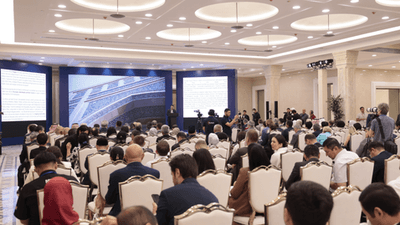
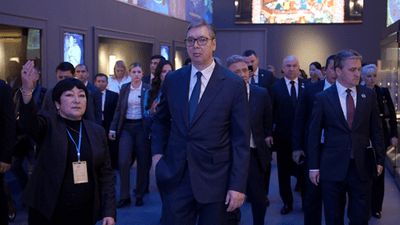
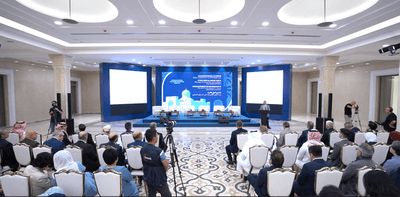
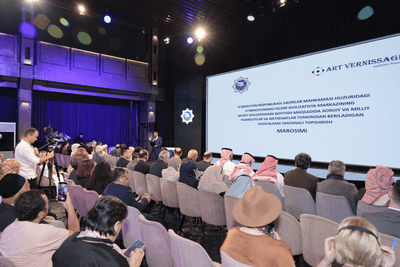
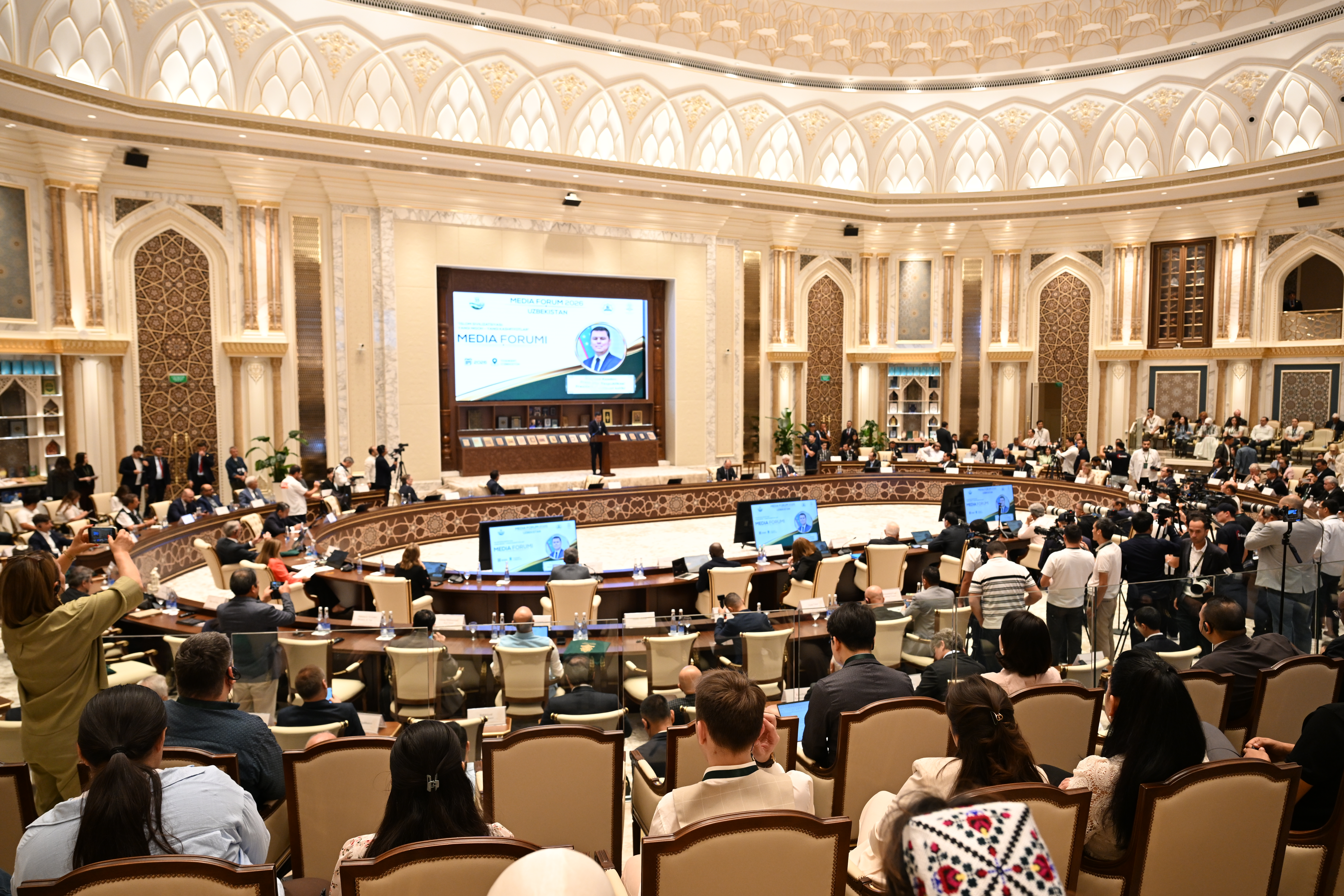 The international media forum “Islamic Civilization: New Perspective — New Discoveries” has begun its work in Tashkent. At the opening session, Sherzod Asadov, Press Secretary to the President of the Republic of Uzbekistan, delivered remarks on some of the most important challenges facing journalism today, changes in the information landscape, the potential of artificial intelligence, and the importance of presenting Uzbekistan’s rich historical heritage to the world.
Sherzod Asadov began by expressing his pleasure at welcoming the participants of the international media forum to the Islamic Civilization Center in Uzbekistan in Tashkent.
He emphasized that for an independent state, alongside political and economic sovereignty, it is equally important to be able to tell the truth about its own history and make its own voice heard around the world.
“Independence has given us the right to determine our own destiny and convey its essence to the world. In this process, the role of the media is invaluable,” Sherzod Asadov said.
The speed of information and journalistic responsibility
Today, information knows no borders. News of an event can reach millions of people within seconds. However, it was emphasized that alongside the growing flow of information, fake news, manipulation, deepfakes, and information attacks are also becoming increasingly widespread.
Therefore, one of the most important tasks facing journalism is to maintain accuracy and responsibility while ensuring timely reporting.
“No matter how much technology changes, the fundamental principles of journalism will remain truth, impartiality, integrity, and the interests of people,” the Presidential Press Secretary said.
He noted that when freedom of speech becomes a tool subordinated to political considerations, the most important principles of journalism — impartiality and credibility — are undermined. Therefore, relying on facts, reporting events objectively, and making society more open are among the key responsibilities of journalism today.
“Artificial intelligence cannot replace a journalist”
The growing role of artificial intelligence in modern journalism was also specifically addressed in the speech.
According to Sherzod Asadov, artificial intelligence will not replace journalists but will expand their capabilities.
A modern journalist is no longer simply a writer. Journalists must become versatile media professionals capable of working with storytelling, infographics, visualization, video production, editing, and digital content.
However, technological advancement does not diminish the importance of the human element in journalism. On the contrary, in the age of new technologies, understanding the truth, verifying sources, drawing objective conclusions, and safeguarding the public interest remain among the journalist’s primary responsibilities.
National media — a bridge between the state and society
Speaking about the role of journalists in society, the Presidential Press Secretary described them not merely as providers of information, but as an important link that listens to the concerns of the people, raises their problems, and conveys the voice of the public to government institutions.
“National media, serving as a bridge between the state and society, is an important force that contributes to our country’s development, protects human rights, and brings our future achievements to the attention of the world,” he said.
It was noted that as a result of reforms being implemented in Uzbekistan’s media sector, the number of media outlets has also been increasing. While 2,004 media outlets operated in the country in 2022, their number had reached 2,277 by 2024. Today, non-state media outlets account for 70 percent of all media outlets in the country.
“Islamic civilization is, above all, a civilization of knowledge and enlightenment”
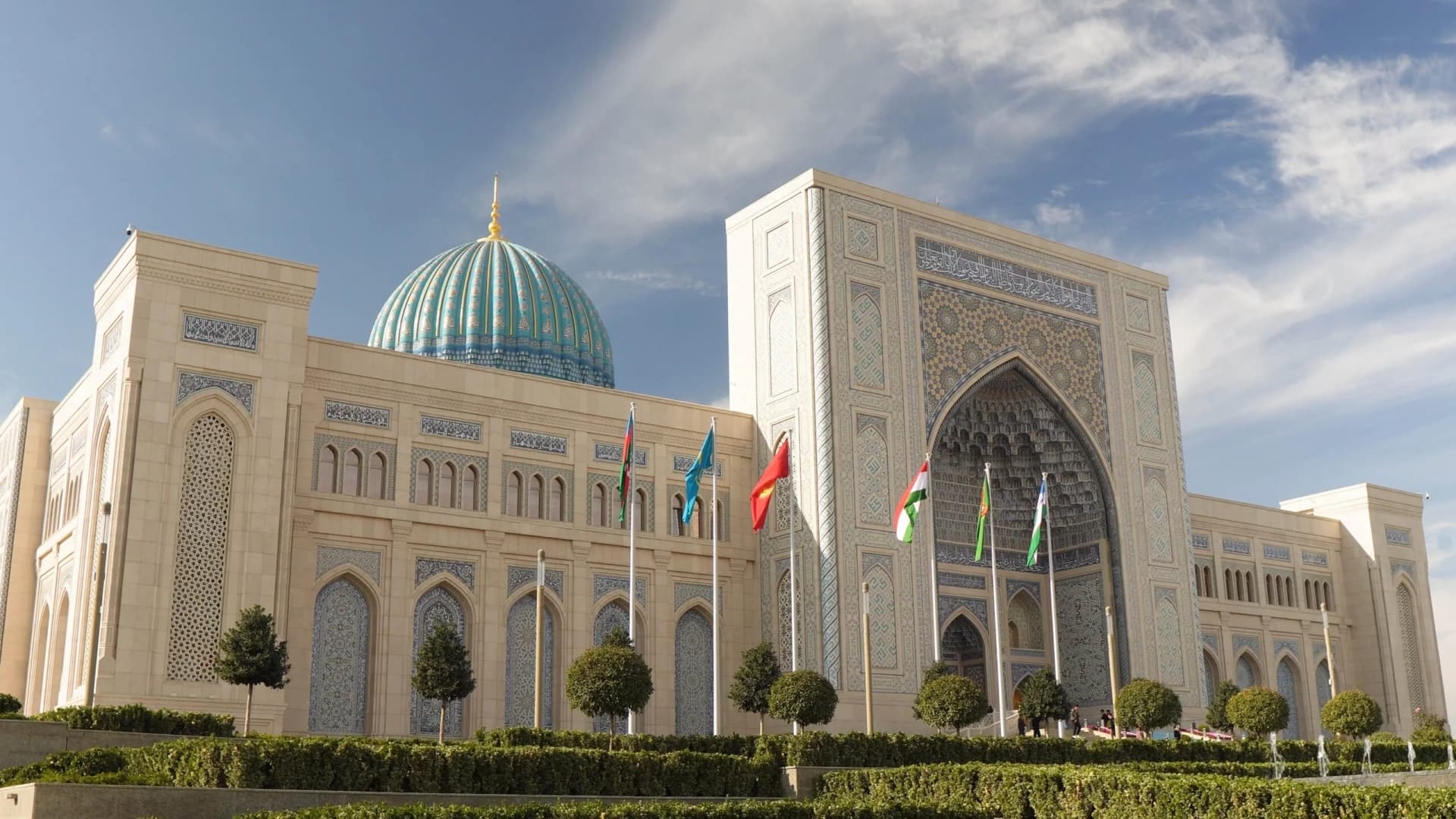
It was emphasized that holding the forum at the Islamic Civilization Center in Uzbekistan carries particular symbolic significance.
The Presidential Press Secretary noted that the Center plays an important role in introducing Uzbekistan’s millennia-old scientific and spiritual heritage to the world.
“Islamic civilization is, above all, a civilization of knowledge, enlightenment, intellectual thought, and progress,” Sherzod Asadov said.
It was emphasized that the legacy of such great scholars as Khwarizmi, Biruni, Ibn Sina, Imam Bukhari, Imam Tirmidhi, Imam Maturidi, and Mirzo Ulugbek is an invaluable treasure not only of Uzbekistan but of all humanity.
Particular attention was drawn to the close connection between historical scientific achievements and modern technologies, as exemplified by the legacy of Khwarizmi. The concept of the “algorithm,” derived from the scholar’s name, is a striking example of how this great scientific legacy continues to live on in today’s digital world centuries later.
Therefore, it is not enough simply to preserve historical heritage in museums and books. It must also be presented through modern digital formats, in a language understandable to younger generations, and communicated objectively to the international community.
“See Uzbekistan with your own eyes”
Addressing the participants of the international forum, Sherzod Asadov encouraged them to discover Uzbekistan not through preconceived stereotypes, but by visiting the country, engaging with its people, asking questions, and drawing their own independent conclusions.
“We are not simply asking you to speak positively about Uzbekistan. We invite you to see it with your own eyes, engage with people, ask questions, and draw your own independent conclusions. For us, openness is not a temporary approach, but a strategic choice,” he said.
In this sense, journalism not only disseminates information about a country but also strengthens mutual understanding and trust between peoples.
“The role of journalism is not to politicize complex issues, but to report on them objectively,” Sherzod Asadov said.
He expressed his view that the international media forum should not be seen as a one-time event, but as a platform for long-term professional dialogue, where experiences and perspectives can be exchanged and new opportunities created to present historical heritage to the world through modern interpretations.
The central idea uniting the forum participants is clear: to understand history, interpret it objectively, and pass it on to future generations through modern means.