



The legacy of Khwarizmi, Farghani, Farabi, Biruni, and Ibn Sina amazed American tourists
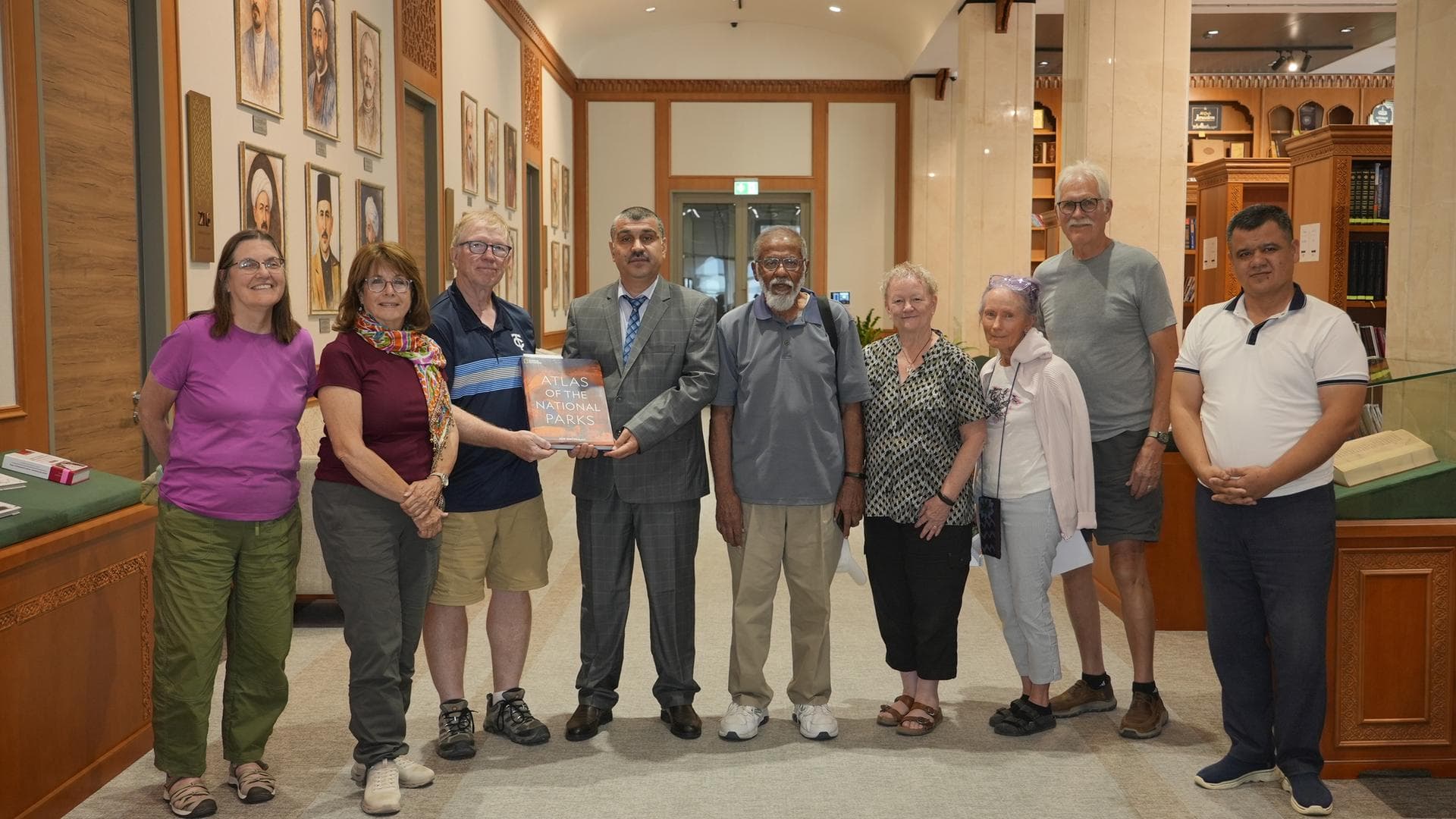
At the beginning of the visit, a special seminar was organized in the Center’s library dedicated to the legacy of five great polymaths of the First Renaissance — Muhammad Khwarizmi, Ahmad Farghani, Abu Nasr Farabi, Abu Rayhan Biruni, and Abu Ali ibn Sina.
During the scholarly discussion, participants explored the contributions of these scholars to the development of mathematics, astronomy, philosophy, medicine, and other fields, the scientific schools they established, and the influence of their knowledge on the development of subsequent civilizations.
The history of the First Renaissance was of particular interest to American tourist Dale Erickson. He noted that although the European Renaissance is widely known in the West, public awareness there of the scientific and intellectual flourishing that took place in Central Asia much earlier is still relatively limited.
“In the West, we know very little about the First Renaissance in Central Asia. We hear a great deal about the European Renaissance, but we do not fully understand the contribution of the scientific and intellectual environment that emerged in this region much earlier to subsequent development,” says Dale Erickson.
According to the tourist, the vast body of scientific knowledge created in Central Asia later spread to other regions, including Europe. However, this process did not take place over a short period; rather, it developed through the exchange of knowledge and ideas over several centuries.
“For me, it was extremely interesting and remarkable to realize that it took four or five centuries for the knowledge created in Central Asia to reach Europe. This process shows how long and complex the exchange of knowledge between civilizations was,” says the American tourist.
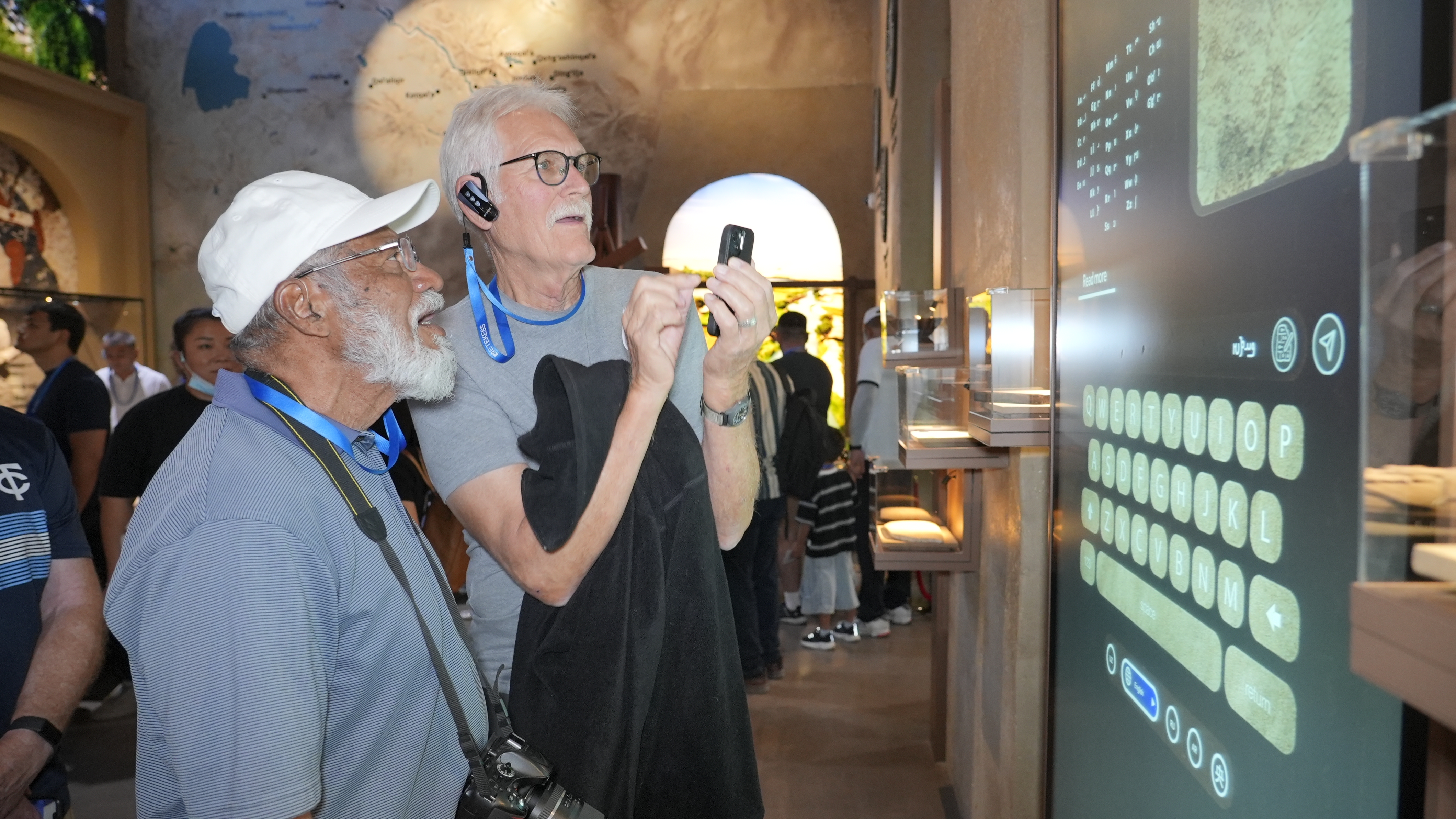
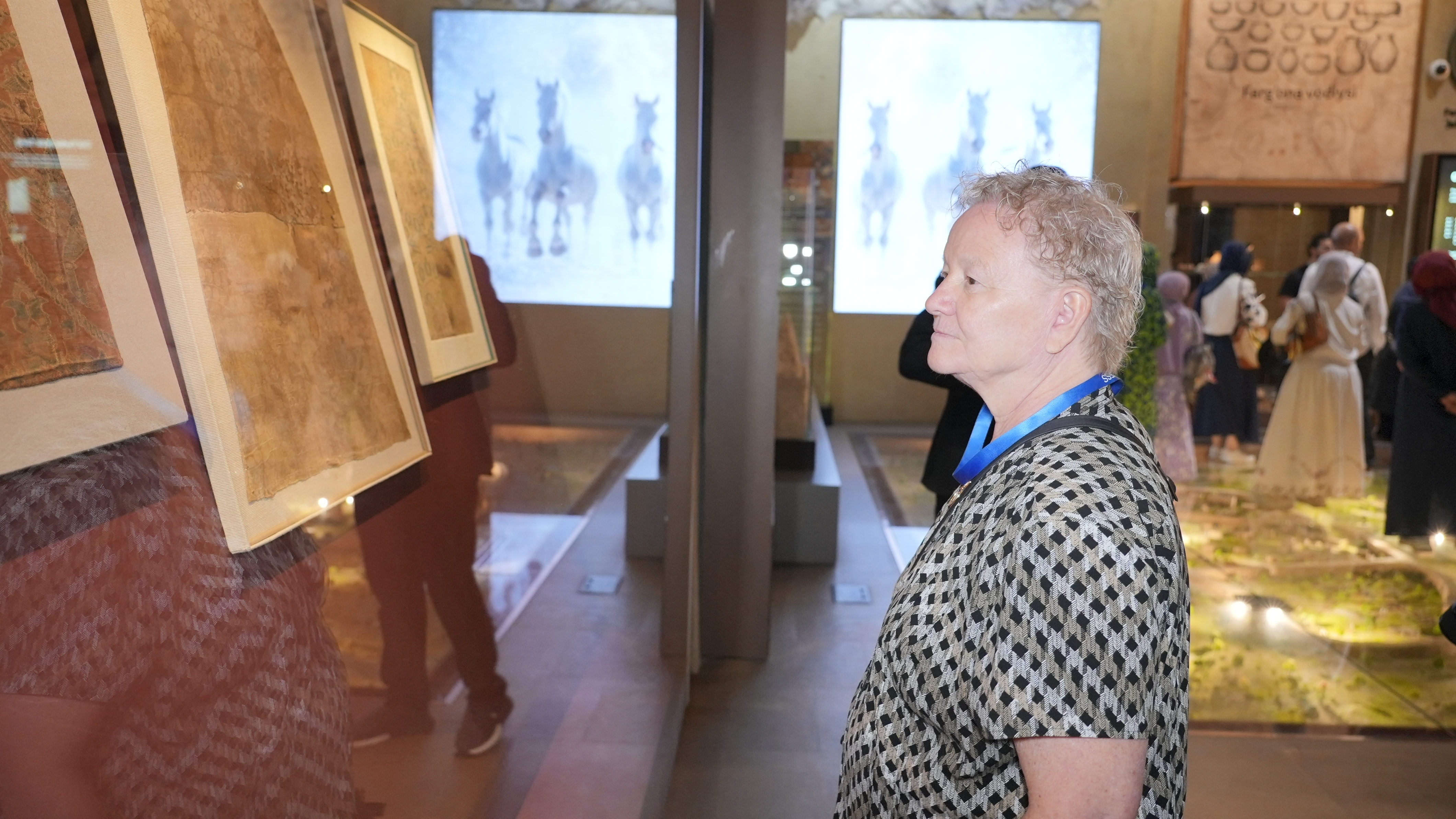 After the seminar, the guests toured the Center’s exhibitions and explored various aspects of the scientific and cultural heritage that developed in Central Asia and its connections with different historical periods and the advancement of civilizations. Historical artifacts, digital technologies, and interactive displays enabled them to understand past scientific discoveries and ideas from a modern perspective.
Dale Erickson noted that the scale of the historical and scientific heritage presented at the Center further enriched his impressions.
“Here, I saw an immense wealth of invaluable knowledge and intellectual heritage related to the history of our civilizations. It is not easy to grasp such a vast scientific legacy all at once. The Center left a very powerful impression on me. I was deeply impressed,” he said.
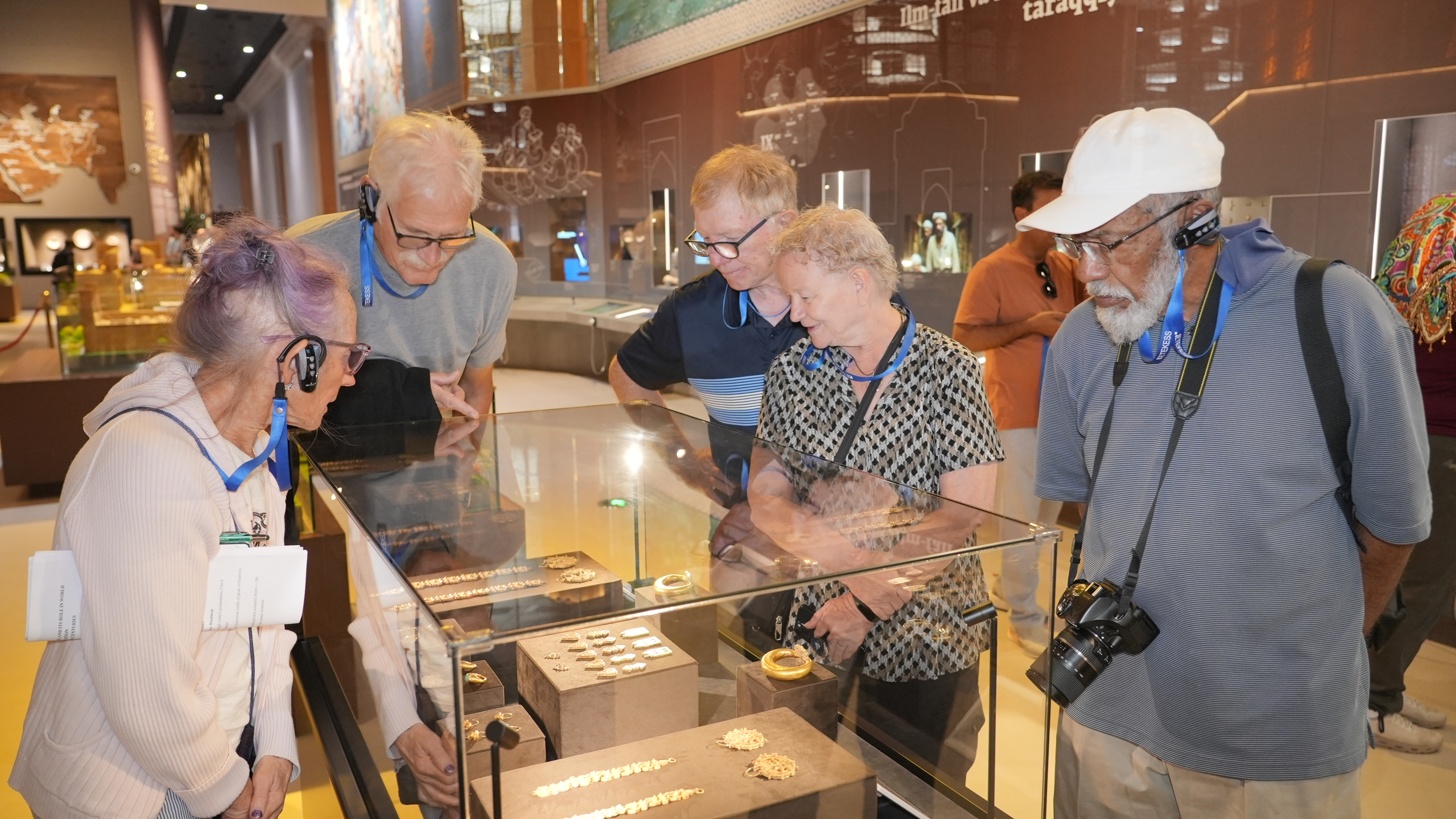
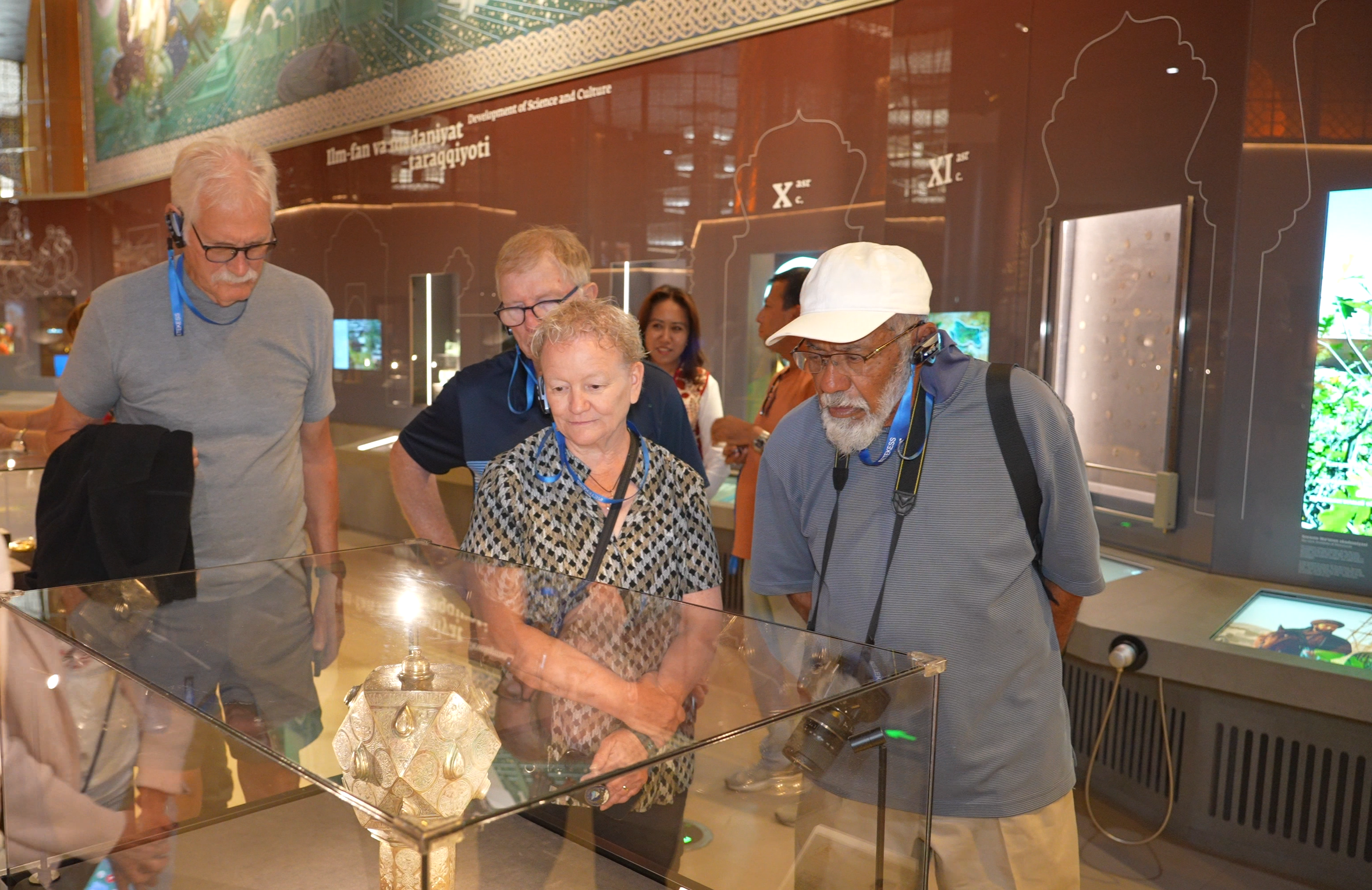 American tourist Marsha Powers particularly praised the way the Center combines historical heritage with modern museum technologies. In her view, alongside the content of the exhibitions, the way they are presented is also one of the Center’s distinctive features.
“This Center truly amazed me. The exhibits here are absolutely wonderful and beautiful. But what impressed me even more was the way the exhibitions are presented through modern videos, interactive features, and lighting systems. I have traveled to China, Japan, South America, and many other countries, but this is one of the most remarkable museums I have ever visited. It truly left an extraordinary impression,” said Marsha Powers.
The impressions of the American tourists show that the legacy of the First Renaissance continues to generate great interest among people from different countries today. The scientific heritage of such great scholars as Khwarizmi, Farghani, Farabi, Biruni, and Ibn Sina is an integral part not only of the history of Central Asia, but also of the development of global scientific thought.
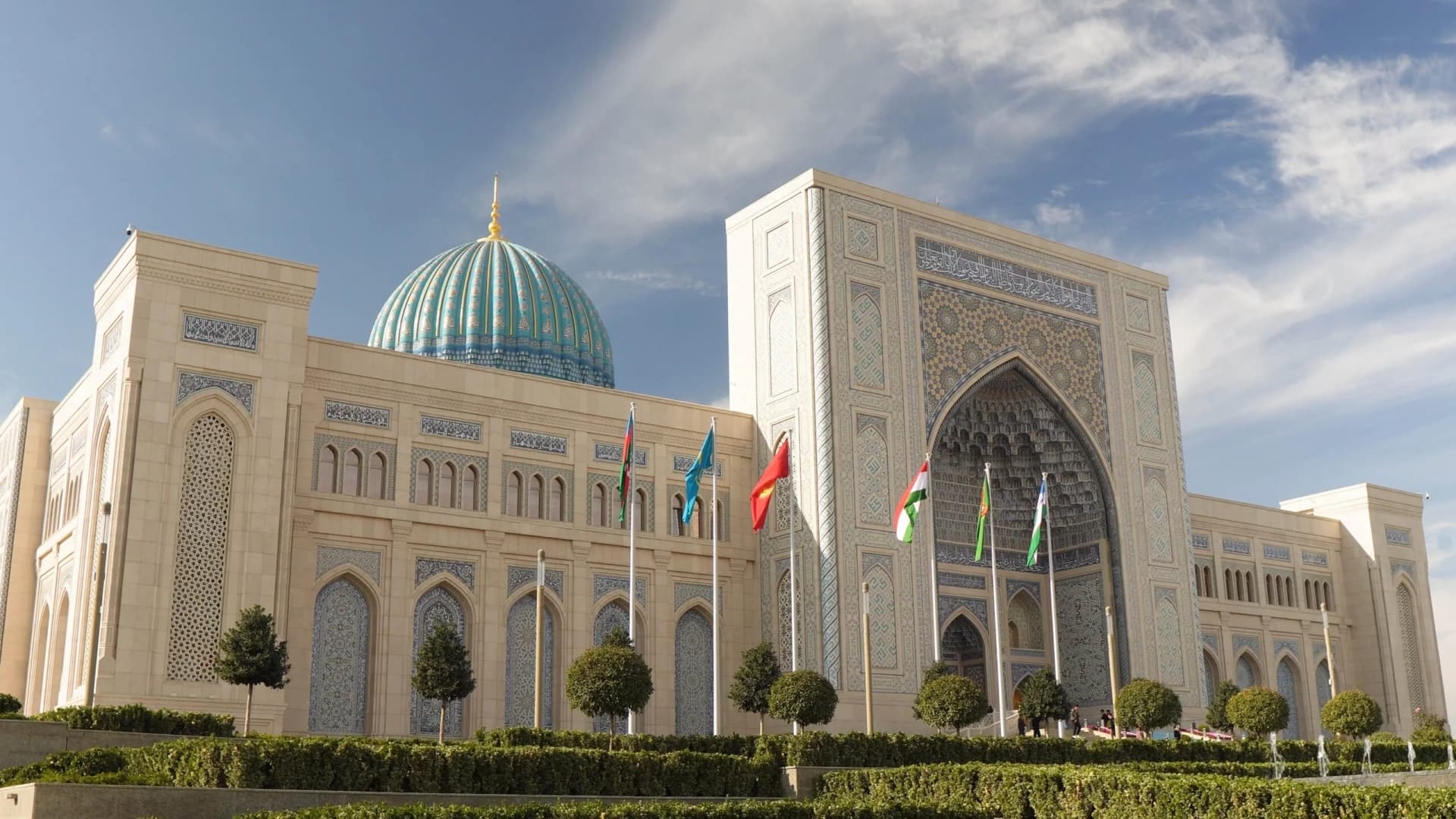
The Islamic Civilization Center in Uzbekistan presents this immense heritage to the wider public through modern exhibitions and scholarly and educational approaches. Here, history does not merely tell the story of the past — it encourages visitors from different countries to reflect more deeply on our shared scientific heritage, dialogue among civilizations, and the common intellectual history of humanity.