



Hundreds of new publications are being prepared at the Islamic Civilization Center

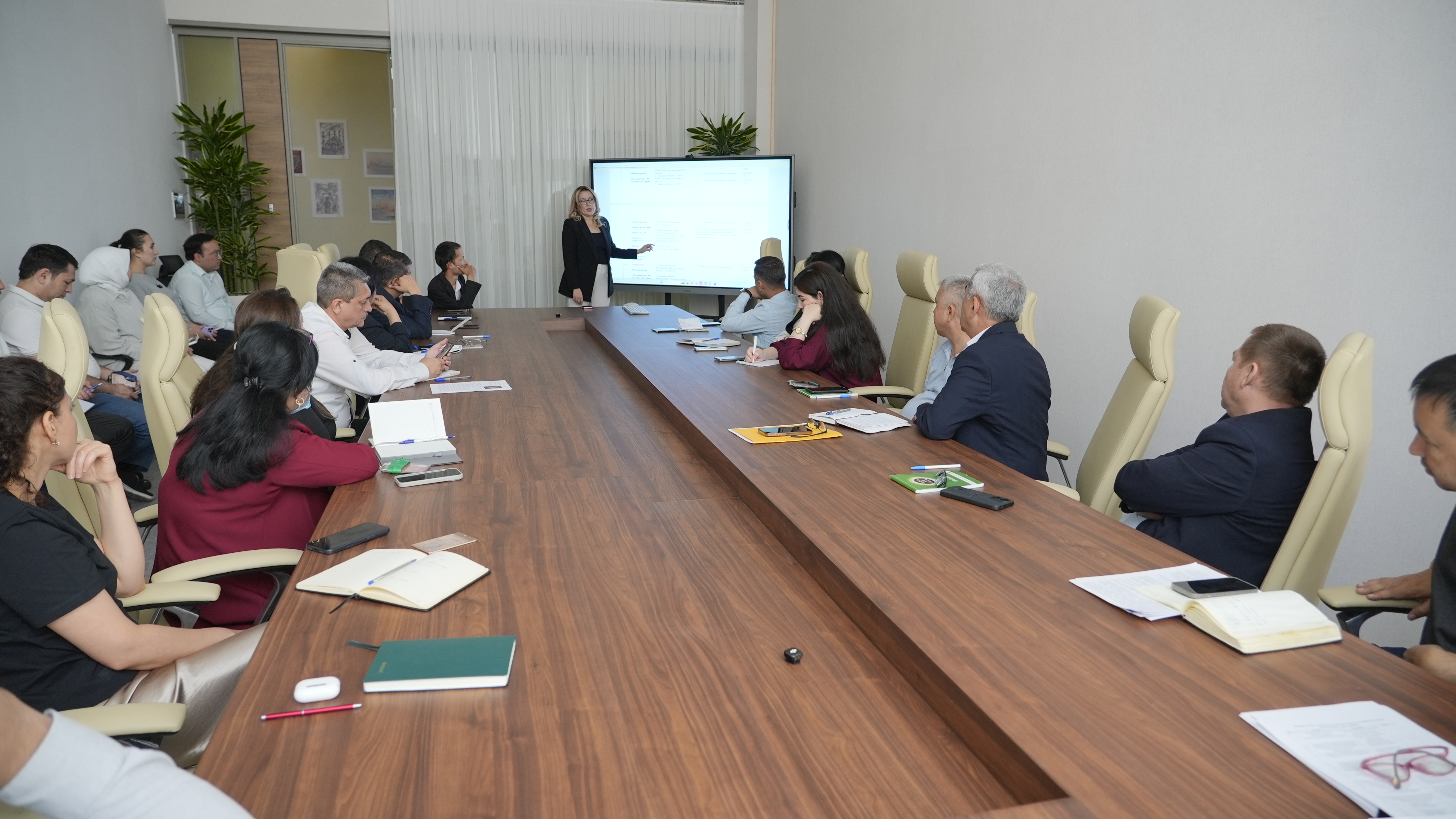
The meeting, chaired by the Center’s Director Firdavs Abdukhalikov, brought together researchers, curators responsible for publications, and working groups. Participants discussed the current status of the book-albums, catalogues, popular science publications, and other works being prepared by the Center, as well as the ongoing work on them and the next steps to be taken.
The projects included in the Center’s publishing plan cover a wide range of themes and directions. They include book-albums in the “Bridge of Eras” series, publications dedicated to international forums and congresses, book-albums highlighting Uzbekistan’s cultural heritage preserved in foreign collections, as well as publications devoted to historical figures, manuscripts, and rare copies of the Holy Qur’an.
During the meeting, the preparation status of each publication was reviewed separately. While the texts for some projects have already been finalized, layout work completed, and the publications brought to the final approval stage, other projects still require further scholarly and literary editing, translation, proofreading, design work, refinement of photographic and illustrative materials, and continued layout preparation.
Special attention was also given to preparing the publications in several languages. In particular, book-albums dedicated to the Islamic Civilization Forum and other major events within the “Bridge of Eras” series are planned to be published in Uzbek, Russian, and English.
The publications also include major projects highlighting Uzbekistan’s place in the world’s cultural heritage. These include book-albums devoted to Uzbekistan’s cultural heritage preserved in collections around the world, historical figures, maps, ceramics, metalwork, textiles, coins, and other rare artifacts.
 As a separate area of focus, publications dedicated to manuscripts and the heritage of the Holy Qur’an are also being developed. These include facsimile editions such as “100 great manuscript treasures of Uzbekistan,” “Exhibition collection of rare Qur’an manuscripts,” and “Rare Qur’ans of Uzbekistan,” as well as book-albums devoted to Qur’ans and Qur’an manuscripts from Uzbekistan.
During the meeting, the responsibilities of the curators and working groups assigned to each publication were discussed, and the importance of coordinating all stages of the process—from scholarly editing, translation, and proofreading to design, layout, and submission to the printing house—was emphasized.
At the same time, it was noted that particular attention should be paid to the accuracy of the information presented in the publications, the scholarly and literary quality of the texts, the relevance of illustrative materials to the content, the quality of translations into foreign languages, and the overall printing and production quality of the publications.
At the conclusion of the meeting, each responsible person was assigned specific tasks to ensure the timely completion of work on the publications within their respective areas, address existing shortcomings, and submit finalized materials to the management within the established deadlines.
These publishing projects being implemented at the Islamic Civilization Center in Uzbekistan are aimed at systematically documenting Uzbekistan’s rich scholarly, educational, and cultural heritage, introducing it into academic circulation, and making it accessible to the wider public as well as the international scholarly and cultural community.