




Amir Temur’s legacy in a new perspective: a new edition of “Institutes of Temur” is being prepared
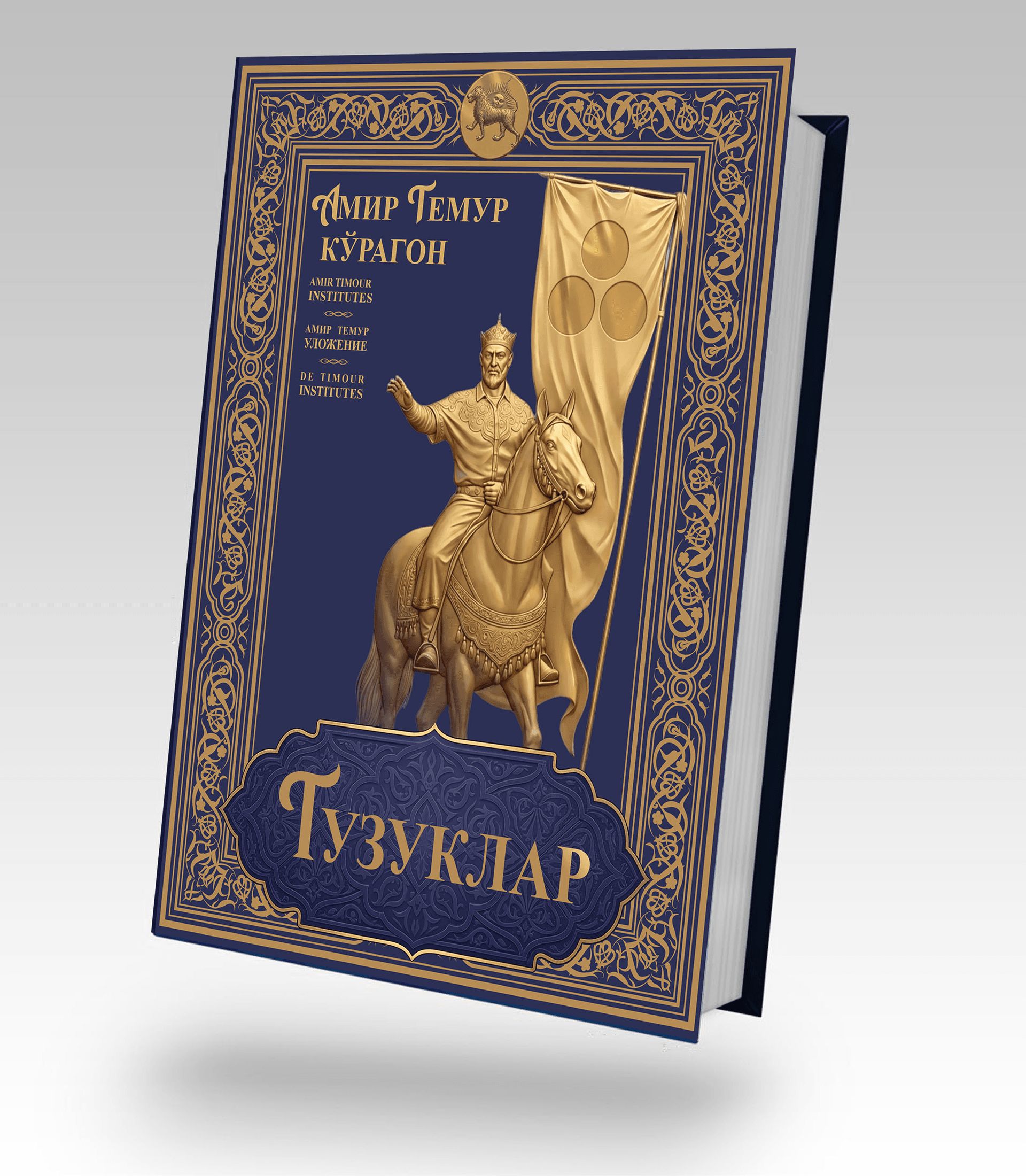
The publication is intended to present the personality of Sahibqiran Amir Temur, his views on statehood, political thought, constructive endeavors, and the principles of governance embodied in “Institutes of Temur” through a contemporary scholarly and educational approach.
The initiative to prepare a new edition of the book is in line with the Center’s efforts to conduct in-depth studies of historical and spiritual heritage, systematize it on the basis of scholarly sources, and present it to the wider public in modern formats.
A new perspective on Sahibqiran’s legacy
Amir Temur left a profound mark on history as a great statesman who holds a distinguished place in the history of Uzbek statehood. His political will, military expertise, views on state governance, diplomatic activities, and attention to science and culture have remained a focus of scholarly interest for centuries.
The new edition likewise approaches Amir Temur not merely as a military commander or the founder of an empire, but as a statesman who established a system of governance, assessed political processes from a strategic perspective, and regarded science and constructive development as key factors in the advancement of the state.
This makes it possible to understand Sahibqiran’s legacy within a broader historical and civilizational context.
Interpreting Amir Temur’s activities solely in terms of military campaigns and victories does not encompass all aspects of his historical personality and experience in statecraft. Therefore, the new edition places particular emphasis on the interrelationship between such concepts as state governance, discipline, responsibility, constructive development, education and enlightenment, and cultural progress.
“Institutes of Temur” — an important source on the tradition of statehood
One of the central themes of the publication is “Institutes of Temur”.
It encompasses views on such matters as state governance, law and order, consultation and counsel, military organization, discipline, public service, the selection of qualified officials, and the responsible fulfillment of duties.
In the new edition, “Institutes of Temur” is interpreted not merely as a historical work, but also as an important source for studying the tradition of statehood, political culture, and administrative practices of the Timurid era.
In particular, the work’s emphasis on the relationship between authority and responsibility, leadership and knowledge, and discipline and justice further enhances its educational significance.
Of course, the principles of medieval state governance cannot be directly applied to today’s political and legal systems. However, universal values such as responsibility, justice, knowledge, experience, discipline, and service to the interests of society and the state ensure that this historical legacy remains relevant to the present generation.
In this regard, the new edition will not only contribute to the study of “Institutes of Temur” as a historical document, but will also help reveal its spiritual and educational significance.
The Timurid era — a flourishing of science and culture
When discussing Amir Temur’s legacy, it is important to give particular attention to the remarkable scientific and cultural flourishing that took place during the Timurid era.
The transformation of Samarkand and Herat into major centers of science and culture, Mirzo Ulugbek’s scholarly achievements in astronomy, Alisher Navoi’s literary and intellectual legacy, the cultural environment of the reign of Husayn Bayqara, and Zahiriddin Muhammad Babur’s scholarly and literary activities all reflect different facets of the civilizational environment that developed during the Timurid period.
Therefore, studying Amir Temur’s legacy separately from the scientific and cultural development that continued under his descendants does not provide a complete picture.
The new edition likewise examines the Timurid era as a historical process closely interconnected with statehood, science, literature, art, architecture, and constructive development.
“Institutes of Temur” is an important historical source. What distinguishes the work from other books, and one of its principal features, is that the events are narrated directly in the voice of Sahibqiran Amir Temur, in the first person. Alongside fascinating episodes relating to the life and personality of the great ruler, the book clearly demonstrates how he governed the state with wisdom and intelligence and consistently supported those under his authority. In establishing and strengthening his realm, Amir Temur acted with consistency and regularly consulted scholars and ministers through mashvarat (council and consultation). Indeed, any undertaking carried out with patience, courage, vigilance, and prudence is bound to yield strong results. Recounting his own experiences, the author emphasizes that throughout his life he always acted in accordance with the principles of justice. For this reason, the ideas expressed in “Institutes of Temur” are not merely theoretical views or invented concepts, but practical experiences that proved their value in real life. Works written in this manner are rare in world history. Reading the book remains highly beneficial for today’s readers as well, with its central figure presented as an example of an ideal personality,” says Khusrav Hamidov, Senior Research Fellow at the Islamic Civilization Center in Uzbekistan.
The Islamic Civilization Center — a platform for bringing historical heritage to the modern generation
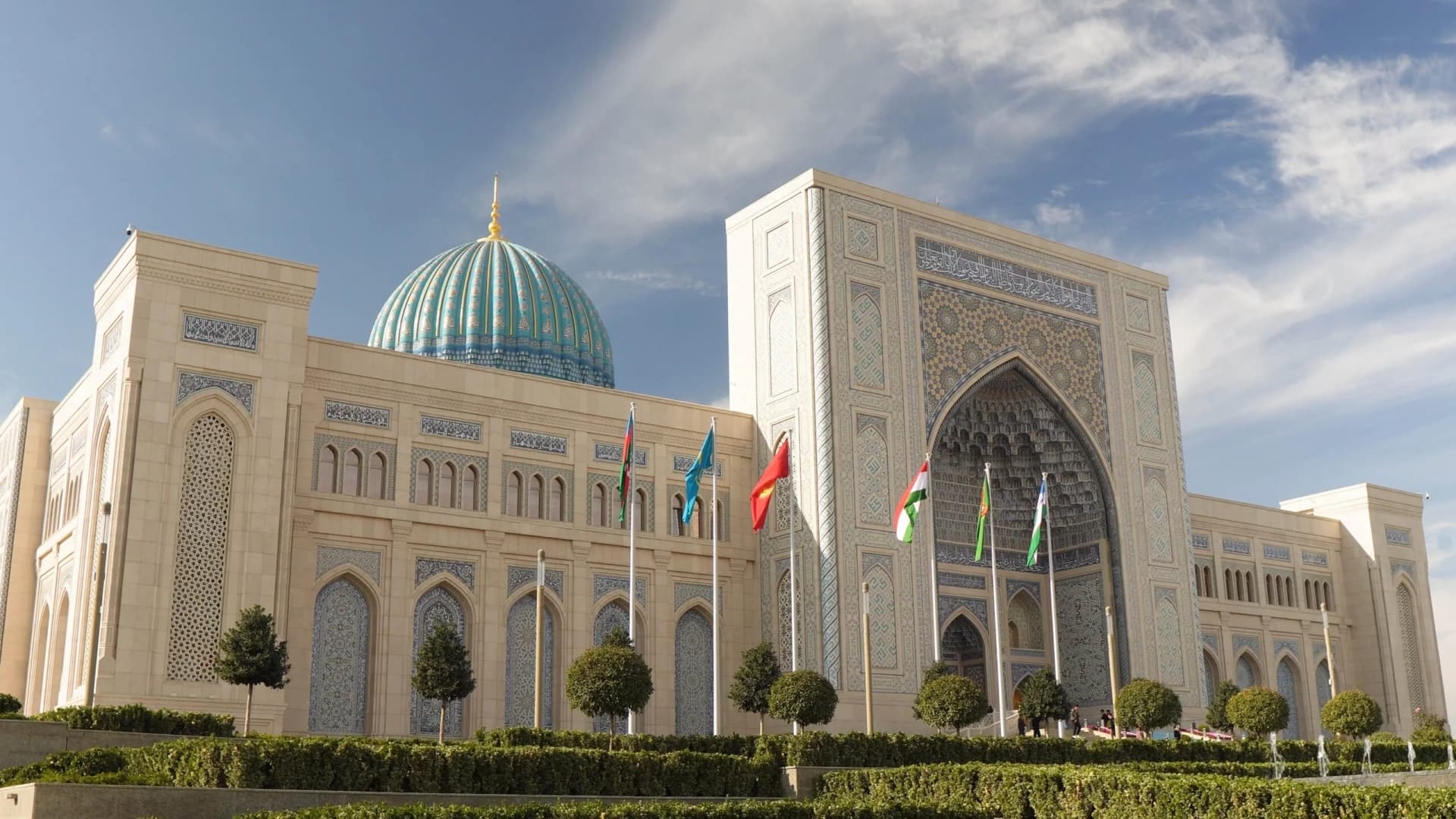
The fact that the book is being prepared in a new edition by the Islamic Civilization Center in Uzbekistan is of particular significance.
One of the Center’s principal scholarly and educational missions is to study the rich civilizational heritage formed by our people and across Central Asia, systematize it on a scholarly basis, and convey it to the modern generation through contemporary means.
The legacy of Amir Temur and the Timurids constitutes an important part of this historical and cultural process.
At the Center, historical figures, scientific achievements, manuscripts, traditions of bookmaking and calligraphy, as well as examples of architecture and art from the Timurid period are presented in an interconnected manner, making it possible to understand this era within a broader civilizational context.
In this sense, the new edition is not merely a project aimed at republishing a single book, but forms part of the Center’s broader scholarly and educational efforts to study historical heritage and make it accessible to the wider public.
From historical sources to a modern educational experience
Today, alongside preserving historical heritage, the question of how it is presented has also become increasingly important.
Modern publishing, digital technologies, multimedia, and interactive tools are creating new opportunities for conveying historical knowledge to younger generations.
The activities of the Islamic Civilization Center in Uzbekistan likewise place particular emphasis on integrating historical sources with contemporary scholarly and educational tools.
This approach is also reflected in the new edition of “Amir Temur and Institutes of Temur: the spiritual foundation of new Uzbekistan.”
New opportunities for scholarly research
Another important aspect of this publication is that it may help define new directions for scholarly research on Amir Temur and “Institutes of Temur”.
In particular, an in-depth study of the manuscript tradition of “Institutes of Temur”, its surviving copies, translations into different languages, publication history, and the source-critical issues surrounding the work can further enrich research in the field of Timurid studies.
Expanding scholarly engagement with primary sources, contemporary academic research, and international schools of Timurid studies will also make it possible to examine the history of Amir Temur and the Timurid era in a broader and more comprehensive manner.
In this respect, the new edition being prepared by the Center may be regarded not only as an educational publication intended for general readers, but also as a resource capable of stimulating further scholarly research in this field.
Historical memory and responsibility for the future
The enduring significance of the legacy of Amir Temur and the Timurids across the centuries is primarily rooted in their rich experience of statehood, scholarship, and culture.
“Institutes of Temur” serves as one of the important written sources for understanding this historical experience.
The preparation of a new edition of this book by the Islamic Civilization Center in Uzbekistan is also an important step toward reassessing historical heritage through contemporary scholarly and educational approaches and presenting it to a broad readership.
Historical memory, after all, is not merely about remembering the past. It helps us understand the experience of our ancestors, connect present-day development with historical processes, and recognize our responsibility to future generations.
From this perspective, the new edition of “Amir Temur and “Institutes of Temur”: The spiritual foundation of New Uzbekistan” once again brings Sahibqiran’s legacy into the sphere of scholarly and educational discourse.
Through this publication, the personality of Amir Temur, the scientific and cultural flourishing of the Timurid era, and the tradition of statehood reflected in “Institutes of Temur” are presented to the modern generation in a more accessible and comprehensible manner.
Most importantly, this publishing initiative undertaken by the Islamic Civilization Center in Uzbekistan is significant as a natural continuation of its broad scholarly and educational activities aimed at studying national history and spiritual heritage, promoting them on a scholarly basis, and passing them on to future generations in a worthy manner.
Durdona Rasulova
P.S.: The article may be republished with a link to the Center’s official website