


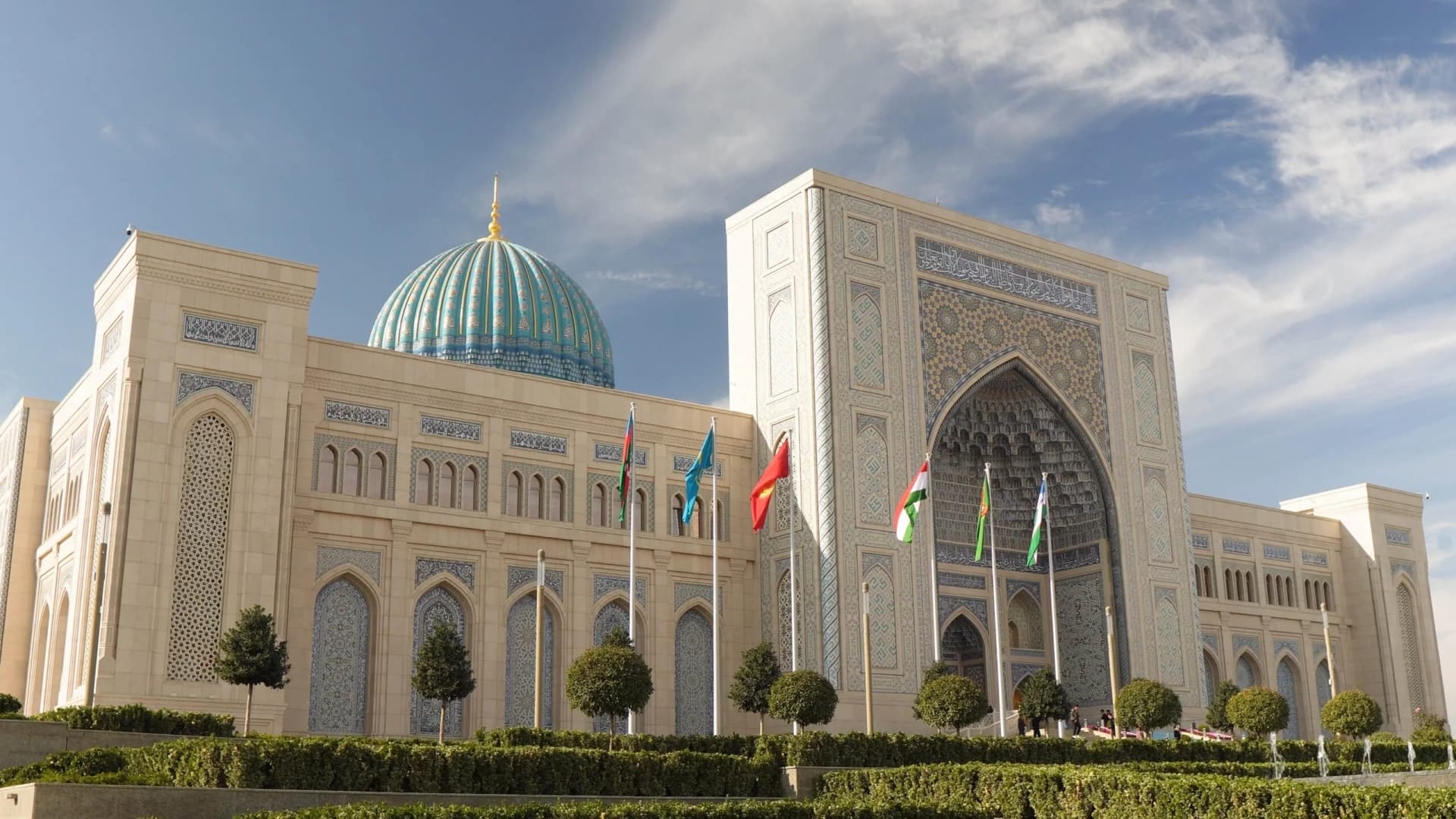


Scientific and Cultural Centers of the Era of Amir Timur and the Timurids
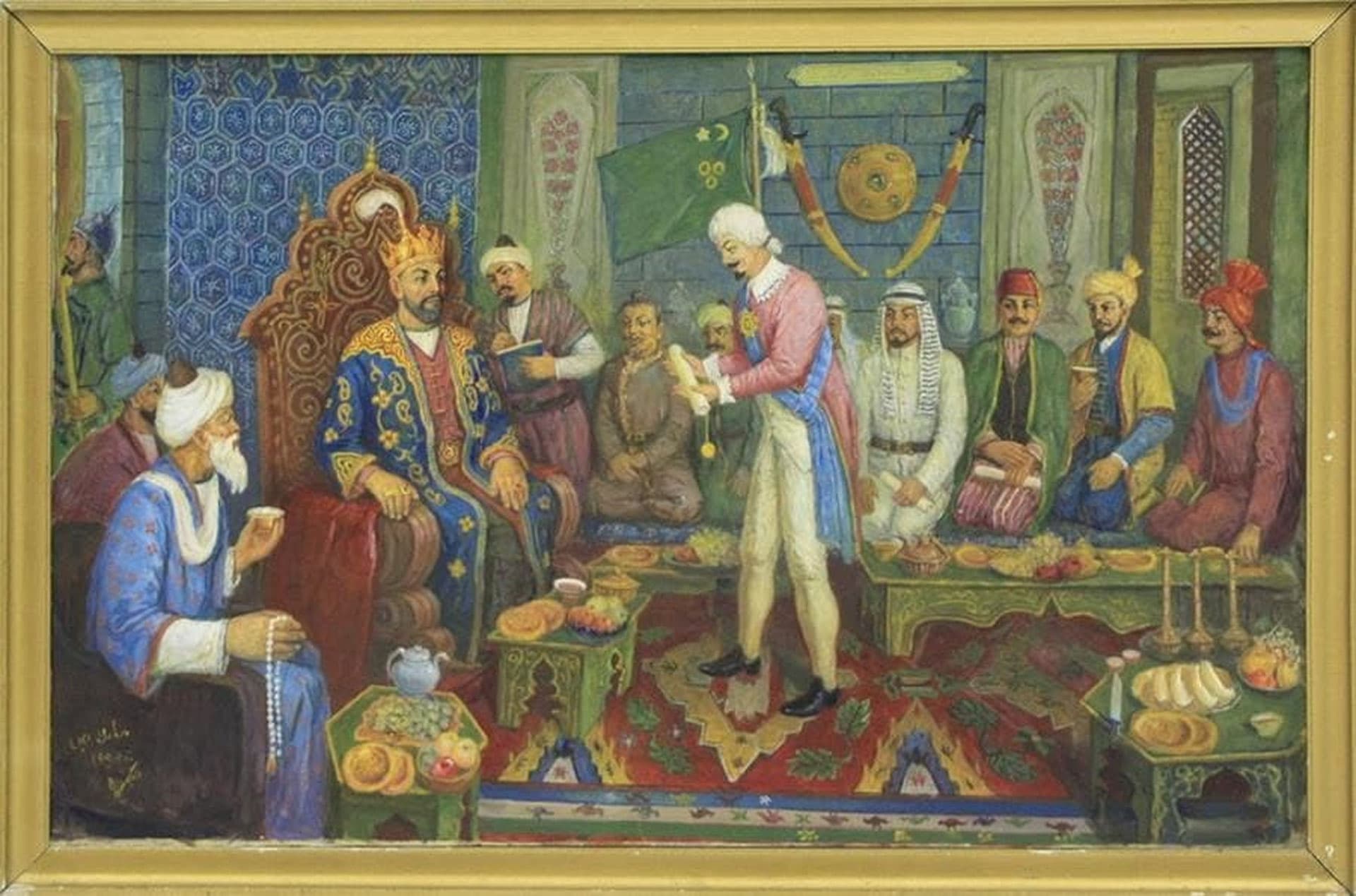
The last quarter of the 14th century and the 15th century are rightfully regarded in the history of Central Asia as a period when science and culture reached remarkable heights. This phenomenon, which entered history under the name of the Timurid Renaissance, was grounded in the constructive and intellectually driven environment that took shape during the reign of the great statesman and unparalleled commander Amir Timur and his descendants.
This article is devoted to highlighting two closely interconnected aspects of the broader national revival that began with Amir Timur and continued under his successors. These aspects are represented by the phenomenon of cultural centers and scholarly schools, which exerted a profound influence not only within Central Asia but also on a universal scale. It was precisely this phenomenon that served as one of the key driving mechanisms of the Timurid Renaissance.
Theoretical Framework
A full and adequate implementation of the stated objective requires clarifying the definitions of the concepts of “cultural center” and “scholarly or scientific school” within the historical context under consideration. The term “cultural center” generally refers to a city or region where, during a specific historical period, science, education, literature, art, and spiritual life reached a high level of development, and where favorable conditions were created for the formation of constructive values.
If further specified within the context of the Timurid era, this concept can be understood as a city or region in which the advancement of science, education, literature, art, and architecture—along with the emergence of a highly developed intellectual environment—gave rise to a center that exerted cultural influence on other regions.
During the Timurid period, such centers emerged under state patronage, in conditions of rapid economic development and social stability. These very factors fostered an intellectual environment that harmonized the activities of thinkers, scholars, writers, artists, and craftsmen.
Cities that developed as cultural centers during the Timurid period exerted influence not only on Central Asia but also on the broader intellectual and cultural processes of the entire Islamic world. In such cities, renowned madrasas, rich libraries, magnificent architectural complexes, and a vibrant literary environment were harmoniously integrated.
In this sense, the cultural centers of the Timurid era constituted a system of major cities that fulfilled the functions of generating well-founded knowledge, shaping constructive cultural and spiritual values, and disseminating them across vast regions.
The concept of a “scholarly school,” in turn, refers to an intellectual environment formed in a specific historical period by researchers and thinkers operating in particular fields of knowledge, based on a teacher–student (master–disciple) tradition, a shared scholarly methodology, and common academic traditions. Such schools were typically established and sustained in major and influential cities.
In brief, a scholarly school is an intellectual milieu grounded in a shared scholarly tradition and a teacher–student system, formed within prominent urban centers. As a result of the cultural environment created during the Timurid period, a number of scholarly schools emerged in major cities. Based on the political, economic, and cultural potential of these cities, they can be systematically classified.
Main Part
The empire established by Amir Timur gained renown not only for its military and political power, but also for its policy aimed at the development of science, education, culture, and the arts. During this period, cities such as Samarkand, Shahrisabz, Bukhara, Herat, Balkh, Shash (Tashkent), Mashhad, and others under the rule of this dynasty became truly prominent cultural centers. Let us briefly consider them.
Samarkand. During the lifetime of Amir Timur, Samarkand was rebuilt as the capital of the empire: numerous mosques, madrasas, and libraries were constructed, and scholars and craftsmen from various countries were invited to the city—some of whom were brought as a result of Sahibqiran’s military campaigns. Among them were prominent theologians, scholars, and artists such as Saad ad-Din Taftazani (1322–1390), the author of the renowned work “Sharh al-‘Aqa’id”; Ibn al-Jazari (1350–1478), a leading scholar of tajwid and an authority on the ten canonical qira’at (Qur’anic recitations); and Mir Ali Tabrizi (14th century), a celebrated calligrapher and artist known as the founder of the nasta‘liq script. The ruler showed particular respect for people of knowledge and created favorable conditions for their work. Major structures erected during this period, including the Bibi-Khanym Mosque and the Gur-e Amir Mausoleum, were not only magnificent architectural monuments but also played an important role in enriching the city’s cultural and spiritual environment.
During the reign of Sahibqiran, Samarkand became one of the world’s leading centers of learning, which laid the foundation for the formation of influential scholarly schools in the city. Representatives of various fields of knowledge gathered here and conducted scientific research. This active intellectual life intensified even further under the rule of the prominent Timurid ruler, Mirzo Ulughbek.
The observatory built in Samarkand by Ulughbek, together with the madrasas constructed in this city as well as in Bukhara and Gijduvan, formed a distinctive academic system. Indeed, these institutions not only trained scholars but also served as centers for scientific research. At the Ulughbek Observatory in Samarkand, as well as in the specially established library for research and in the madrasa, such eminent scholars as Qazizoda Rumi, Ghiyath al-Din Jamshid al-Kashi, and Ali Qushji were active, making significant contributions to astronomy and mathematics. The work Zij-i Jadid-i Guragani became the crowning achievement of Ulughbek’s astronomical school, holding universal significance.
Sources also mention that Amir Timur’s palace in Samarkand housed a rich library containing valuable manuscripts, including rare scientific treatises, historical chronicles, and philosophical and religious works. However, the exact fate of these manuscripts after Amir Timur’s death remains unknown to this day. Nevertheless, a number of hypotheses have been proposed by historians.
According to the most widespread of these hypotheses, the books from the library were distributed among the educational institutions established by Sahibqiran’s successors. In this regard, particular reference is made to the scientific center founded by Mirzo Ulughbek—his observatory and madrasas—as well as to the madrasas of Herat. Proponents of this view argue that the manuscripts from Amir Timur’s library became an integral part of the scientific infrastructure of the Timurid state and were largely placed at the disposal of scholars of the Samarkand astronomical school. Indeed, the complex celestial research conducted at the observatory required a strong scholarly foundation.
According to representatives of a second hypothesis, as a result of the political changes that took place in the 15th–16th centuries, part of the manuscripts was taken abroad, some were dispersed into private collections, and others were distributed among local madrasas and religious centers, and so on.
According to another hypothesis, part of the manuscripts from Amir Timur’s collection was transferred to the cultural institutions of the Ottoman Empire. After the conquest of Istanbul in 1453, the Ottoman state paid considerable attention to identifying manuscripts preserved in various parts of the Islamic world and consolidating them in the imperial center. As a result, it is highly likely that some manuscripts created during the Timurid period found their way into the Topkapi Palace Library and madrasas in Turkey.
Shahrisabz. Among the cultural centers of the Timurid period, it occupied a special place. The key factors that defined this status can be classified as follows:
Political factor. As the birthplace of Amir Timur, the city was one of the important political centers. The ruler paid particular attention to its development, considering it one of his main strongholds.
Architectural factor. Numerous major architectural structures were built in Shahrisabz, including such grand complexes as Ak-Saray, Dorus-Saodat, and Dorut-Tilovat. These monuments reflected the city’s rich cultural and spiritual essence.
Scholarly and educational factor. Shahrisabz was home to many madrasas, mosques, and other religious and educational institutions. Prominent scholars, jurists, and thinkers were active there, making the city one of the leading centers of learning of its time. In the sources, it is referred to as “Qubbat al-‘ilm wa al-adab” (the “Dome of Knowledge and Literature”).
Dynastic cradle factor. As the place of origin of the Timurid dynasty, Shahrisabz was revered as a sacred site, which further elevated its cultural status.
Geographical and economic factor. Located in the Kash (Kesh) oasis, Shahrisabz stood at the crossroads of important trade routes and in a region with developed agriculture. These features contributed to its economic stability and enhanced its cultural significance.
Bukhara. During the Timurid period, it retained its status as one of the major scientific and cultural centers of Central Asia. The city’s high standing in this era was shaped by the following key factors:
Ancient scholarly and educational traditions. Bukhara had long been one of the principal centers of learning in Central Asia, and this status was preserved during the Timurid period. The city was home to numerous scholars, hadith experts, and jurists, and hosted educational institutions— including higher madrasas—specializing in religious and spiritual studies, social sciences and humanities, as well as exact and natural sciences. As a result, Bukhara functioned as a regional hub of scholarship and education.
Religious and spiritual factor. From the early Islamic period, Bukhara developed renowned schools in hadith, fiqh, theology (‘aqida), and Sufism. It produced outstanding scholars such as Abu Hafs al-Kabir, Imam al-Bukhari, Mustamli al-Bukhari, and Ibn Sina. Bukhara maintained its high religious and spiritual status during the Timurid era as well.
Architectural development. During the Timurid period, many mosques, madrasas, and other public buildings in the city were restored, and new ones were constructed. The Po-i Kalyan complex is among the notable examples. Such architectural monuments enhanced the city’s cultural and spiritual prestige.
Trade and economic factor. Bukhara was located along one of the main routes of the Great Silk Road and itself functioned as a major center of trade.
During the reign of Amir Timur and the Timurids, its international trade and economic role increased even further. Merchants, travelers, scholars, and craftsmen arriving from various countries enriched the cultural life of the city.
Scholarly environment and the teacher–student tradition. The madrasas of Bukhara fostered a strong intellectual environment based on the master–disciple system. This environment contributed to the development of religious sciences—hadith, kalam (theology), fiqh, and Sufism—as well as the social sciences, humanities, and fields such as medicine.
The Library of Muhammad Parsa (1348–1420). During the Timurid period, a major public library was established by this renowned Sufi scholar, a prominent representative of the Naqshbandiyya order and one of the closest disciples of Bahauddin Naqshband.
Muhammad Parsa was an outstanding scholar who harmonized knowledge and Sufism. He was born and raised in Bukhara, later carried out his activities in Balkh, where he passed away and was buried.
Book production and the art of miniature. During this period, Bukhara became one of the important centers for these artistic traditions. Although it did not reach the level of Samarkand and Herat in manuscript production, it remained one of the leading centers in Transoxiana for the creation of handwritten books. The manuscripts produced here were generally free from excessive ornamentation and elaborate decoration, consisting mainly of educational texts written in a clear naskh script (often referred to as Bukhara naskh) suitable for madrasa use, as well as poetic collections copied in nastaʿliq script. The Bukhara school of miniature largely followed the Herat tradition while adapting it to local tastes, which led to the emergence of a distinct Bukhara miniature style. In short, Bukhara was not so much a “capital of artistic refinement” based on calligraphy and miniature, but rather an intellectual and educational center of manuscript culture.
Owing to these factors, Bukhara’s position as one of the most important scientific and cultural centers of Central Asia was firmly consolidated.
Herat. This city, which became the crown jewel of the cultural achievements created during the Timurid period, flourished in the 15th century. In some sources, Herat is even described as the center of the Timurid Renaissance. It flourished during the reigns of Shahrukh Mirza (1409–1447) and Sultan Husayn Bayqara (1469–1506). Shahrukh made Herat the capital. His wives, Gawharshad Begum and Mulkat Agha, commissioned numerous mosques and madrasas in Khorasan and were notable patrons of scholarship and culture. This cultural hub reached its peak especially during the reign of Sultan Husayn Bayqara (1469–1506).
Within this environment, a multifaceted intellectual milieu took shape, integrating various fields such as literature (Alisher Navoi, Husayn Bayqara, Abdurahman Jami, and others), the arts (the miniature school of Kamal al-Din Behzad), historiography (Mirkhond (1433–1498), author of Rawzat al-Safa—“The Garden of Purity,” Khwandamir (1475–1534), and others), and book production (scribes and artisans associated with the library of Baysunghur Mirza).
Alisher Navoi, who was active in this milieu, was a great representative of Turkic literature, an influential statesman, a patron of culture, and a thinker who made an immense contribution to the development of literature and the arts. During this period, the renowned scholar and thinker Abdurahman Jami was also active in Herat.
Within this environment, literature, historiography, visual arts, and the schools of miniature painting reached remarkable heights. As a result, Herat became one of the most important artistic centers of the Islamic world at that time.
Balkh. One of the greatest cities of the ancient world, which had a population of up to one million during the flourishing of the Great Silk Road and served as the capital of Khurasan in the 8th century, was devastated during the Mongol invasions. During the Timurid period, however, the city experienced a new phase of revival in its history. From the late 14th century, under Timurid rule, the irrigation system began to be restored, residential areas were rebuilt, and the population gradually returned.
Situated at a key crossroads connecting Khurasan, Transoxiana, and India, Balkh, during the reign of Shahrukh Mirza, became a regional religious and spiritual center within Khurasan. One of the defining features of the city was its strong orientation toward Sufi orders, particularly evident in the Naqshbandi tradition. The prominent leader of this order, Muhammad Parsa (1348–1420), lived in Balkh for a considerable period and held the status of a spiritual guide (pir-murshid).
Mashhad. In the late medieval period, this city—located in present-day Iran and under the rule of the Timurids—served as the capital of Khorasan and was a major cultural and religious center. Its high social and spiritual status was primarily associated with the shrine of Ali ibn Musa al-Rida (Imam Reza, 770–818), the eighth Imam of Twelver Shi‘ism and a descendant of the Prophet Muhammad (peace be upon him), who is deeply revered by both Shia and Sunni Muslims. Expanded during the Timurid era, the city became one of the largest pilgrimage centers in the Islamic world.
During the Timurid period, numerous madrasas, caravanserais, and mosques were built in the city. Among them, the mosque commissioned in 1418 by Gawharshad Begum—the wife of Shahrukh Mirza—is highly revered as a masterpiece of Islamic architecture, distinguished by its magnificent turquoise dome, exquisite muqarnas mihrab, and delicate mosaic decoration. Its grand portal is adorned with epigraphic inscriptions executed by Baysunghur, the son of Shahrukh Mirza and Gawharshad Begum, making it one of the finest examples of Timurid architecture. Thanks to the efforts of prominent scholars from Khorasan, this mosque also became an important center of learning and enlightenment.
Mashhad, which developed around the shrine of Imam Reza, although not a political capital like Samarkand or Herat, embodied great spiritual significance as a sacred city. The number of pilgrims visiting it reached 10–15 million annually, and the city’s religious and spiritual atmosphere spread throughout the Muslim world through these visitors. Consequently, Mashhad was consistently supported and patronized by the Timurid rulers.
Shash (Chach). During the time of Amir Timur and the Timurids, it developed rapidly as a frontier fortress (outpost). The city served as a commercial bridge with the steppe population, facilitating trade and cultural exchange between sedentary and nomadic communities, and became a center of craftsmanship. Unlike Samarkand and Herat, it had relatively few monumental architectural structures. Instead, it was characterized by numerous residential buildings and markets adapted to the needs of everyday life.
Nevertheless, military structures were reinforced, urban infrastructure was developed, and great attention was given to Islamic traditions: many mosques and madrasas operated in the city, and its connections with other centers of learning and culture were strengthened.
Although Shash (Tashkent) was considered one of the secondary cities, it possessed a distinctive cultural character. The Timurid rulers paid it considerable attention. Amir Timur ordered the reconstruction of the shrine of Zangi Ata (Oy Khoja), who lived in the 12th–13th centuries, in the late 14th century, transforming it into an architectural complex.
The restoration and development of such pilgrimage sites helped strengthen relations between the state and the population, while close ties with Sufi leaders facilitated the integration of Shash into Amir Timur’s empire. During the Timurid period, this complex retained its status as an important religious center and became a key part of the spiritual landscape of the Tashkent region.
In the late 14th and early 15th centuries, other major cities that were briefly part of Amir Timur’s empire—such as Shiraz, Isfahan, and Tabriz—were renowned as centers of Persian-language poetry and culture. However, their period under Timurid rule largely lasted only until the death of Amir Timur.
It is also possible to identify shared characteristics that unified the cultural centers of the Timurid period. These features manifested across various fields. For example, the main characteristics of the highly developed architecture of the Timurid era included the construction of monumental domes, the widespread use of intricate geometric patterns as a standard artistic tradition, the extensive application of colorful glazed tiles, and the introduction of refined symmetry in design.
These features are clearly reflected in the architectural monuments built in Samarkand, Shahrisabz, Herat, Shash, and other cultural centers, which stand as vivid examples of Timurid architecture.
During this period, the art of miniature painting—rapidly developing in Samarkand, Herat, Bukhara, Shiraz, Tabriz, and other regions—also embodied the distinctive features of these and other cultural centers, serving as one of the key directions that enriched and interconnected them. This art form is particularly noteworthy for spanning vast territories from Central Asia to Iran and South Asia (especially during the Mughal period).
Conclusion
- The creative and intellectually vibrant environment that developed in the scientific and cultural centers of the Timurid period occupies an important place in the history of world civilization. The rapid progress observed in fields such as astronomy, mathematics, literature, historiography, architecture, visual arts, and manuscript production influenced other regions, including Europe. The scholarly traditions that emerged in these areas resonated not only across Central Asia but throughout the entire Islamic world. Therefore, the study of the scientific and cultural centers of the Timurid era is essential not only for understanding the history of Central Asia, but also for gaining a deeper insight into the multifaceted nature of global civilization.
- Each of the scientific and cultural centers that developed within the Timurid Empire was distinguished by its own unique character and specialization. Samarkand excelled in science—particularly astronomy—as well as in architecture; Shahrisabz was renowned for architecture and court culture; Bukhara became a center of theology and education; Herat flourished in literature, miniature painting, and manuscript production; Balkh stood out in theology, especially Sufism; and Mashhad emerged as a center of religious pilgrimage. All of these factors collectively exerted influence on neighboring regions.
- The influence of the Timurid Renaissance, which emerged during the reign of the Timurid dynasty in the 14th–15th centuries, manifested in Europe in the following ways:
In the field of science: The Zij-i Sultani, produced as a result of the activities of the Ulugh Beg Observatory, contained precise coordinates of more than 1,000 stars. This knowledge reached Europe through the Ottoman Empire and Iran. It contributed to accelerating the European Renaissance (15th–16th centuries) and advanced the development of astronomy during the time of Nikolay Kopernik (1473–1543).
In miniature painting, geometric ornamentation, and calligraphy: Information about specialized schools in these fields spread to Western Europe through Venice, Genoa, and Turkey. Their influence was reflected in the decorative patterns and ornaments of the European Renaissance, as well as in textile production, fostering a growing interest in “Oriental” aesthetics.
In the field of diplomacy: Through diplomatic exchanges between Europe and the court of Amir Timur—particularly via the accounts of Ruy González de Clavijo —the perception of Samarkand as a center of prosperity and culture became firmly established in Europe. This strengthened European interest in the East and contributed to the pursuit of new routes and geographical discoveries.
- The processes described above were largely indirect, meaning they reached Europe through the Ottoman Empire, Iran, and international trade networks. According to researchers, without the scientific and cultural influence of the Timurid period, the European Renaissance would have emerged in a poorer form and at a slower pace.
- The fact that many manuscripts from the Timurid era are today preserved in major libraries and museums in cities such as Istanbul, London, Paris, and Saint Petersburg serves as clear evidence of the Timurid Renaissance’s impact beyond its original region. The study of how these works “traveled” to such centers remains an important task for relevant academic institutions, including the Islamic Civilization Center in Uzbekistan.
- The scientific and cultural heritage of the Timurid period, which made a significant contribution to world civilization, continues to be a multifaceted phenomenon and remains an important subject for new scholarly research.
Zahidulla Munavvarov, Chief Researcher at the
Islamic Civilization Center in Uzbekistan, Doctor of Political Sciences, Professor