



Representative of the Islamic Civilization Center participated in an international conference in Almaty
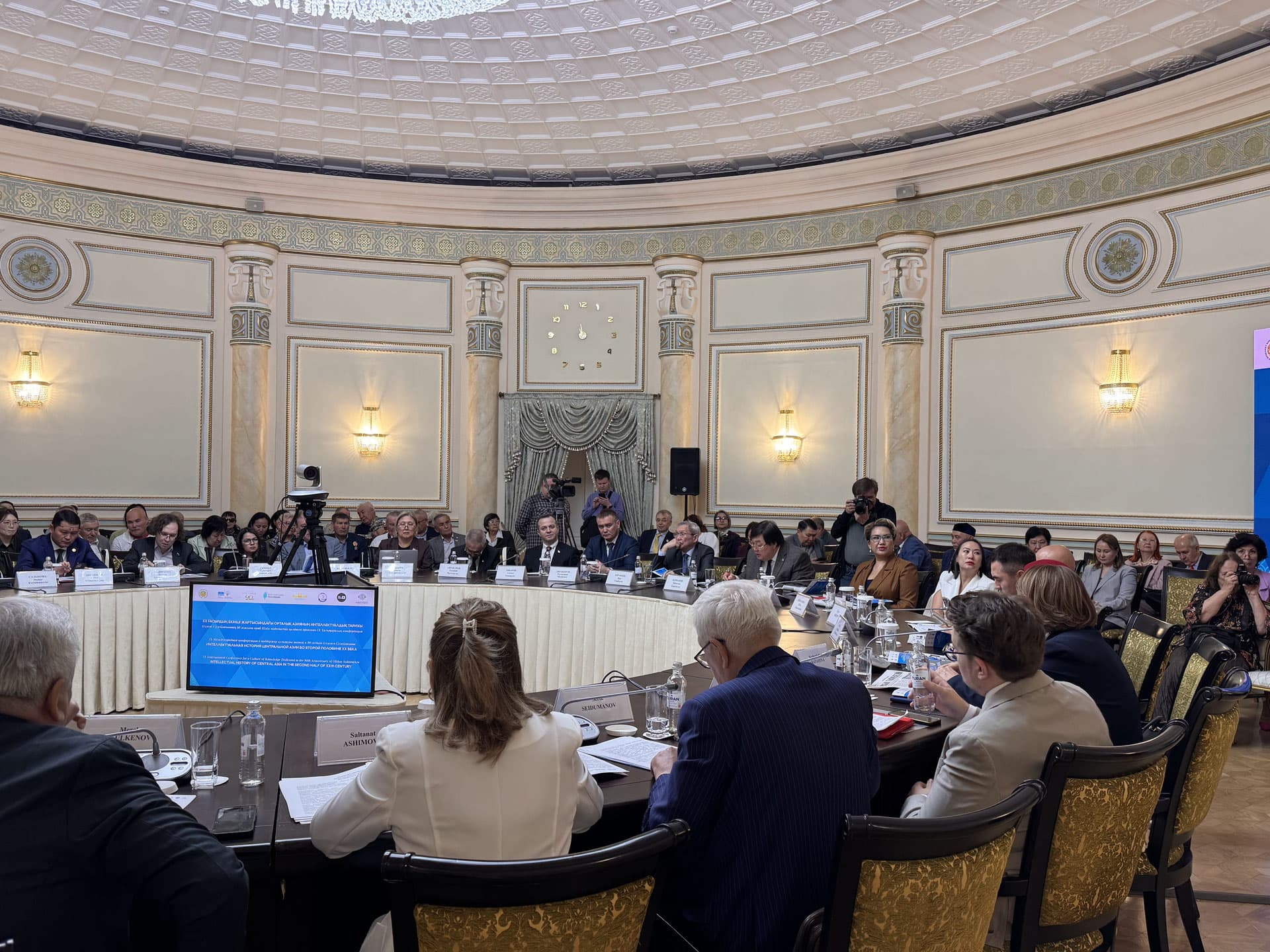
Dedicated to the 90th anniversary of the birth of Olzhas Suleimenov, an outstanding son of the Kazakh people, renowned poet, writer, scholar, and public figure, this prestigious conference became an important international platform for discussing the study of the intellectual and cultural heritage of the peoples of Central Asia, the contemporary interpretation of the traditions of scientific and philosophical thought that developed in the region, and their transmission to future generations.
The conference was organized by the International Center for the Rapprochement of Cultures under the auspices of UNESCO, with the support of the Ministry of Culture and Information of the Republic of Kazakhstan. The event brought together scholars, literary critics, historians, philosophers, journalists, public figures, and representatives of the education sector. In particular, specialists from Kazakhstan, Uzbekistan, Kyrgyzstan, Azerbaijan, Türkiye, Russia, and Tajikistan took part.
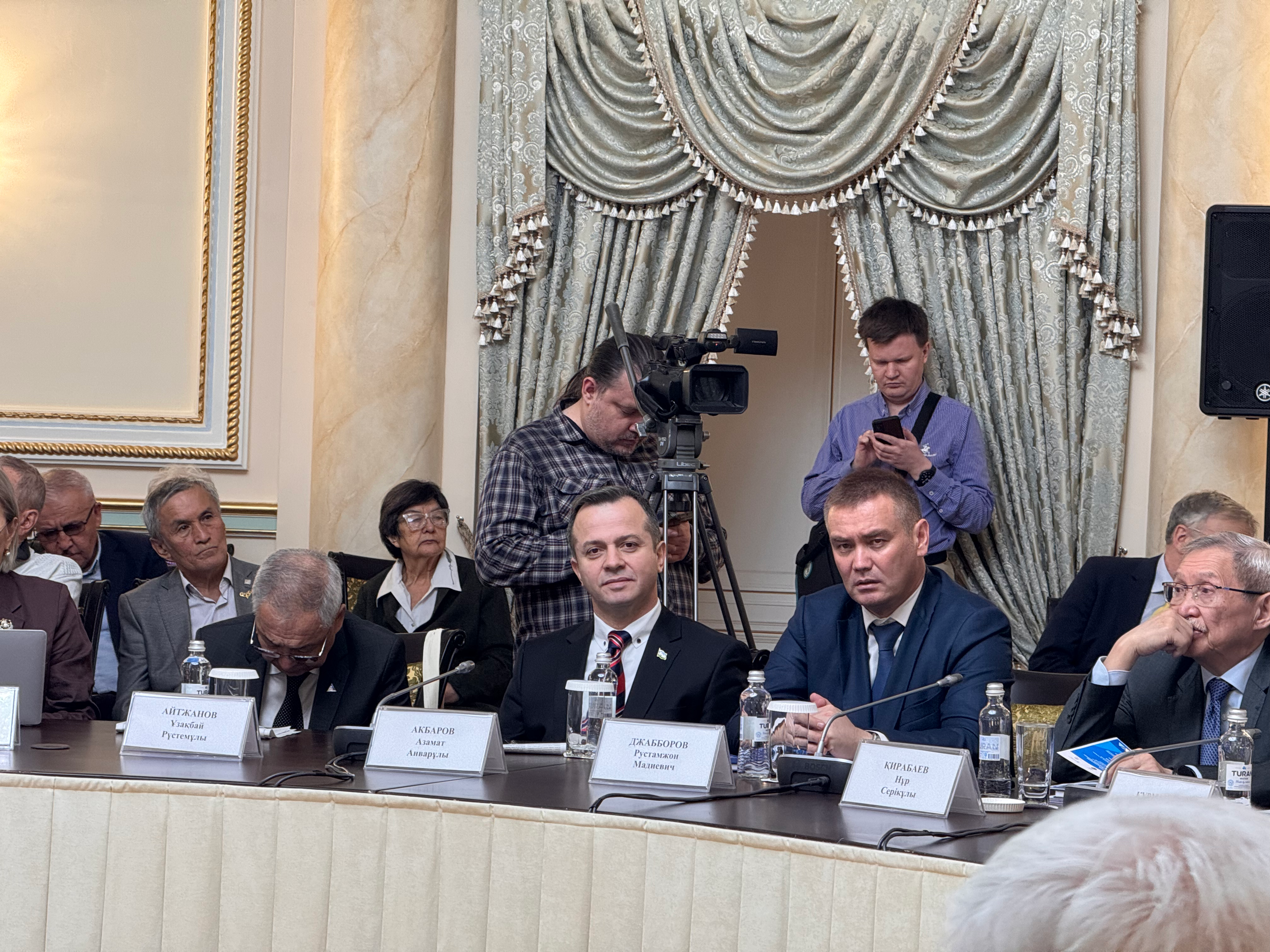 At the conference, Rustam Jabborov, Scientific Secretary of the Islamic Civilization Center in Uzbekistan, delivered a presentation titled «The theme of Turkic-Islamic civilization in the works of Olzhas Suleimenov».
The presentation examined the works of Olzhas Suleimenov not merely as a literary phenomenon, but as a major intellectual legacy that contributes to understanding the shared historical memory of the peoples of Eurasia, the interaction of languages and cultures, and the centuries-old relations between the Great Steppe and Islamic civilization.
In his presentation, Rustam Jabborov drew attention to one of the most important ideas in the works of Olzhas Suleimenov — the need to view the history of peoples and civilizations not in isolation from one another, but as a continuous process of dialogue and mutual influence.
In particular, using the writer’s famous work «Az i Ya» as an example, it was emphasized that relations between Rus’ and the Great Steppe were not limited solely to confrontation and military conflicts, but also involved trade, political alliances, kinship ties, bilingualism, and cultural exchange.
The presentation also placed particular emphasis on the role of Turkic peoples in the development of Islamic civilization.
From the 10th–11th centuries onward, as the Turkic world embraced Islam, it also began to play an active role in its scholarly, spiritual, and cultural development. During the Karakhanid period, such great works as Yusuf Khass Hajib’s «Qutadghu Bilig» and Mahmud Kashgari’s «Diwan Lughat al-Turk» were produced. The interaction of Arabic scholarly traditions, the Persian literary environment, and Turkic language and thought gave rise to a distinctive Turkic-Islamic cultural synthesis.
In this regard, the presentation emphasized that Turkic peoples were not an external or secondary element within Islamic civilization, but rather one of its major formative and creative forces.
Cities such as Kashgar, Balasagun, Bukhara, and Samarkand became major centers of scholarship, trade, craftsmanship, literature, and spiritual life. Madrasas, libraries, caravanserais, and trade routes established by Turkic dynasties facilitated not only the movement of people, but also the circulation of books, knowledge, and ideas across vast regions.
The presentation also highlighted the era of Amir Temur and the Timurids as an important stage in the history of Turkic-Islamic civilization.
Using the image of Amir Temur in the poetry of Olzhas Suleimenov as an example, the presentation examined the interaction between the histories of East and West, as well as the question of assessing historical figures from the perspectives of different civilizations. It also particularly noted that during the Timurid period, Samarkand became a major cultural and scholarly center, while the scientific school of Mirzo Ulugbek and the literary legacy of Alisher Navoi elevated Turkic language, literature, and scholarship to a new level of development.
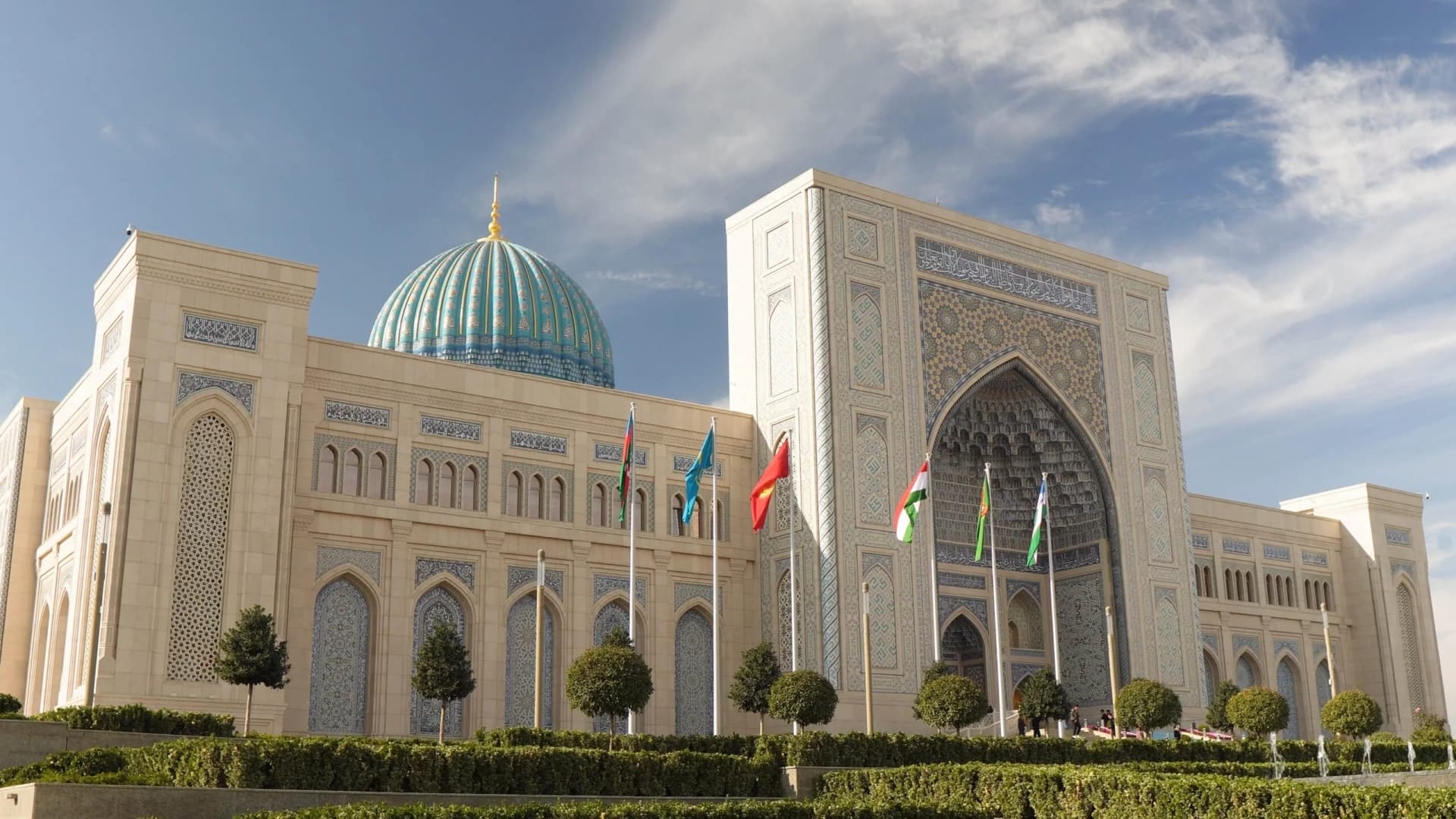
One of the important parts of the presentation was devoted to the activities of the Islamic Civilization Center in Uzbekistan, established in Tashkent at the initiative of President of the Republic of Uzbekistan Shavkat Mirziyoyev.
The initiative to establish the Center was put forward in 2017, with one of its main objectives being the in-depth study and broad promotion of the millennia-old history of our people, the contribution of our great ancestors to world civilization, and their rich cultural and intellectual heritage. In official presidential communications, the Center has also been described as a major educational and cultural complex that brings together Uzbekistan’s science, education, culture, and historical memory.
As emphasized, the mission of the Center is not limited to displaying rare manuscripts, books, and historical artifacts. It also provides broad opportunities for the scholarly study of the universal values of Islamic civilization, research into the heritage of great scholars, cooperation with foreign academic institutions, the organization of international conferences and forums, and the transmission of historical heritage to the modern generation.
In this context, it was emphasized that Olzhas Suleimenov’s ideas of studying the histories of peoples not in isolation but in their interconnectedness, and of revealing the centuries-old dialogue between cultures rather than setting them against one another, are closely aligned with the goals and objectives of the Islamic Civilization Center in Uzbekistan.
Great cultures have never developed in isolation. They have always been in dialogue with one another, learning from and enriching each other. The works of Olzhas Suleimenov repeatedly bring us back to this truth, — Rustam Jabborov said in his presentation.
According to him, an objective study of the role of Turkic peoples in Islamic civilization makes it possible to gain a deeper understanding of the shared scholarly and cultural heritage of all the peoples of Central Asia.
The conference participants emphasized the need to continue studying the literary, scholarly, and philosophical legacy of Olzhas Suleimenov, to integrate it more widely into educational processes, and to further advance the international study of the intellectual heritage of Central Asian thinkers. As part of the conference, the first educational reader titled «Introduction to Olzhas Studies» was also presented.