


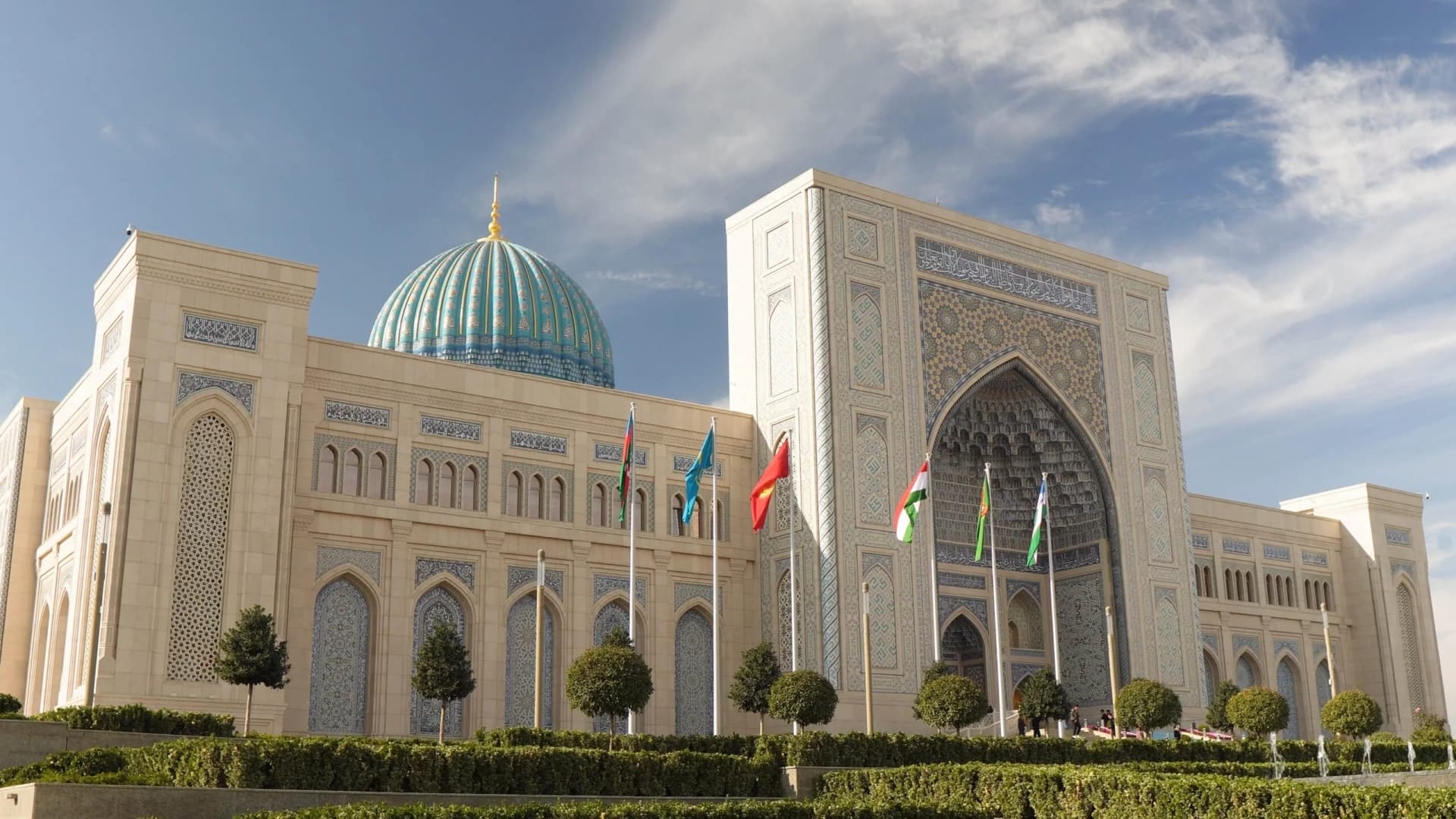


Historical sources and scholarly heritage: the future of nearly 130 publications discussed at the Islamic Civilization Center

At the beginning of the meeting, the Center’s Director, Firdavs Abdukhalikov, warmly congratulated the teachers and scholars working at the Center on October 1 — Teachers and Mentors Day.
In his congratulatory remarks, special emphasis was placed on the important role of teachers and scholars in advancing science and education, ensuring the continuity of national scholarly traditions, conducting in-depth research into historical and cultural heritage, and passing this legacy on to future generations. The Director of the Center wished the teachers and scholars good health, new achievements in their academic work, and outstanding results.
The meeting then proceeded to discuss the main items on the agenda.
As noted, the publishing projects being implemented at the Islamic Civilization Center constitute one of the key areas of the Center’s scholarly and educational activities. Therefore, each stage of preparing and publishing a book requires a high level of responsibility in order to ensure its scholarly value, accuracy, and substantive quality.
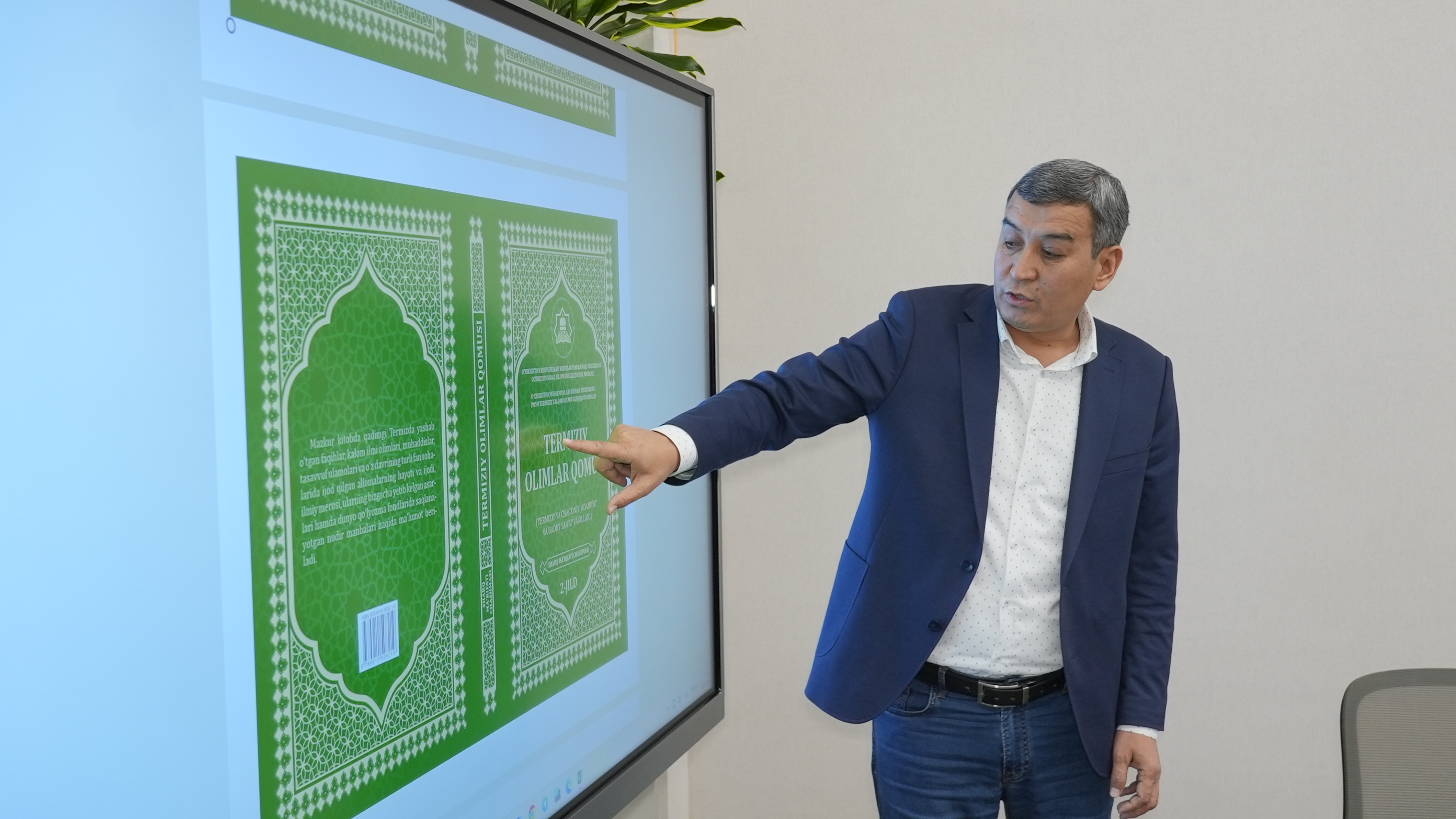 Detailed information on each of nearly 130 publications was reviewed during the meeting. In particular, reports were presented on the level of preparedness of the books scheduled for publication at the end of 2026 and in 2027, their authors, translators in the case of translated works, editors, and academic editors.
The meeting also discussed the need to clearly designate those responsible for each publication, ensure the high-quality organization of translation and editing work, and improve the process of working with source materials.
The Islamic Civilization Center, established at the initiative of our esteemed President, should develop not only as a place that showcases our historical and cultural heritage, but also as a major scholarly and educational platform that brings together academic research and educational activities. Therefore, we must approach every book published by the Center with the highest level of responsibility. Each publication must be academically rigorous, based on reliable sources, and of the highest standard in terms of editing and translation. Most importantly, it must present our national scholarly heritage to the modern generation in a worthy manner, — said Firdavs Abdukhalikov, Director of the Center.
 Particular attention was also given to the selection of publishing houses, the organization of the printing process, and tender procedures. It was emphasized that each book must be submitted to a special tender in accordance with the established procedure and sent for publication based on the results of the tender.
At the same time, the importance of having each publication reviewed by a special commission of the Islamic Civilization Center prior to printing was noted. It was determined that a book may proceed to the publication stage only after the commission has issued its relevant conclusion and decision.
Special attention should be paid to the scholarly content of the work, the accuracy of historical facts, the reliability of the sources used, the quality of the translation, the standard of editing, and ensuring that the text is free from spelling errors.
During the discussions, particular emphasis was placed on strengthening modern scholarly approaches in preparing historically and academically significant works for republication.
In particular, it was noted that special introductory sections should be prepared for the publication of such important sources as Amir Timur’s «Temur Tuzuklari» (The Code of Timur), Ruy González de Clavijo’s account of his journey to Samarkand, and Mirzo Ulugbek’s «Zij-i Jadid-i Kuragoni».
It was emphasized that these introductory sections should cover not only the history of the works and their scholarly significance, but also reflect new studies, academic research, and recent discoveries made in recent years.
In particular, in preparing a new edition of «Zij-i Jadid-i Kuragoni» (The New Guragan Astronomical Tables), it was stressed that greater attention should be given to recent research related to Mirzo Ulugbek’s scholarly legacy, as well as to the findings of studies being conducted in Uzbekistan and abroad.
The meeting also discussed the introduction of recently identified sources into scholarly circulation. In particular, it was noted that new information related to Alishah Khwarazmi Bukhari’s «Bustonul-munajjimiyn» should be reflected in academic publications.
In preparing «Temur Tuzuklari» for publication, it was also stated that particular attention should be paid to the Turkic translations of the work. Specifically, it was emphasized that the Turkic translation produced in Khujand in the second half of the nineteenth century should be included in the publication.
The meeting also considered the republication of the scholarly heritage of prominent scholars who made major contributions to the development of science and culture in Uzbekistan. In particular, it was emphasized that the academic works of such renowned scholars as Pugachenkova, Rtveladze, and Hamid Sulaymonov should be prepared for republication and supplemented with special introductory sections based on contemporary research.
This approach is intended not only to preserve scholarly heritage, but also to make it a more accessible and meaningful resource for a new generation of researchers. At the same time, integrating historical works with contemporary academic research will help reveal their relevance and significance for the present day more fully.
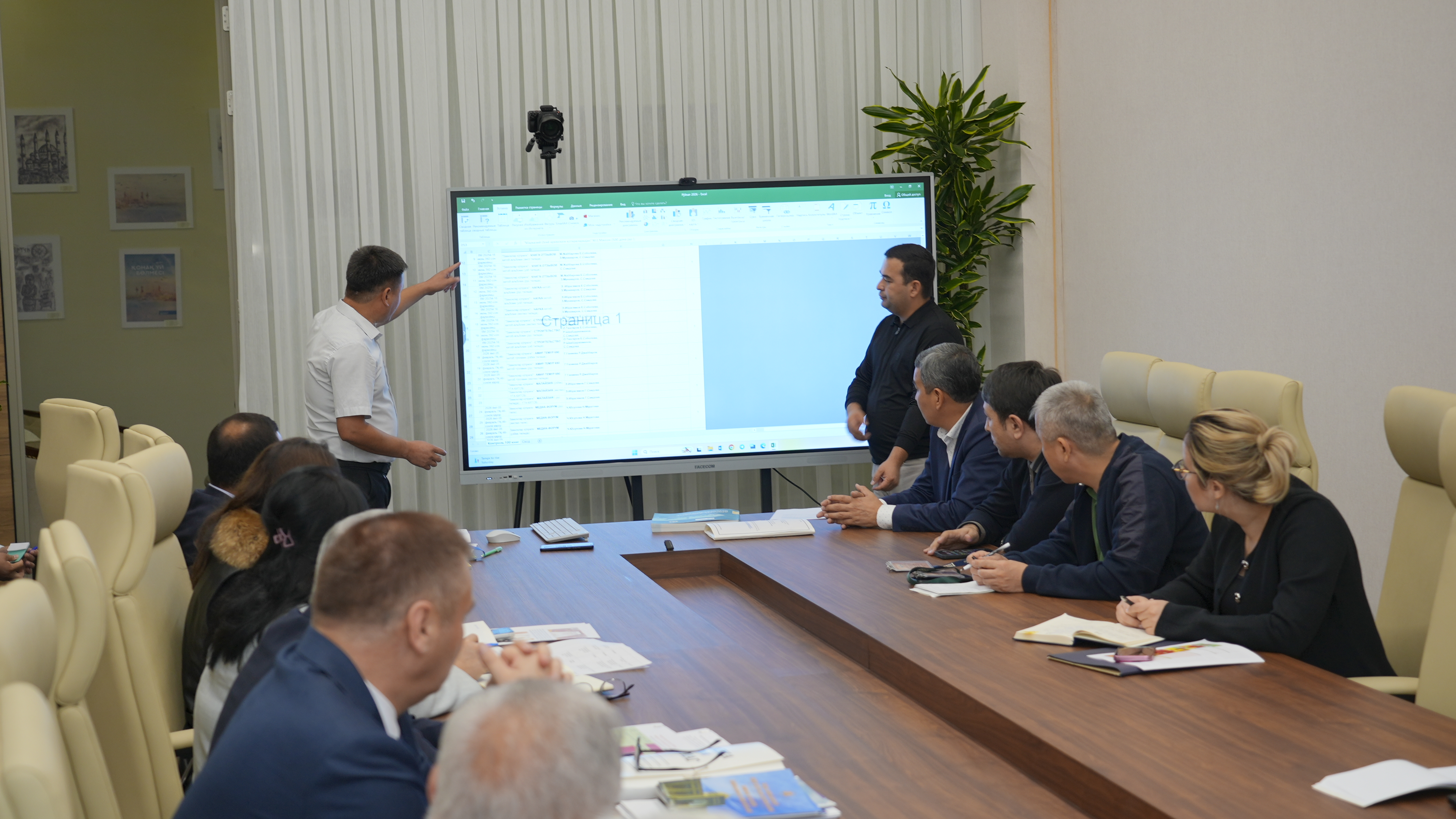 At the conclusion of the meeting, specific tasks were assigned to those responsible for each publication. The next steps were clarified with regard to preparing the books, subjecting them to scholarly and editorial review, submitting them to the special commission, organizing tender procedures, and forwarding them for publication.
Thus, systematic work is continuing at the Islamic Civilization Center to prepare nearly 130 publications in accordance with high scholarly and editorial standards, enrich historical sources with the findings of new research, and present the national scholarly heritage to the wider public and the international academic community.