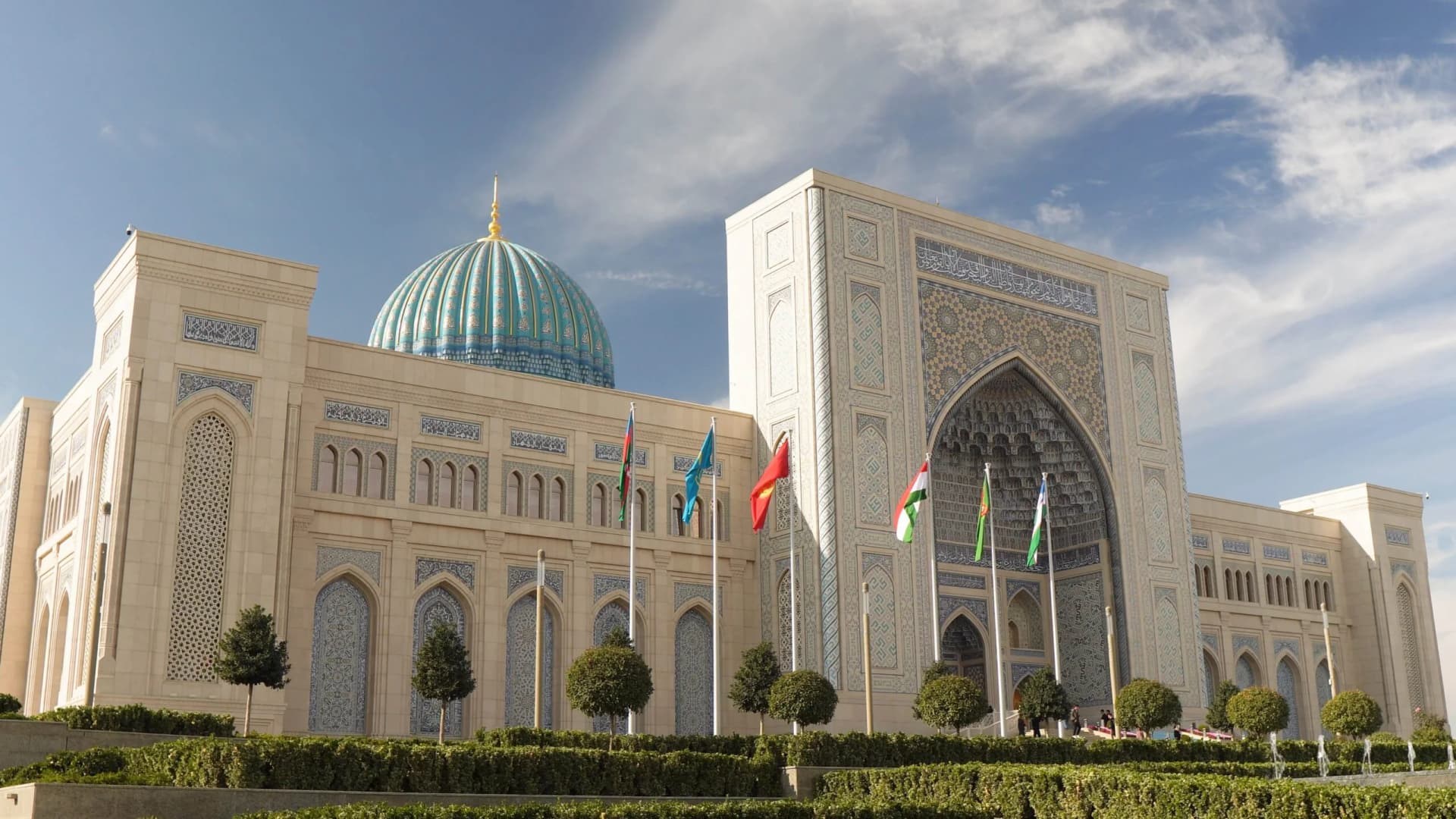
Restoration laboratory: How is the Mushaf of Caliph Uthman being preserved?
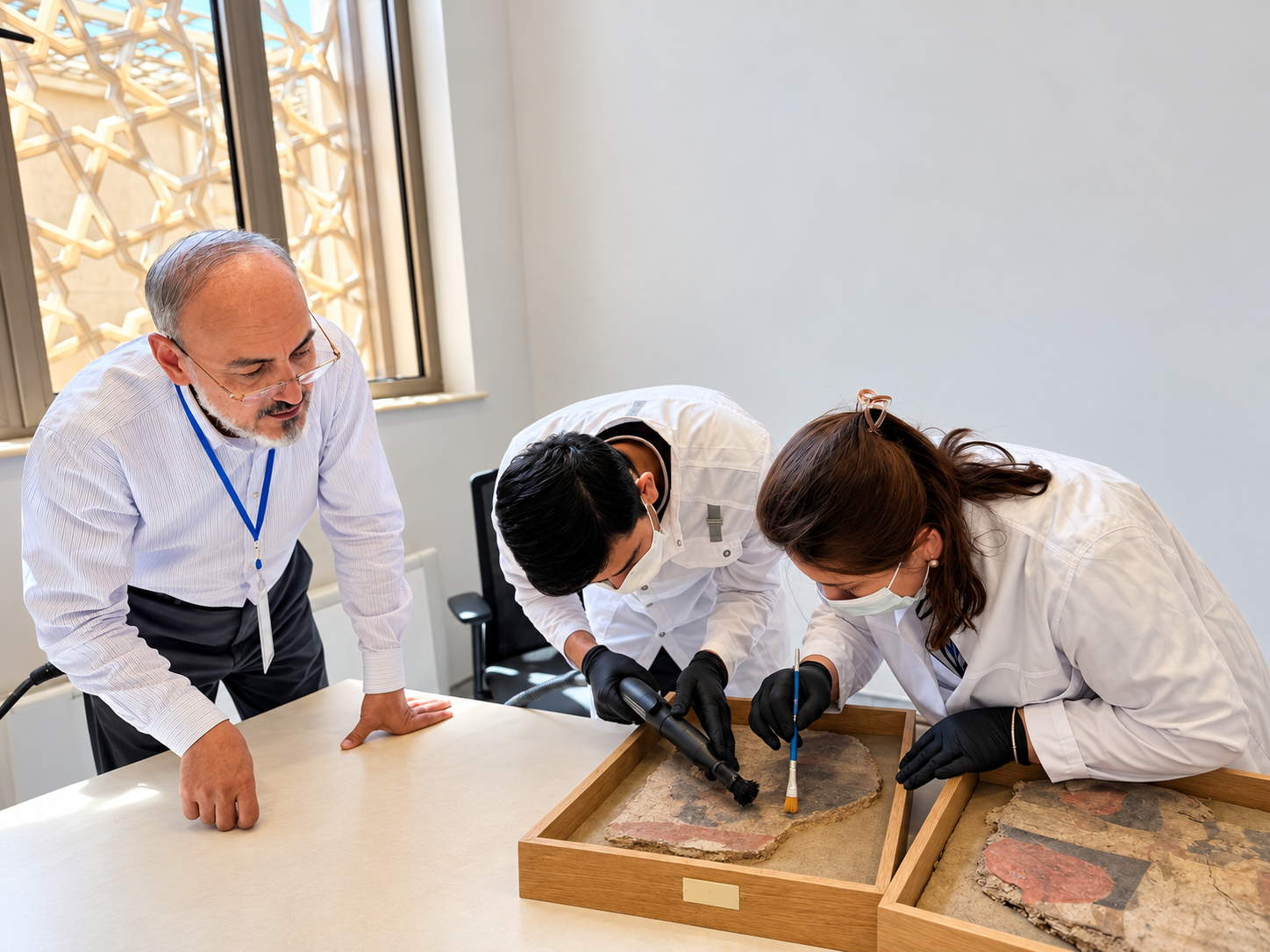 Every manuscript and historical artifact that has survived through the centuries preserves the knowledge, art, and memory of its era. Specialists at the Islamic Civilization Center in Uzbekistan are working to study this heritage on a scientific basis, protect it, and pass it on to future generations. This article explains how restoration and conservation work is carried out, including how the Mushaf of Caliph Uthman is being preserved.
Preserving historical heritage is not merely about safeguarding an artifact, but about transmitting its historical and scientific value to future generations. In particular, working with rare manuscripts, parchment-inscribed sources, and ceramic, glass, and metal objects, which are sensitive to the effects of time and environmental conditions, requires rigorous scientific analysis, profound expertise, and immense responsibility.
At the restoration and conservation laboratory of the Islamic Civilization Center in Uzbekistan, established on the initiative of President of the Republic of Uzbekistan Shavkat Mirziyoyev, systematic work has been organized to scientifically study historical and cultural artefacts, assess their physical and technical condition, ensure their long-term preservation, and, where necessary, carry out scientific restoration and conservation.
The Center’s collection is diverse in terms of materials and historical characteristics. Alongside archaeological and ethnographic objects made of ceramic, glass, and metal, it includes manuscript books, historical documents, and rare sources made of paper, parchment, and other organic materials. An environmental condition that is suitable for one type of material may not be appropriate for another, so the material, structure, and condition of each exhibit are studied individually.
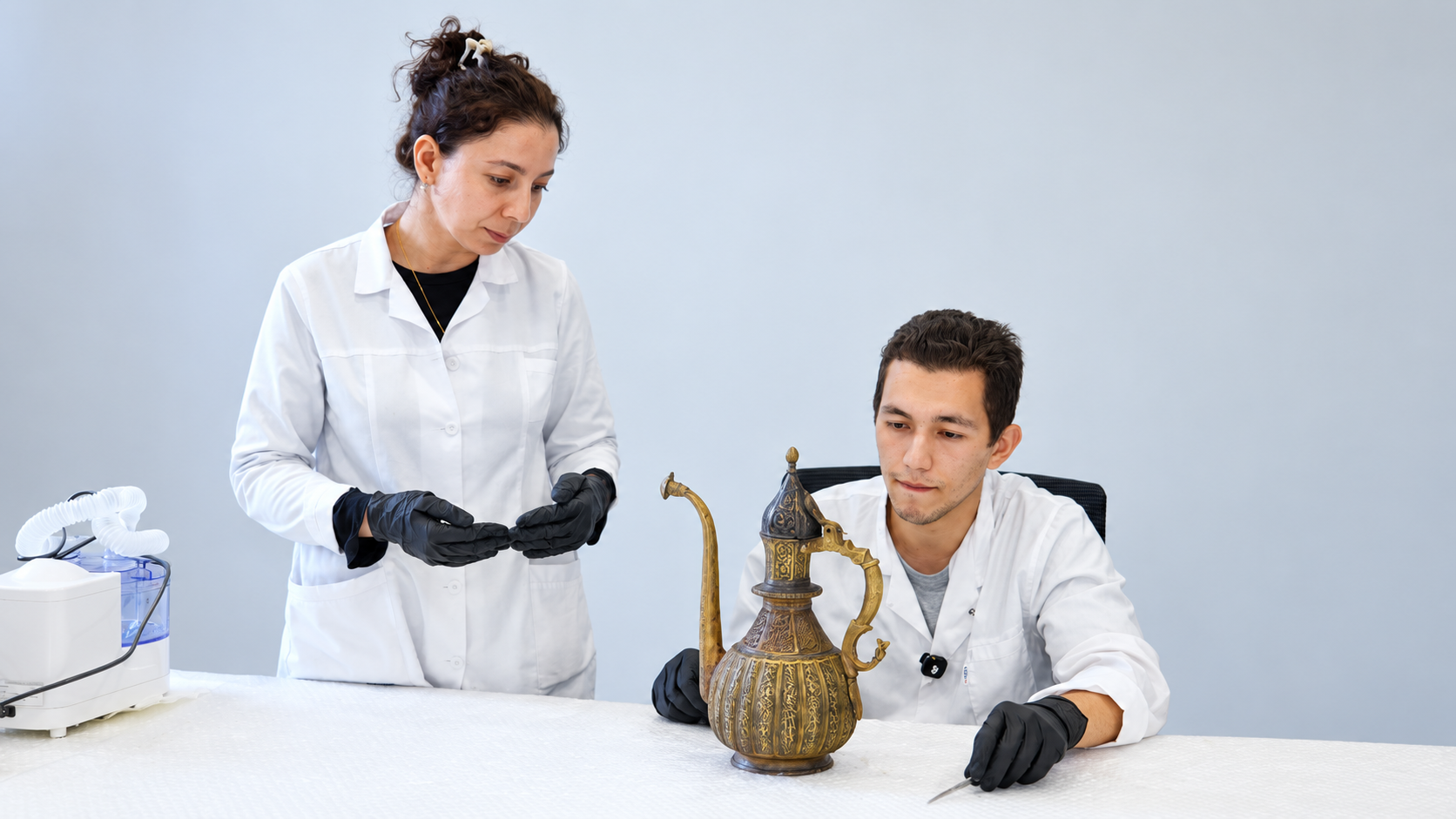 Why is it necessary to preserve rare artifacts?
The true value of any rare manuscript, historical textile, ceramic, or metal object lies in its historical and material authenticity, and its uniqueness lies in the fact that, once lost, it can never be authentically replicated.
Gulnoza Matchanova, Senior Research Fellow at the Scientific Department of Museums and Exhibits of the Islamic Civilization Center in Uzbekistan, explains the necessity of preserving such artifacts as follows:
“Manuscripts, historical textiles, garments, carpets, ceramic objects, gold and silver artifacts, coins, and other heritage items that have survived to the present day have endured various natural, social, and anthropogenic influences over the centuries. Only a fraction of our historical heritage has reached us. This shows how rare each original object is and how much it needs protection.”
This means that modern conservation and restoration is not a mere repair process. It is a scientific and practical activity closely connected with fields such as materials science, chemistry, biology, history, art history, and museology.
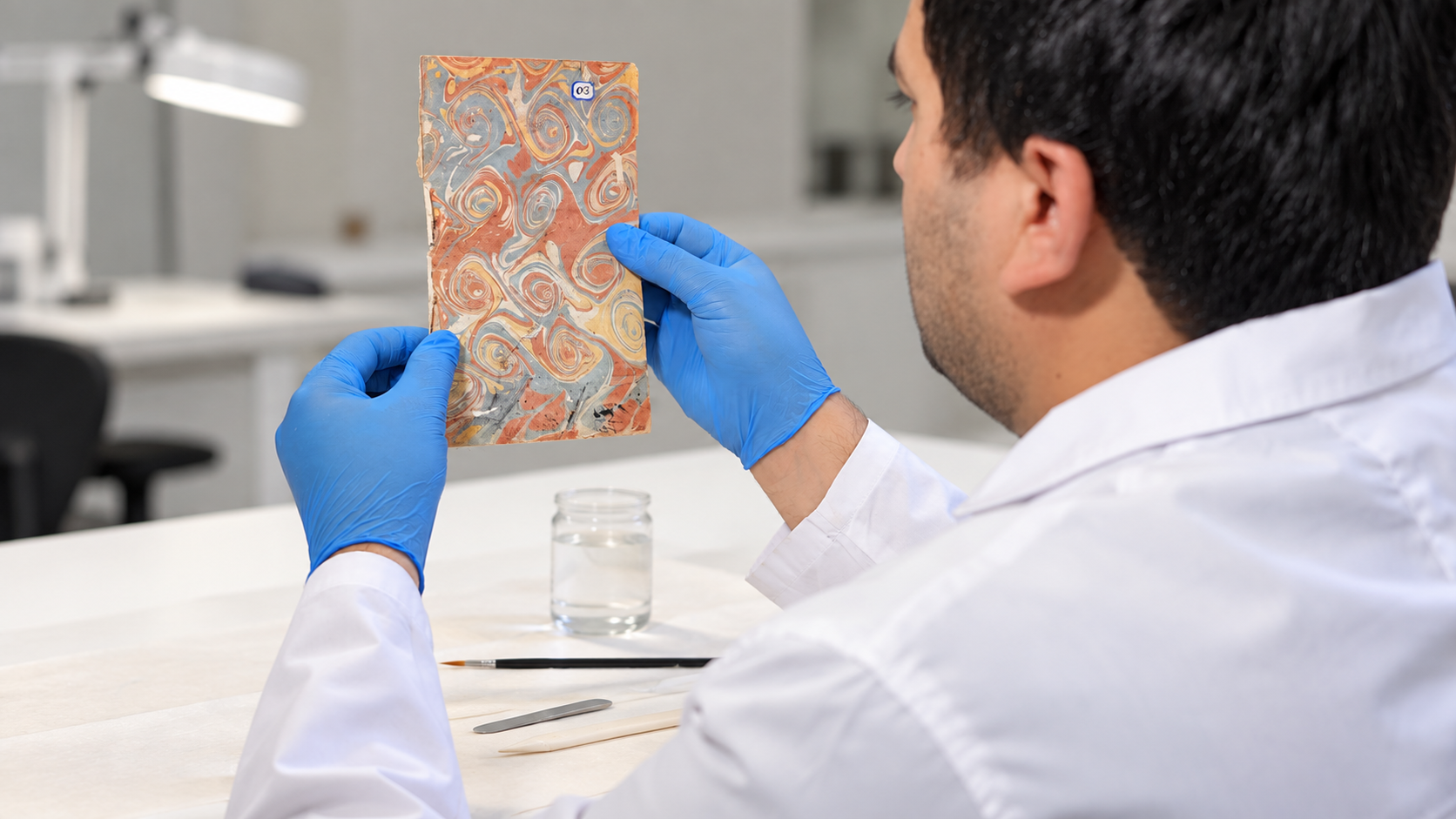
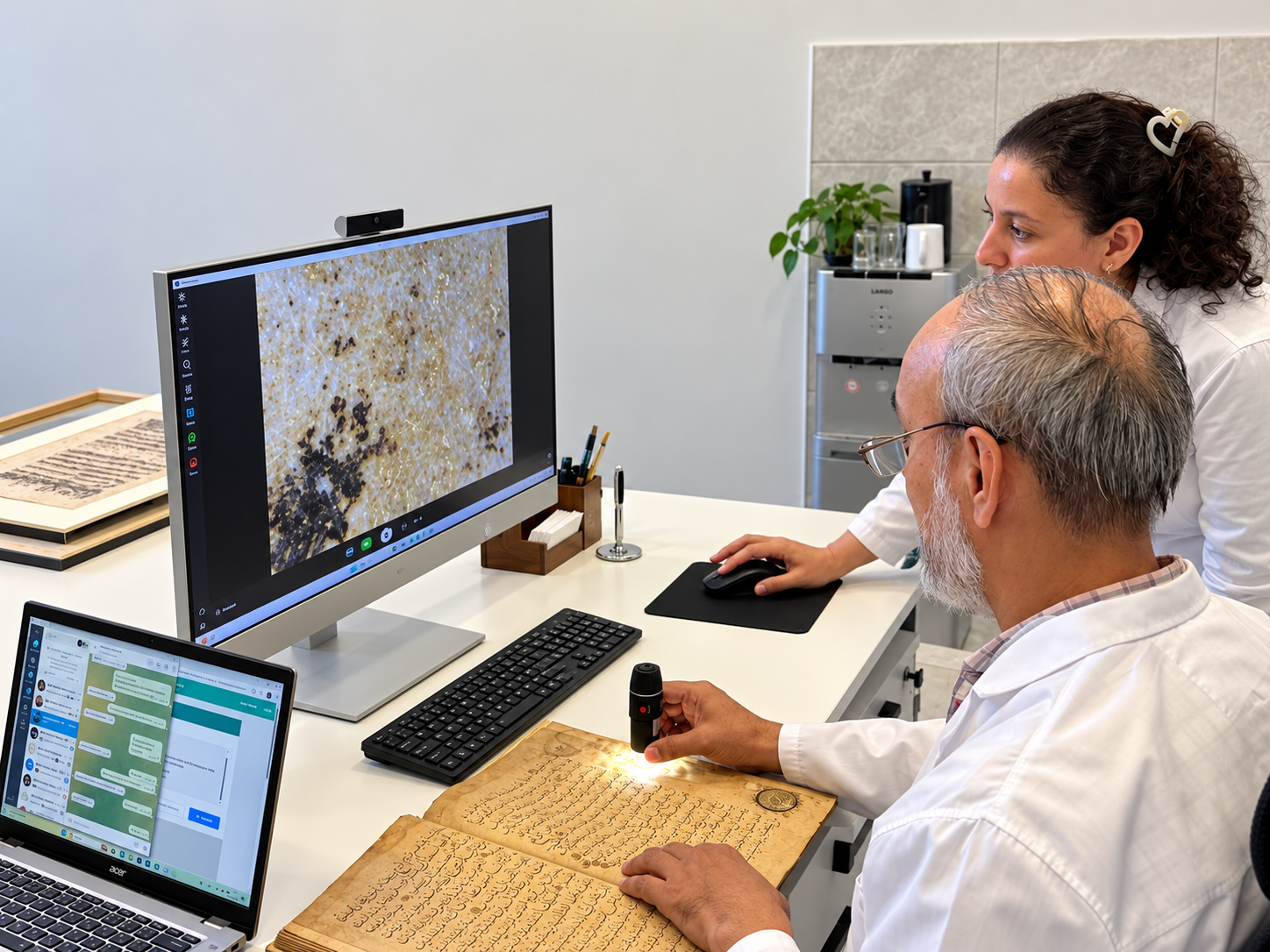
Restoration and conservation efforts begin with a comprehensive study of the artifact. The current condition of the exhibit is documented, visually inspected, and, where necessary, subjected to microscopic and in-depth technical analysis. Based on the diagnostic data gathered, subsequent steps for its preservation, conservation, or restoration are determined.
“Before working with any exhibit, its material, structure, and state of preservation are thoroughly evaluated. This is because different materials, such as metal, ceramics, wood, textiles, or manuscripts, have their own distinctive properties and require a special approach. The objective of restoration is not to renew the object, but to preserve its historical character, authenticity, and scholarly significance as far as possible,” says Gulnoza Matchanova.
Preventive conservation: eliminating risks in advance
Temperature, relative humidity, light exposure, dust, biological pests, as well as the procedures for handling and using artifacts directly impact the condition and longevity of museum objects. Therefore, preventive conservation, controlling potential risk factors in advance and mitigating their impact, plays a crucial role.
Shukhratillo Pulatov, a restorer at the Center, emphasizes the immense significance of preventive measures in this regard:
“Restoration is often associated with repairing museum objects that have been damaged or have partially lost their functional and aesthetic qualities. However, one of the key priorities in modern conservation practice is preventive conservation. Its purpose is to identify and control risk factors before irreversible changes occur, maintain temperature, relative humidity, and light levels within appropriate ranges, and minimize the impact on exhibits during storage, display, and use.”
When deterioration has already begun, conservation measures are undertaken to stabilize the artifact’s condition. For instance, paper- and cellulose-based materials are highly vulnerable to biological deterioration, acid–alkali imbalance, or weakening of the material, while metal objects may undergo corrosion. In such cases, the primary objective is to stop or slow down the deterioration process as much as possible and to stabilize the condition of the artifact.
The principle of minimal intervention
Even when restoration is necessary, preserving the original characteristics and integrity of a historical object remains paramount. Not every trace that has emerged on it over time is a defect that must be removed; some changes provide important information about how the artifact was created, how it was used, or which historical periods it has lived through. Therefore, the restorer’s task is not to alter the object’s historical appearance, but to eliminate the factors that endager its preservation.
“One of the most important principles in restoration is to preserve the uniqueness of an ancient object and to intervene as little as possible. Every action must be thoroughly studied and scientifically grounded,” says Shukhratillo Pulatov.
If the method being applied fails to achieve its intended results or is found to pose an additional risk to the object, the treatment is immediately suspended. The artifact is stabilized and maintained within a controlled microclimate until a safer method or a new technological solution eemerges. Such caution is fully justified: improper intervention can, in some cases, lead to irreversible damage.
Continuous monitoring of exhibited artifacts
The duties of conservator-restorers are not limited to work in the laboratory. The Center’s specialists also regularly monitor the state of preservation of artifacts featured in the exhibition. If deformation, material weakening, discoloration, or any other sign of risk is detected, the exhibit's condition is re-examined. When necessary, it is temporarily de-installed from display to undergo immediate diagnostic assessment and stabilization.
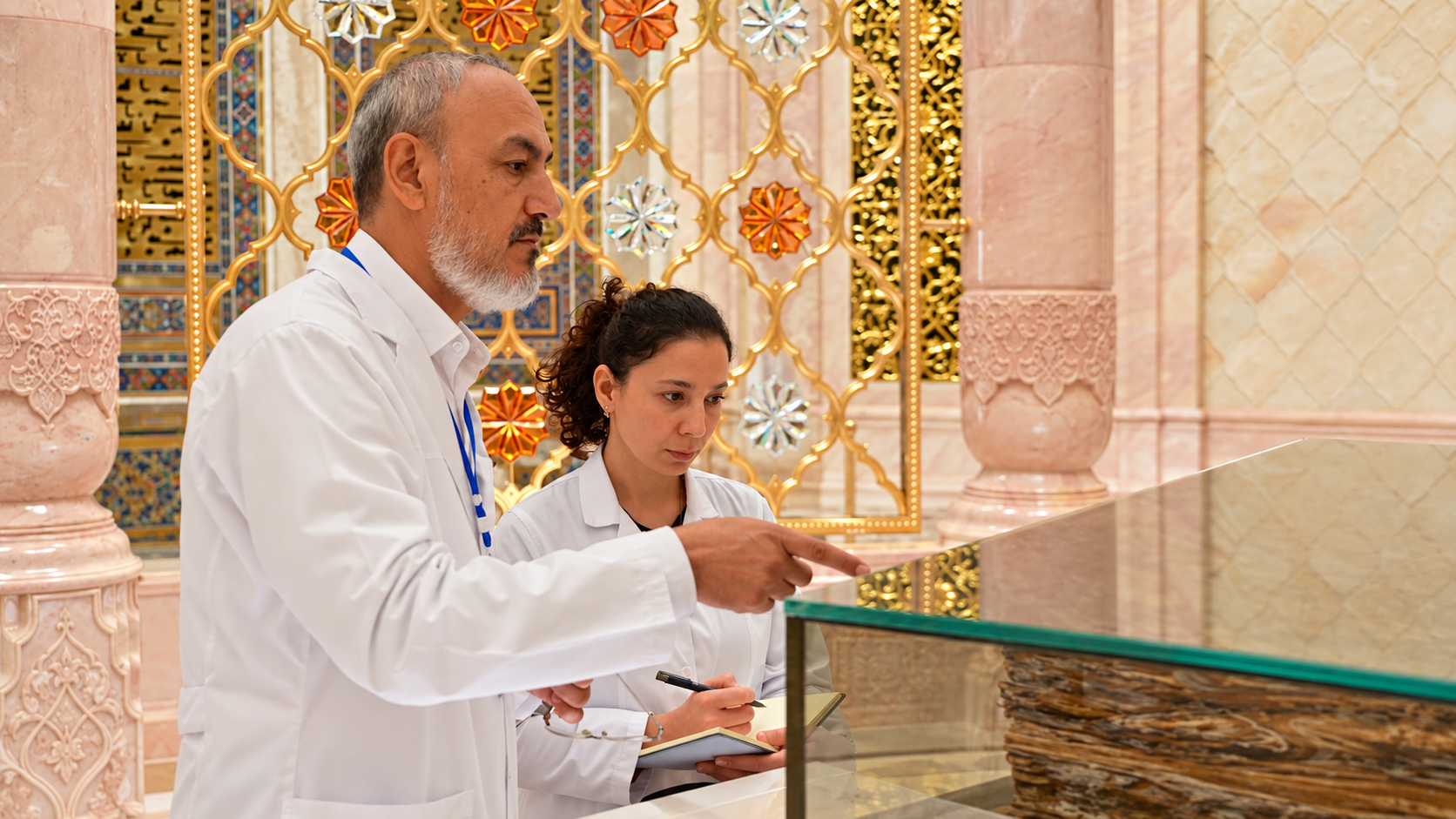
In particular, the eexhibition of ancient books and manuscripts requires a number of specific conditions to be taken into account. While visitors see an open manuscript behind display glass, specialists monitor its opening angle, the pressure exerted on its pages, the strain on its binding and leather parts, light exposure, and microclimate conditions. Improper display techniques can cause irreparable structural strain on sewing structures, text blocks, and binding covers over time. For this reason, such artifacts are displayed using specially designed supports appropriate to their structure and physical condition.
 The Mushaf of Caliph Uthman: a special responsibility
The immense responsibility involved in the conservation work carried out at the Center is best exemplified by the ancient Qur’anic manuscript associated with Caliph Uthman (may Allah be pleased with him), known as the Mushaf of Caliph Uthman. In addition to its unparalleled historical and spiritual value, preserving the physical condition of this rare relic requires a specialized professional approach.
Inscribed on parchment, the Mushhaf is fundamentally hygroscopic, continuously interacting with atmospheric moisture and is sensitive to changes in environmental humidity. Shukkhratillo Pulatov explains this as follows:
“Parchment is extremely sensitive to moisture variations in the surrounding environment. Sudden fluctuations in temperature and humidity levels can seriously impact its shape and physical condition.”
For this reason, the physical state of the Mushaf is regularly monitored by the staff of the Library of the Muslim Board of Uzbekistan and the restorers of the Islamic Civilization Center. In doing so, special attention is paid to the stability of temperature and relative humidity, as well as to controlling the amount of light exposure to the manuscript.
To ensure the transmission of this rare manuscript to future generations, the Center actively collaborates with world-renowned international experts. With the participation of specialists engaged from the United Kingdom, Turkey, and France, each page of the Mushaf was meticulously examined, and its state of preservation was documented in detail. Any identified defects, deformations, and other alterations were recorded through written notes and photographic documentation.
This diagnostic data serves as an indispensable resource for planning subsequent conservation and restoration work on a scientific basis. It enables specialists to determine when direct conservation is required, where restoration is necessary, or which parts should continue to be monitored under stable conditions.
The value of a historical relic is not determined solely by its external appearance. Every page of a manuscript, its layer of ink, the structure of the parchment, and the alterations that have occurred over the centuries also serve as a scholarly source. In this sense, preserving a relic means protecting not only its physical form, but also the historical evidence it has carried through the centuries.
 A complex approach in a single professional environment
Restoration and conservation work has long existed in Uzbekistan's museums, fostering a distinct school of practical experience in the field. According to Gulnoza Matchanova, what distinguishes the Center is that it brings together specialists who specialize in various materials, have trained abroad, and possess research experience within a single professional setting. The fact that specialists in manuscripts and rare works, textiles, metal, ceramics, and other objects work within one integrated system makes it possible to develop an individual strategy for each object that suits its material composition, physical and chemical condition, causes of deterioration, and historical characteristics.
“It would be inaccurate to perceive the Center as the genesis of restoration in Uzbekistan. Existing experience and traditions are being integrated into a single system with modern international conservation practices, scientific methodologies, and the expertise of specialized professionals. Uniting experts in fields such as manuscripts, textiles, metal, and ceramics within a single professional environment fosters an integrated approach. This allows us not only to restore individual exhibits, but also to monitor the condition of objects in collections and exhibitions, implement preventive conservation measures, and develop long-term preservation strategies,”
For the future: modern infrastructure and personnel
As the collection continues to expand with new objects, the importance of professional infrastructure for studying, preserving, and properly displaying them also increases. Equipping the laboratory with modern analytical instruments and expanding the possibilities for studying the composition and condition of objects with high precision are among the vital tasks in this area. In addition, significant emphasis is placed on the use of environmentally safe materials in conservation practice and on harmonizing international experience with local practice.
Alongside modern technologies, training qualified personnel is of decisive importance. Developing the professional knowledge and practical skills of the young team of restorers emerging at the Center, as well as creating opportunities for them to study international best practices and apply modern methods, remains a strategic priority. As Shukhratillo Pulatov noted, the uniqueness of the Center's collection and its future enrichment increase the responsibility of the restoration and conservation service, while the team of specialists being formed today will help establish a professional school capable of working scientifically with an even broader and more diverse collection in the future.
In the museum’s exhibition hall, visitors see the present-day appearance of historical heritage. Nonetheles, in the restoration and conservation laboratory the scientific foundation is being laid for the future of that heritage. The research, monitoring, and conservation work carried out here serves to preserve the historical heritage that has reached us across centuries and transmit it on to future generations while preserving its authentic characteristics and scholarly value.
Shahina Alijonova
P.S. This article may be republished with a link to the Center’s official website