
Interfaith tolerance: Uzbekistan's experience in the arena of international dialogue
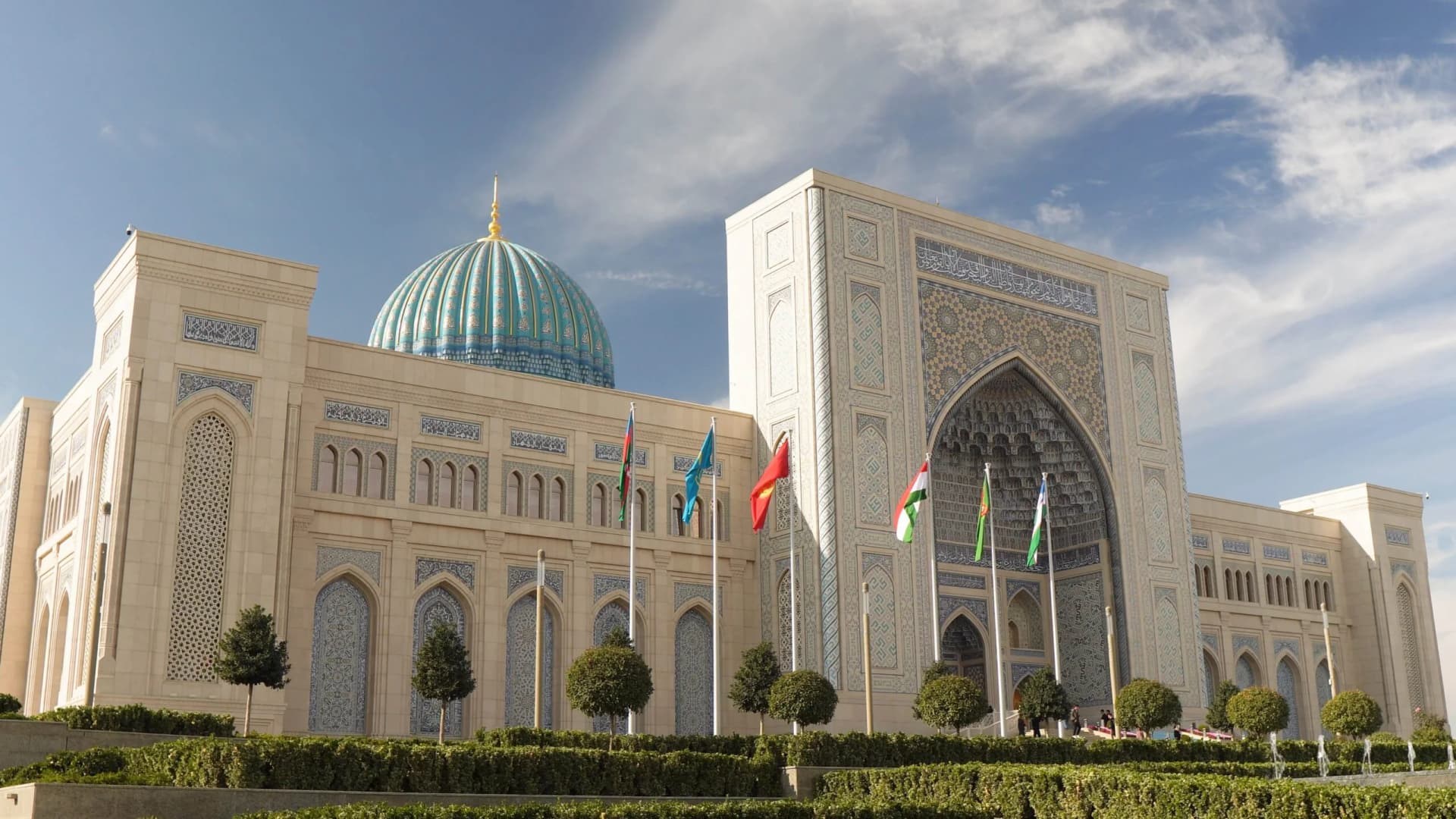
Is it enough to hold international conferences to strengthen religious tolerance, or is everyday cooperation among people of different faiths also necessary? This question was one of the key discussion topics at the international scientific and practical conference "Interfaith Tolerance," held on November 17 at the Islamic Civilization Center in Uzbekistan. Religious figures, diplomats and experts from the United States, Sweden, Saudi Arabia, Germany, Russia, India and other countries discussed the experience of more than 130 nationalities and ethnic groups and 16 religious denominations living together in harmony in Uzbekistan, strengthening interfaith trust, preventing radicalization, and the role of enlightenment in educating young people.
In today's era of globalization, fostering mutual respect, trust and solidarity among people of different nationalities and religions is one of the key conditions of sustainable development. At a time when various conflicts are observed in the world, widely promoting the ideas of peace and tolerance and developing dialogue among nations and denominations is of particular importance.
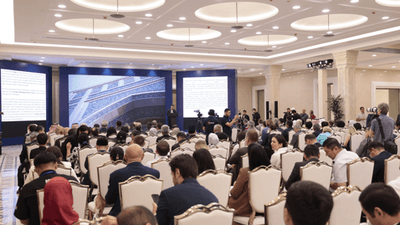
The international conference held on November 17 of this year in the conference hall of the Islamic Civilization Center in Uzbekistan was also aimed at these goals.
At the opening of the event, introductory remarks were delivered by Bakhtiyor Namozov, representative of the UNESCO Office in Uzbekistan; Davronbek Makhsudov, First Deputy Chairman of the Committee on Religious Affairs; and Kakhramon Sariyev, Chairman of the Committee on Interethnic Relations and Foreign Compatriots.
The tolerant environment in Uzbekistan: a practical experience
Within the conference, participants exchanged views on the environment of interethnic harmony and religious tolerance that has taken shape in Uzbekistan, and on its role in societal stability and the country's development.
In his speech, Deputy Chairman of the Muslim Board of Uzbekistan Zayniddin Eshonkulov emphasized that the peaceful and harmonious coexistence of representatives of more than 130 nationalities and ethnic groups and 16 religious denominations in our country is a practical expression of the tolerant environment in Uzbekistan.
According to him, today in Uzbekistan every person, regardless of nationality or religious affiliation, is valued as an equal member of society. This is a continuation of traditions of mutual respect and solidarity formed over centuries.
"In our country, home to more than 130 nationalities and ethnic groups, we live like children of one family. Today, it is also recognized internationally that Uzbekistan's environment of interethnic and interfaith harmony, concord and solidarity can be studied and presented to the world as a model.
In our country, every person finds their worth as a citizen of Uzbekistan. Preserving this peace and tranquility and passing it on to future generations is the duty of all of us. The gathering today, at which representatives of various countries and of the different nationalities and religious denominations living in our country have come together in one place, is also a vivid expression of mutual respect and solidarity," said Zayniddin Eshonkulov.
Chief Imam-Khatib of Tashkent city Abdukakhhor Yunusov also drew attention to the fact that representatives of different denominations in our country operate on the basis of mutual respect and cooperation.
"Today our Motherland is at peace, our people are prosperous, our skies are clear. The fact that the issue of tolerance has been raised to the highest level in New Uzbekistan is recognized not only by our compatriots but by the whole world.
At a time when disagreements and conflicts are observed in various parts of the world, it is of great importance that 16 religious denominations in our country operate on the basis of mutual respect and good relations. All of them continue to contribute to the development and prosperity of New Uzbekistan," said Abdukakhhor Yunusov.
International cooperation and strengthening mutual trust
Foreign participants also highly praised Uzbekistan's environment of tolerance, the reforms being carried out in the country, and the initiatives aimed at developing international dialogue.
Christian Camille, Special Envoy for Interfaith and Intercultural Dialogue of the Ministry for Foreign Affairs of Sweden, emphasized that relations between Uzbekistan and Sweden have been developing rapidly in recent years. According to him, cooperation between the two countries is expanding in the areas of migration, preventing radicalization and interfaith dialogue.
"Cooperation between Uzbekistan and Sweden has been developing at a rapid pace in recent years. We have reached a bilateral agreement in the field of migration, and we are also cooperating in preventing radicalization and in interfaith dialogue.
In March of this year, I hosted a high-level delegation from Uzbekistan in Sweden. As part of that visit, a seminar dedicated to religious tolerance and the prevention of radicalization was also held in the Swedish Parliament. Today's conference is a logical continuation of that dialogue.
Culture and religion play an important role in strengthening trust between countries. I believe that today's event in Uzbekistan will also help further develop positive relations between the two countries," said Christian Camille.
Rachel Bayani, Chief Representative of the Bahá'í International Community to the United Nations, noted that cooperation among communities in everyday life is of great importance in strengthening interfaith tolerance.
In her view, the mahalla institution plays a special role in this process. This is because people with different views and beliefs working together strengthens mutual acquaintance, trust and cooperation.
"It is not enough for representatives of religious communities to meet only at conferences. They must also communicate and work together in everyday life. In this regard, the mahalla can be an important arena.
When people work together, they get to know each other better, discuss problems in society and try to find solutions together. In that process, misconceptions and misunderstandings disappear. A person begins to see a representative of another religious community not as a stranger, but as a partner and a close person," said Rachel Bayani.
Archbishop of the Armenian Apostolic Church Yezras Nersisyan also acknowledged the processes of spiritual renewal taking place in Uzbekistan and highly praised the work being done to strengthen peace and solidarity in the country.
"We came to hospitable Uzbekistan to take part in this international conference and to express our joy and gratitude. We witnessed the processes of spiritual renewal taking place in New Uzbekistan.
It is gratifying that the people living in this blessed land live in peace and harmony, regardless of their religious or national affiliation. We ask the Creator to further strengthen peace, mutual understanding and solidarity among peoples and countries," said Archbishop Yezras Nersisyan.
Chairman of the CIS India Forum and the Russia-India Council Sanjiit Kumar Jha also touched upon the international significance of the conference and described the friendly environment in Uzbekistan as an example for other countries as well.
"Representatives of different nationalities, cultures and religions have long lived in harmony in Uzbekistan. It is gratifying that this tradition continues today. In your country, people live in a friendly environment, in peace and solidarity. This is an experience that can serve as an example for other countries of the world as well.
I would also like to especially highlight the Islamic Civilization Center, established on the initiative of the President of Uzbekistan. It is a unique architectural structure. I feel happy to be a participant in the international conference organized at this center," said Sanjiit Kumar Jha.
Vice President of the Governing Center of the New Apostolic Church in Russia Vladimir Lazarev also particularly emphasized the significance of the conference in strengthening not only interfaith but also interethnic harmony.
"Today's event is important in that it has brought together representatives of different religions in one place. Such meetings strengthen peace and mutual understanding among people.
There is a great responsibility, especially before young people. For they are the future not only of Uzbekistan but of the whole world. Strengthening cooperation among religious leaders, the public and young people, and preserving mutual respect and solidarity, is the duty of all of us.
I particularly acknowledge the work being done in Uzbekistan in this regard and the harmony among different denominations. I wish your country peace, your people prosperity and even greater progress," said Vladimir Lazarev.
Education and enlightenment: a factor of stability
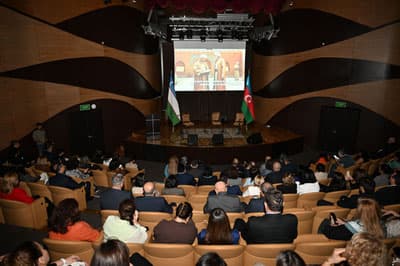
The conference continued in three sections. The second section discussed strengthening interfaith and intercultural dialogue and developing cooperation between religious organizations and national cultural centers.
The third section was devoted to the role of education and enlightenment in ensuring harmony in society. It examined forming ideological immunity among young people, the importance of enlightenment in preventing extremism and radicalism, and expanding scientific and educational cooperation among educational institutions.
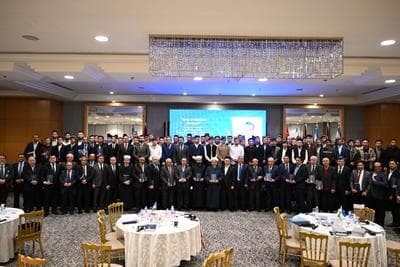
In the sections, scholars, representatives of religious denominations and experts from Uzbekistan and abroad delivered presentations and put forward proposals and recommendations on the topic.
The international conference became an important platform for dialogue, for exchanging experience among representatives of different countries and for strengthening mutual trust and cooperation.
It should be noted that holding such international gatherings at the Islamic Civilization Center in Uzbekistan also helps to promote the country's rich scientific and spiritual heritage and the ideas of peace and tolerance widely on the international stage.
This article was automatically translated using artificial intelligence.