



Center of Islamic Civilization: A Glimpse into History through Majestic Murals
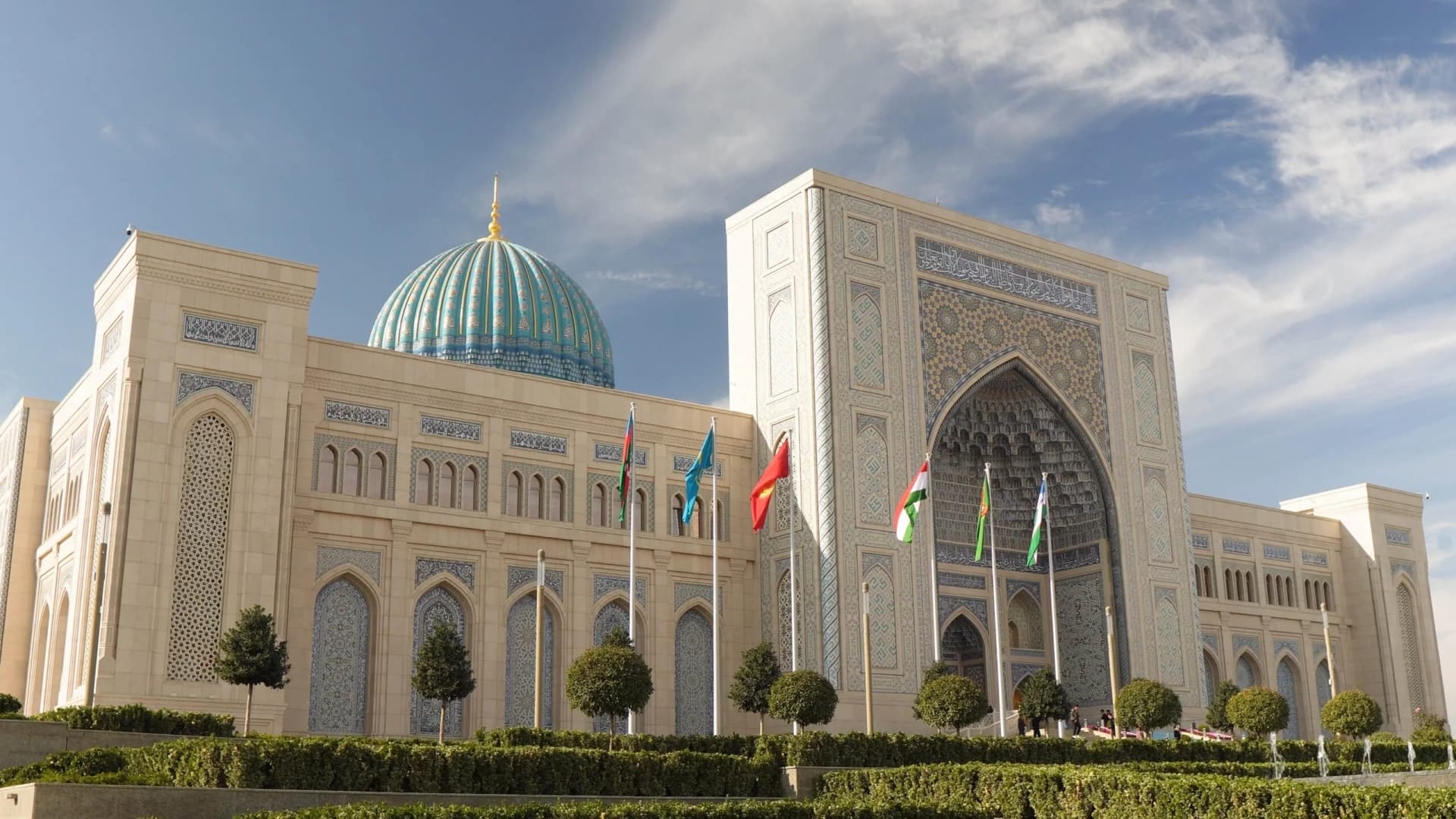
 The Center of Islamic Civilization in Uzbekistan is not only a monumental architectural structure, but also a hub that reflects our nation’s rich spiritual and scholarly heritage, as well as its contributions to the Islamic world. The 14 mural compositions to be placed at the main entrance of the center are a testament to its profound meaning and rich ideological significance. Among them, one piece stands out in particular an illustrative artwork depicting the First Renaissance period that unfolded in the lands of Mawarannahr. This piece encapsulates one of the brightest chapters in the history and spirituality of our people.
Following the advent of Islam, the present-day territory of Uzbekistan swiftly transformed into a center of knowledge and enlightenment. Between the 9th and 11th centuries, cities such as Bukhara, Samarkand, Termez, and Nasaf were recognized as some of the most prestigious centers of learning in the world. The scholars who emerged from these regions achieved remarkable accomplishments not only in Islamic sciences, but also in fields such as philosophy, mathematics, astronomy, chemistry, medicine, and other secular disciplines. Their works were studied throughout the Islamic world for centuries and even served as sources of inspiration for the Renaissance movements in Europe.
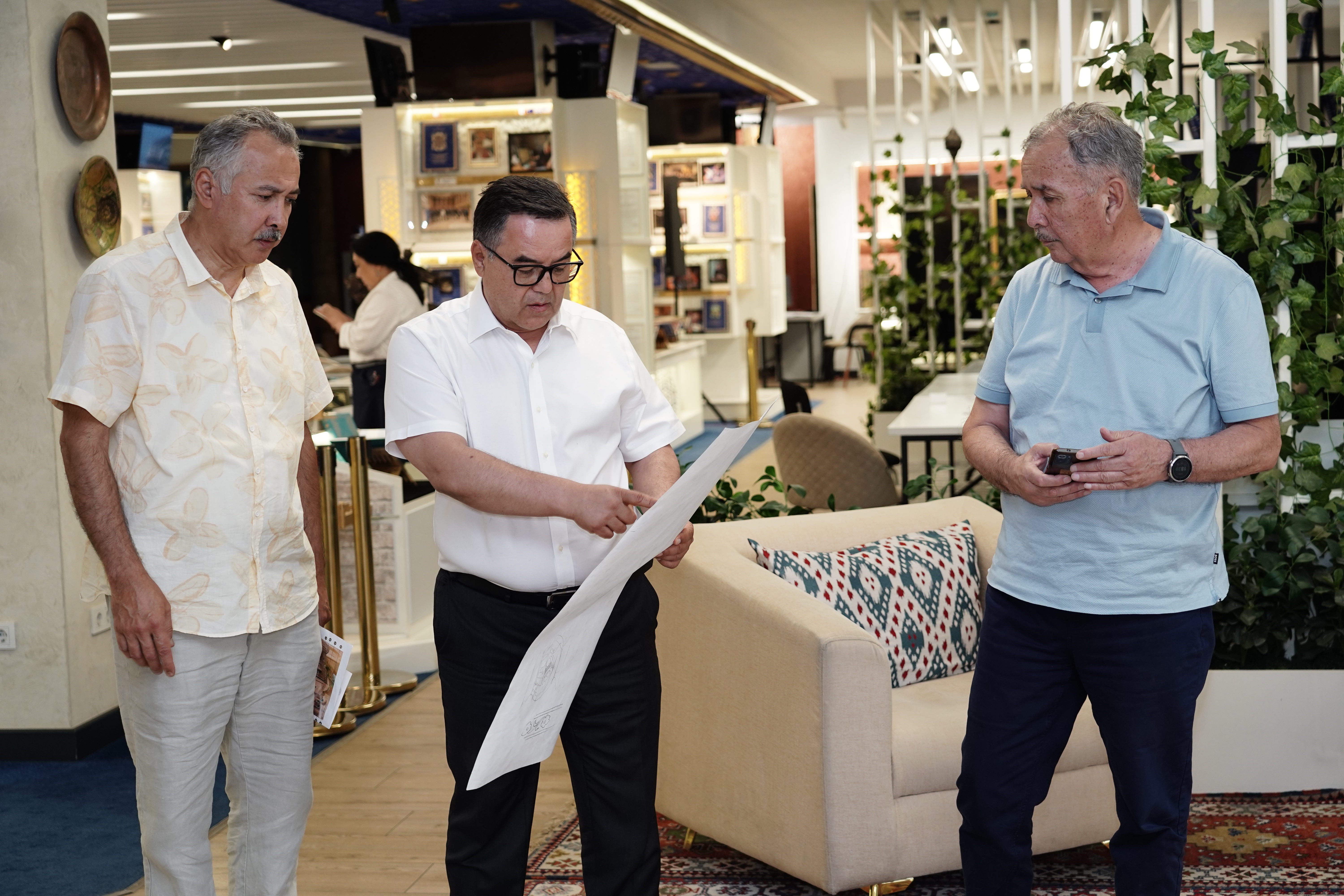
“This mural composition vividly reflects the spiritual atmosphere of that historical era, the reverence for knowledge, and the respect shown toward scholars, all conveyed through precise artistic expression. The artwork portrays Imam al-Bukhari as he writes his Sahih al-Bukhari, with students gathered around him in pursuit of knowledge. Hakim al-Tirmidhi is depicted in a state of spiritual contemplation. Qaffal al-Shashi is shown engaged in the study of fiqh, while Burhan ad-Din al-Marghinani is deep in thought over his renowned work Al-Hidayah. Muhammad al-Khwarizmi, who laid the scientific foundations of mathematics and algorithm theory, is engrossed in complex calculations. Abu Rayhan al-Biruni is drawing geographical maps, and Abu Nasr al-Farabi is explaining the principles of music theory and philosophy. Most notably, the artistic composition includes a detailed depiction of Ibn Sina’s contributions to medicine, including his medical studies and anatomical illustrations,” said Zohidulla Munavvarov, Chief Researcher at the Center of Islamic Civilization in Uzbekistan.
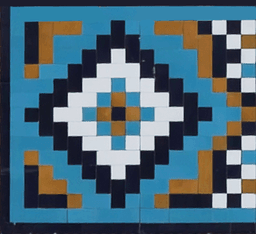
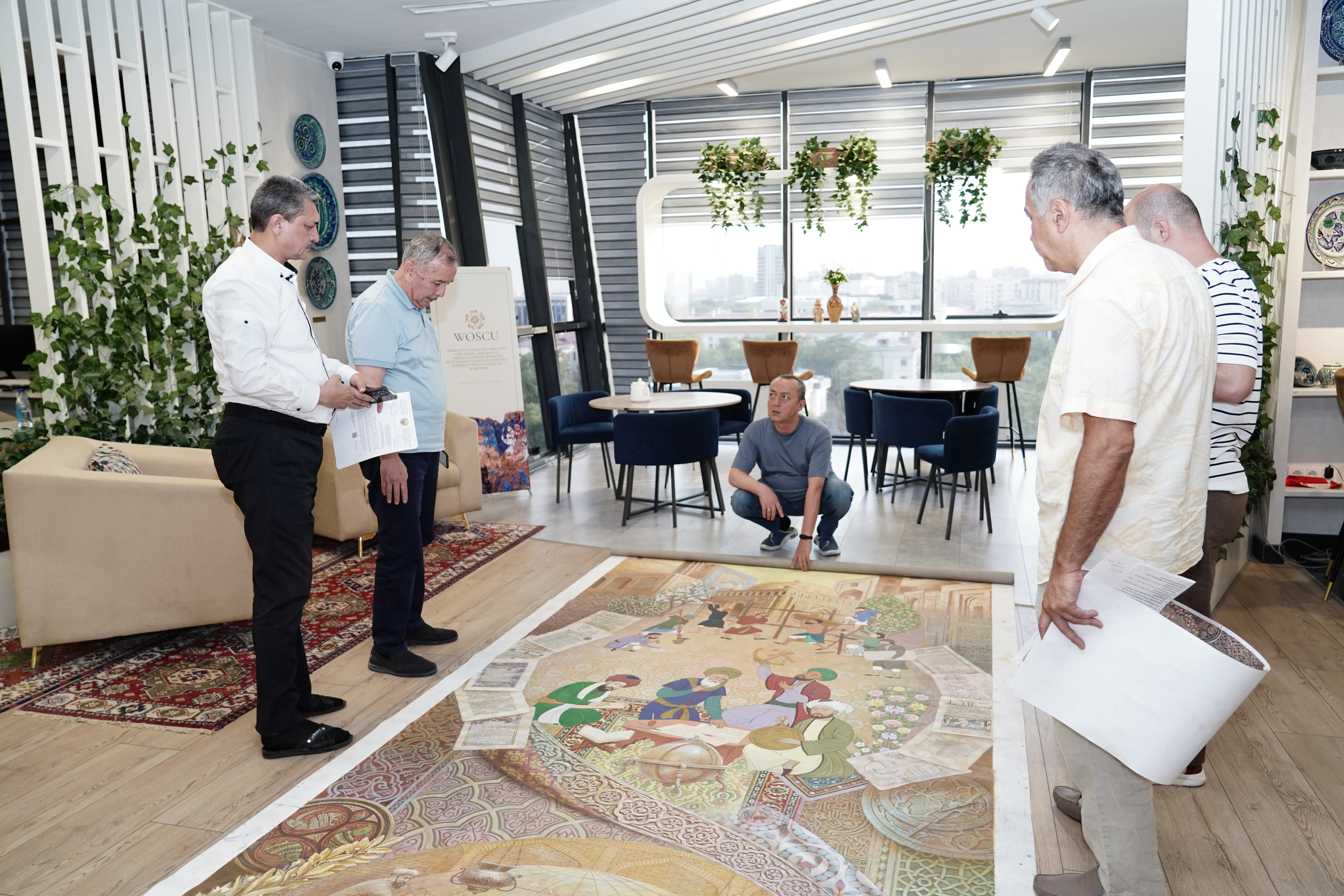 This composition is being crafted in specialized workshops in China using micro-mosaic technology and will become a monumental piece measuring 8 meters in height and 4 meters in width. More than 100 types of stones in various colors are used in the artwork, ensuring every detail is rendered with exceptional precision and density. The mosaic incorporates elements of traditional national miniature art and the classical painting traditions of the East. At the top of the piece is inscribed a verse from the Qur’an Surah Az-Zumar: “Are those who know equal to those who do not know?” which forms the conceptual foundation of the entire composition. Through this, the work serves not only as a historical remembrance but also as a tool of spiritual and educational guidance.
Another compelling feature of this mural is its vivid portrayal through artistic imagery of the environment that fostered the growth of knowledge and science, such as madrasas, libraries, and the teacher-student relationship. One can clearly envision the passion for learning, the reverence for pen and paper, and the peaceful, contemplative atmosphere of the libraries. Additionally, the symbolic inclusion of the map and geographical aspects of the spread of Islam in the region adds further depth to the piece.
From this perspective, the artwork is not merely a visual expression but a harmonious synthesis of enlightenment and history, philosophy and artistic thought, Islamic heritage and national identity. It powerfully reflects our people’s respect for the past and their deep-rooted tradition of valuing knowledge and enlightenment. In today’s efforts to revive education and nurture the younger generation based on our national heritage, the significance of such artistic and educational works is immense.