
The thousand-year-old caravan route is once again “coming to life” in a modern museum
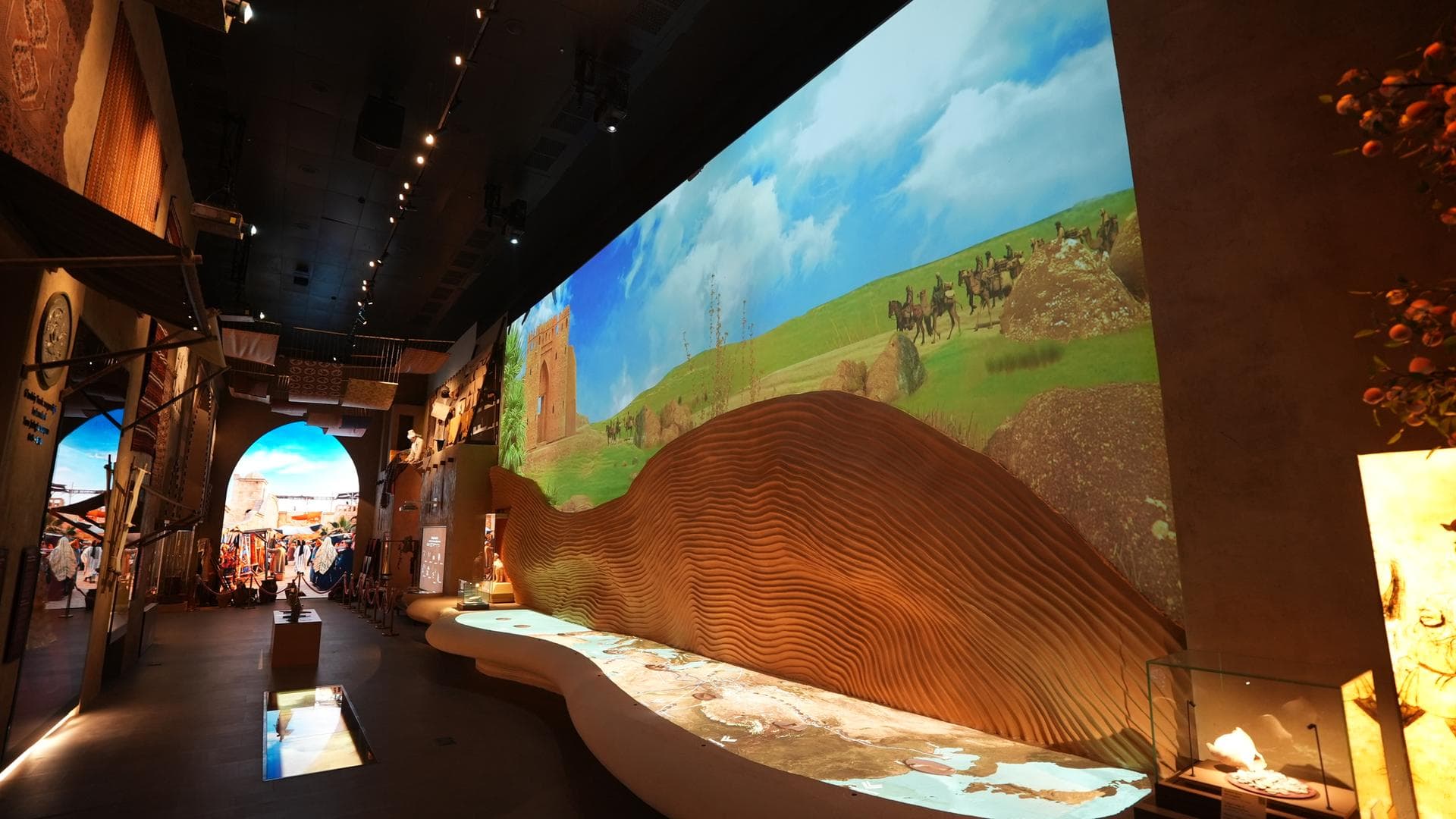
Traces of ancient caravans the Great Silk Road, the Lapis Lazuli Road, the Great Royal Road, the Silver Road, and the Great Indian Road civilizational connections and cultural exchanges, interactive projects, exhibits, and modern videos… In other words, caravans that once passed through these routes are now “moving” again at the Islamic Civilization Center.
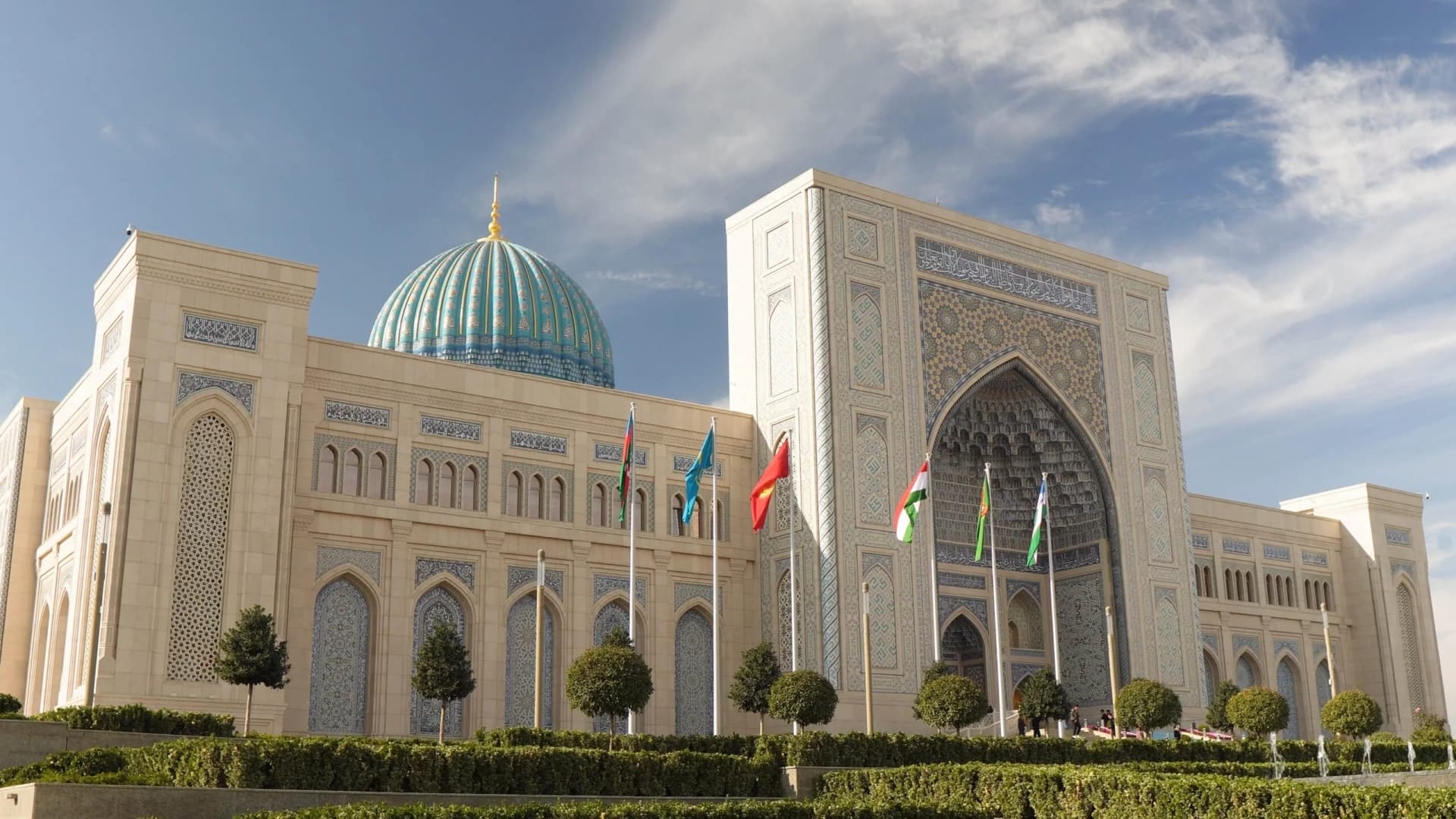
A visitor stepping into the Islamic Civilization Center in Uzbekistan does not merely observe history but becomes a direct participant in it. In particular, the Hall of Ancient Trade Routes located in the museum’s “Pre-Islamic Period” exhibition leads guests deep into the millennia.
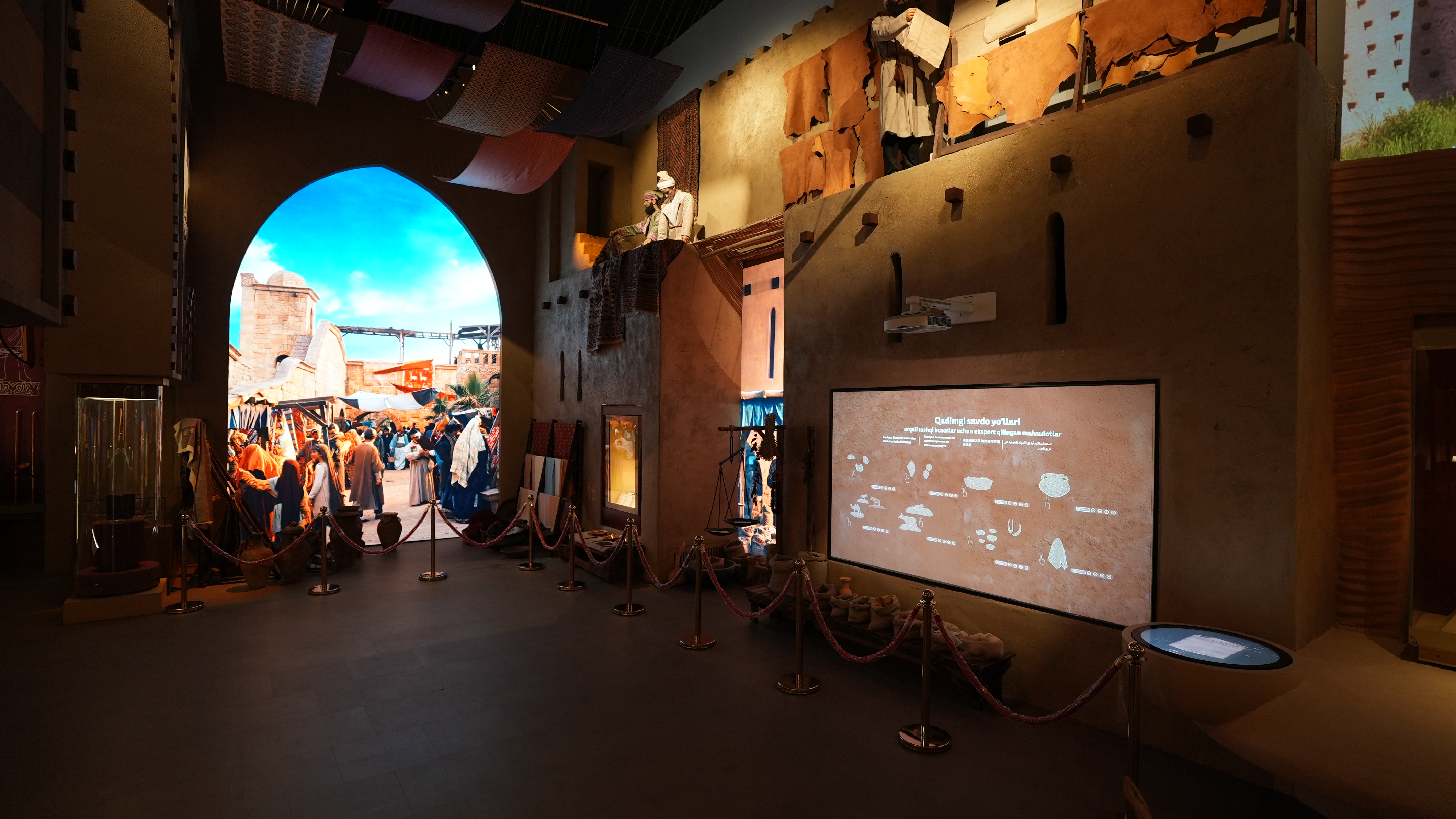
“Ancient Trade Routes” Exhibition
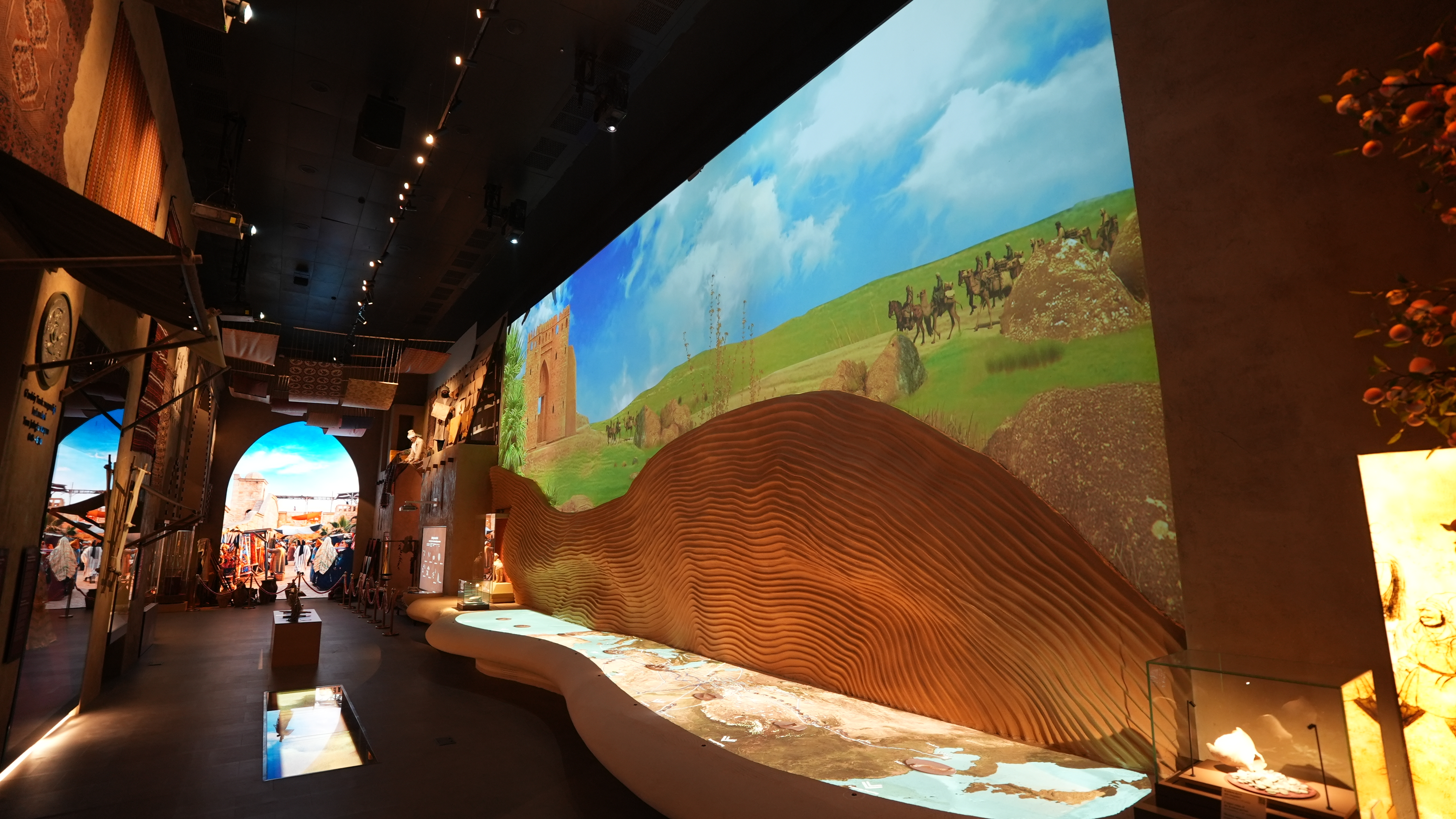
One of the central themes of the Center’s exhibitions, the “Ancient Trade Routes” display, embodies the most advanced approaches of contemporary museology. It comprehensively presents historical routes such as the Great Silk Road, the Lapis Lazuli Road, the Great Royal Road, the Silver Road, and the Great Indian Road. Digital maps precisely show caravan movements along specific routes, while screens successively depict cities, markets, and caravanserais connected by these trade networks.
Every detail in the hall has been deliberately chosen. Through maps, digital panels, and visual effects, the exhibition reveals how Central Asia served for centuries as a vital hub linking East and West.
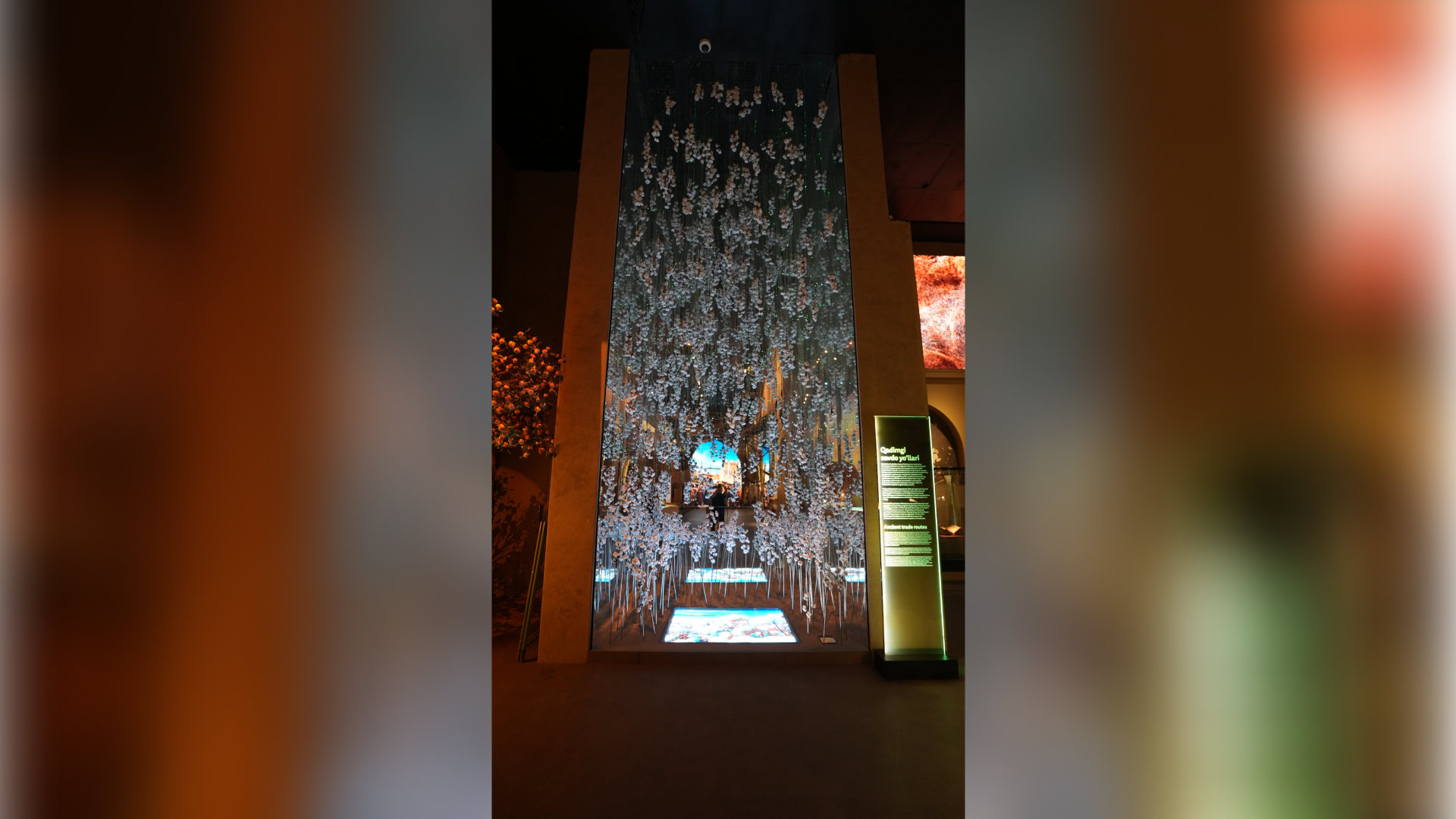
“Uzbekistan The Homeland of Cotton” Installation
In this context, the “Uzbekistan The Homeland of Cotton” installation displayed in the hall draws particular attention as a vivid example of ancient economic and cultural connections. Located in the Pre-Islamic Period exhibition, specifically within the Hall of Ancient Trade Routes, the installation clearly demonstrates that cotton has been cultivated in the territory of present-day Uzbekistan since ancient times.
Created in the form of real cotton stalks with bolls, the installation conveys a sense of naturalness and historical authenticity. For foreign visitors and researchers, it provides a clear and visual understanding of the origin of the cotton plant, ancient cultivation methods, and agricultural traditions. Through this scene, cotton is understood not merely as an agricultural product, but as a strategic resource that for centuries supported trade, craftsmanship, and economic development.
Through interactive panels, visitors can select a specific route and learn about the goods transported along it, the connections established among different peoples, and the cities that became major trade centers. This process allows historical facts to be perceived not as dry data, but as a vivid and concrete experience.
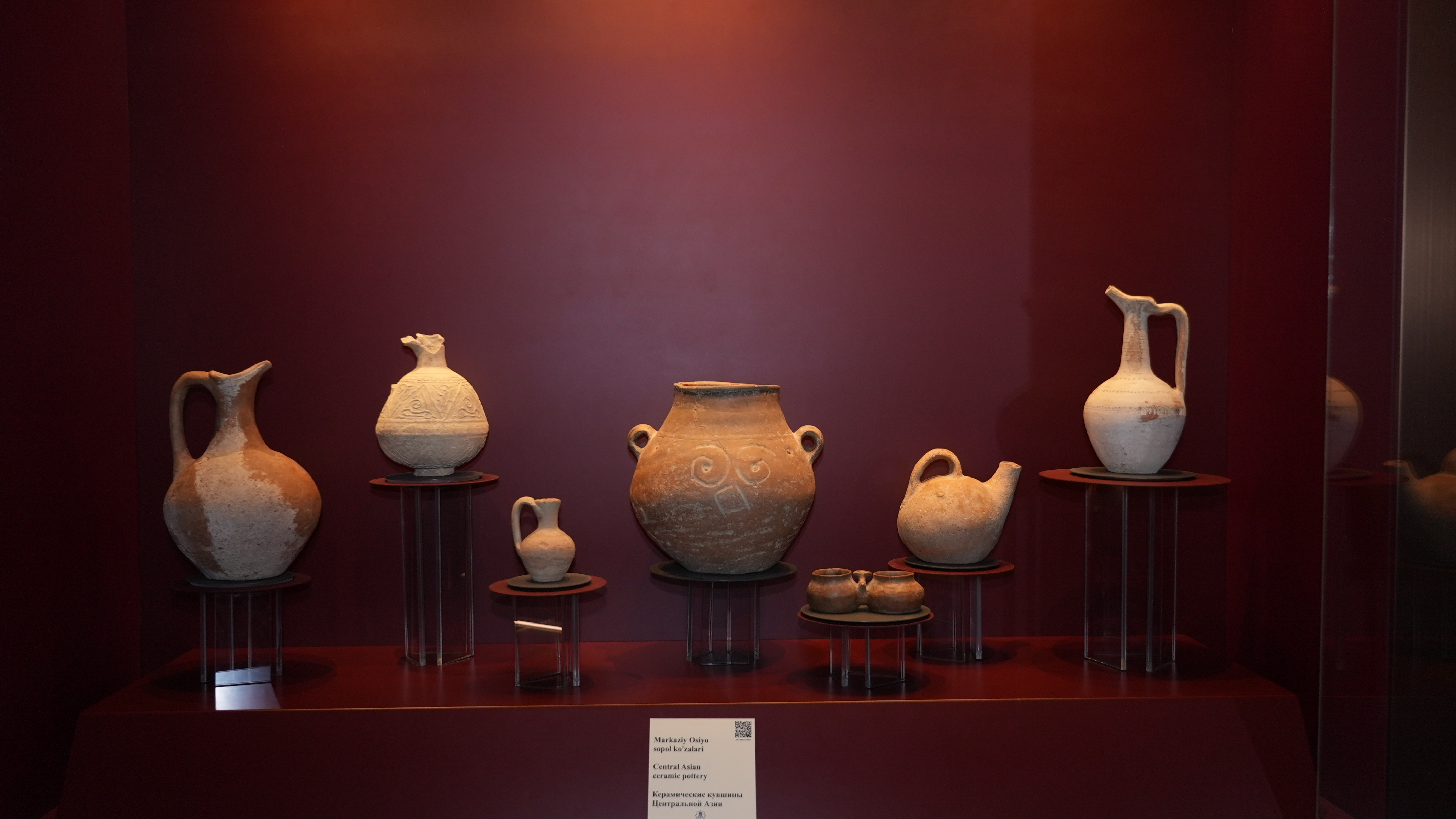
Central Asian Ceramic Vessels. Pre-Islamic Period
Another important aspect of the exhibition is the display of material culture. Archaeological finds, numismatic objects, textiles, and handicrafts presented here serve as tangible evidence of ancient trade routes. The distribution of Badakhshan lapis lazuli, silk fabrics, leather goods, metal items, and ceramic products through caravan trade is illustrated in harmony with videos and infographics.
The multimedia and video content of the exhibition is especially impactful. Through 3D animations, ancient cities are reconstructed, caravans set out on their journeys, and markets come alive. Panoramic videos give visitors the impression of being transported into the markets of Samarkand, Merv, or Bactria. These videos do not merely show history they invite visitors to feel it.
Interactive projects implemented at the Center further enliven the exhibition. Through specially developed video games and digital simulations, visitors take on the role of an ancient caravan leader, plan trade routes, exchange goods, and establish contacts with different cultures. This creates an entirely new and engaging way for younger generations to study history.
Ancient trade routes are also closely presented alongside the history of textiles and silk production. Pre-Islamic weaving traditions and the production processes of silk, wool, cotton, felt, leather, and zandan fabrics are shown visually. The exhibition also includes sketches and reconstructions of historical weaving equipment.
The comprehensive and modern presentation of ancient trade routes at the Islamic Civilization Center demonstrates that their significance was not limited to economics alone. Rather, they are interpreted as spaces of cultural dialogue through which science, religion, art, and ideas spread. It was through these routes that civilizations interacted, enriched one another, and developed.
Today, the Islamic Civilization Center not only preserves this historical heritage but also conveys it to new generations in a modern language. The harmony of interactive technologies, exhibits, and videos transforms this space into not just a museum, but a living platform for dialogue with history.
Durdona Rasulova
P.S.: The article may be republished with a link to the Center’s official website.