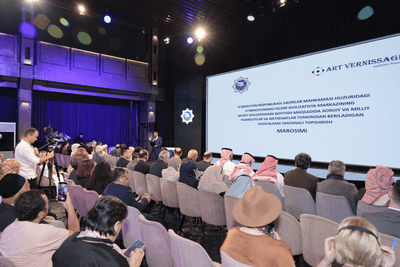


No secrets remain: the letter sent by the French King Charles VI to Amir Temur is being presented openly and transparently
A letter on display at the Islamic Civilization Center in Uzbekistan connects the past and the present. It stands as a living witness to the diplomatic dialogue between Amir Temur and the French King Charles VI. The great commander Amir Temur emerges in history not only as a conqueror by the sword, but also as a statesman who achieved victories through the pen.
Sahibqiran Amir Temur is recognized in history not only as a great military leader and statesman, but also for his diplomatic skill and his ability to effectively develop interstate relations. His diplomatic activity especially his relations with major European powers played an important role in shaping the rules of interstate relations and regulating trade ties.
The great commander’s relations with European monarchs, particularly his correspondence with the French King Charles VI, are of special historical significance. In 1394 and 1399, Fransuga Sandro, who accompanied the Byzantine emperor visiting Amir Temur, carried a letter addressed to Sahibqiran from the French king. Part of the correspondence between Charles VI and Amir Temur has survived to the present day and is preserved in French archival collections.
A second letter written by Sahibqiran to the French king known through its Latin translation is dated 1 August 1402. Both letters were delivered to France by Archbishop John III.
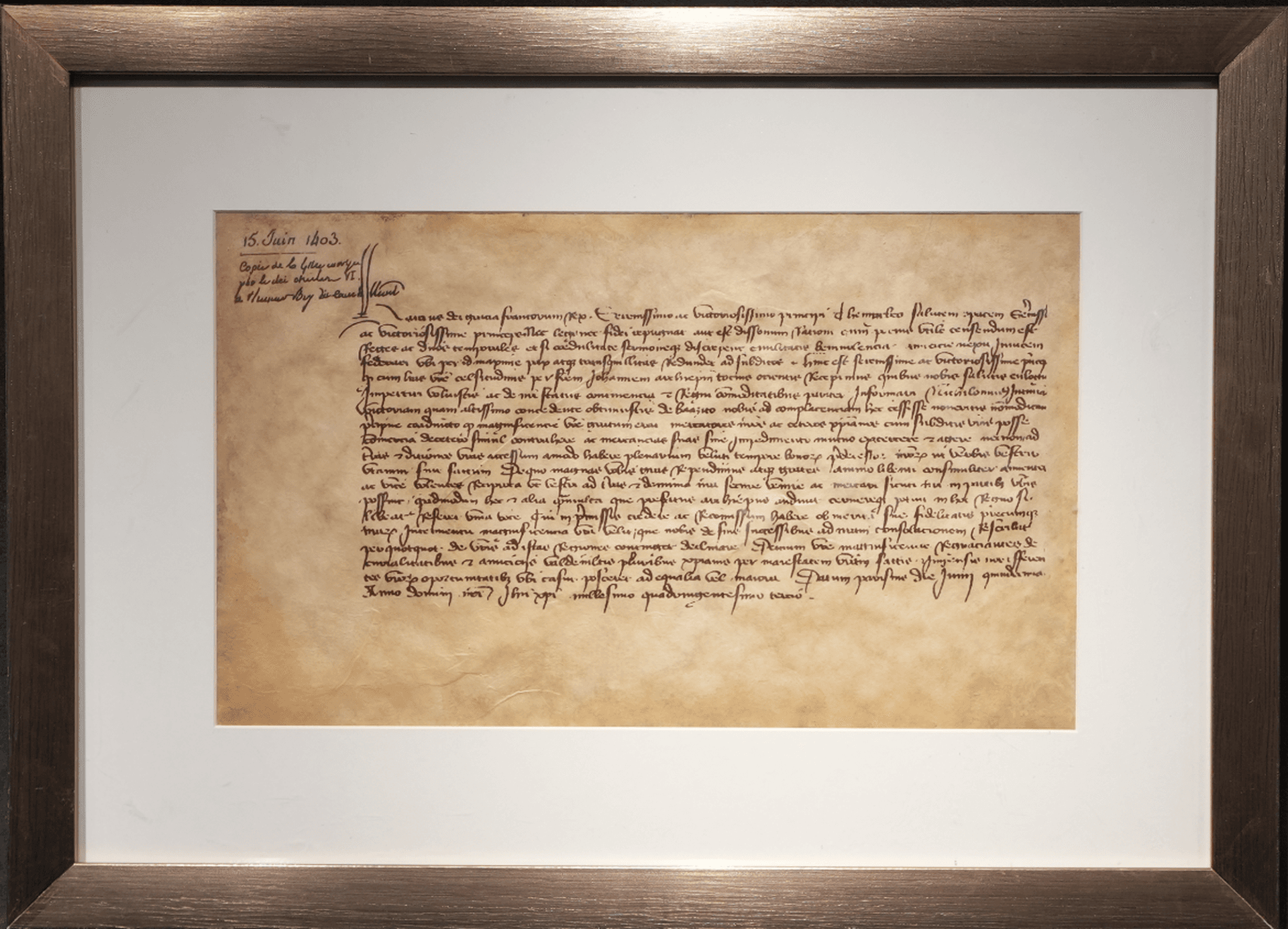
Amir Temur’s initiative for mutual cooperation was warmly received by the French king, as reflected in Charles VI’s letter to Sahibqiran dated 15 June 1403. From these letters, it is clear that both Amir Temur and Charles VI were interested in friendship, solidarity, and the conclusion of a trade agreement.
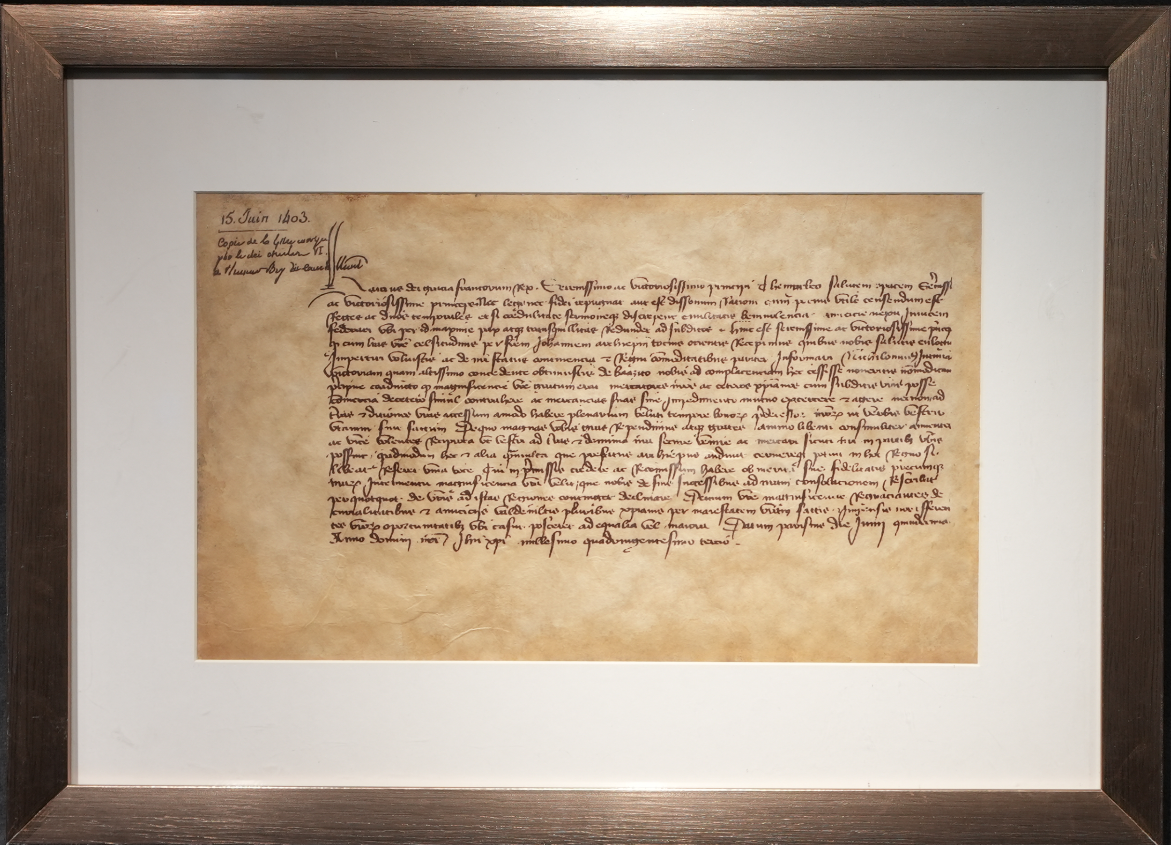
A copy of the letter sent by the French King Charles VI to Sahibqiran
One such document is the copy of the letter sent by King Charles VI to Sahibqiran, now included in the exhibition of the Islamic Civilization Center in Uzbekistan. In his letter, Charles VI expresses his desire to strengthen relations of respect and friendship between the two states and conveys his joy at Amir Temur’s victory over Bayezid. He also guarantees peace and security for merchants and citizens, emphasizing the stability of cooperation between the states. This letter demonstrates respect for Amir Temur’s political and military achievements and reflects a sense of responsibility in developing diplomatic relations.
The letter includes the following words:
“Amir al-Kabir Temur Kuragan, may his life be long! The King of France sends to his friend hundreds of thousands of greetings and good wishes, together with a world of hopes. After conveying these prayers, let it be known to the great amir that the teacher (monk) Fri Franciscus arrived here and delivered the royal letter, speaking of the fame, nobility, and greatness of the great amir. We were greatly pleased. He also told us that you set out with a vast army and, by the will of Almighty God, subdued our and your enemies. Thereafter, we sent Fri Ioannes, the archbishop of Sultaniya, to your presence, to report all that had occurred. What we ask of the great amir is that he continually send us royal letters and inform us of his well-being, so that we may be reassured. Furthermore, if your merchants travel to our lands, we shall honor and protect them here; likewise, if our merchants are sent to your lands, may you honor and protect them as well, and may no one harm or oppress them. For the world prospers through merchants! What more can be proposed? May our states remain in cooperation for many years. Written at the beginning of the month of Muharram in the eight hundred and fifth year of the Hijra (1 August 1402).”
The reply letter written by King Charles VI in 1403 is also of great significance in the history of diplomacy. The letter, written in Latin, was delivered to Samarkand through Archbishop John.
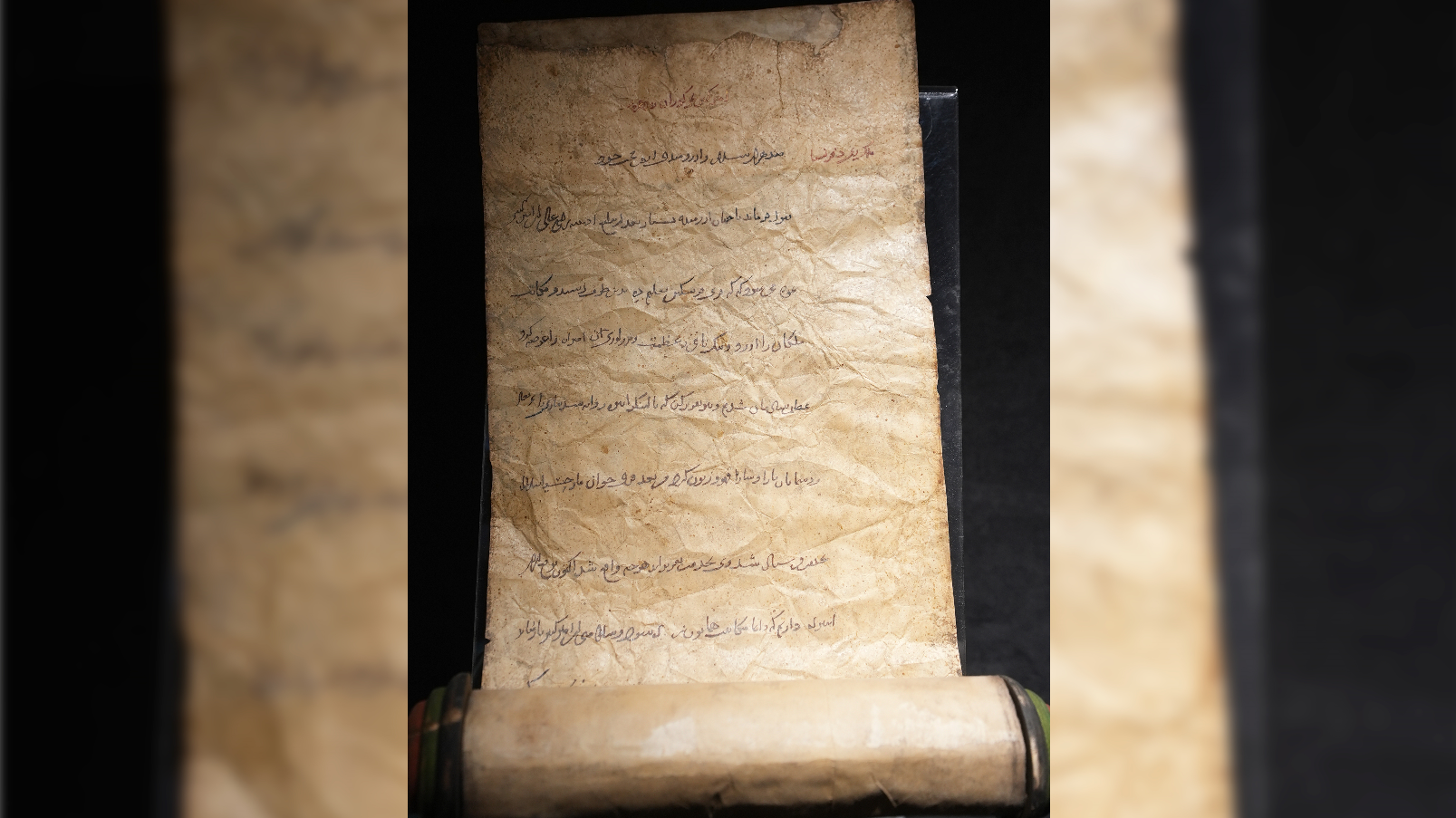
A copy of the letter sent by Amir Temur to Charles VI
The letters sent by Amir Temur to Charles VI are a vivid example of an effective and strategic diplomatic approach. Through them, interstate relations, trade, and political ties of the fifteenth century are revealed in a truly concrete manner.
These correspondences clearly demonstrate Amir Temur’s diplomatic mastery, his active role in international politics, and his strengths as a statesman. They are valuable not only as historical documents, but also as important sources for the study of international relations and diplomacy. Amir Temur’s relations with the French King Charles VI have remained in history as a unique example of interstate cooperation and diplomatic engagement in the fifteenth century.
The display of these letters in the “Second Renaissance Period” section of the Islamic Civilization Center museum is of great historical significance, offering broad insight into the enduring values of interstate friendship, trade, and cooperation preserved across the centuries.
Durdona Rasulova
P.S.: The article may be republished with a link to the Center’s official website.