



“This is not just a museum”: A member of parliament from Kyrgyzstan shares views on the unique center in Tashkent
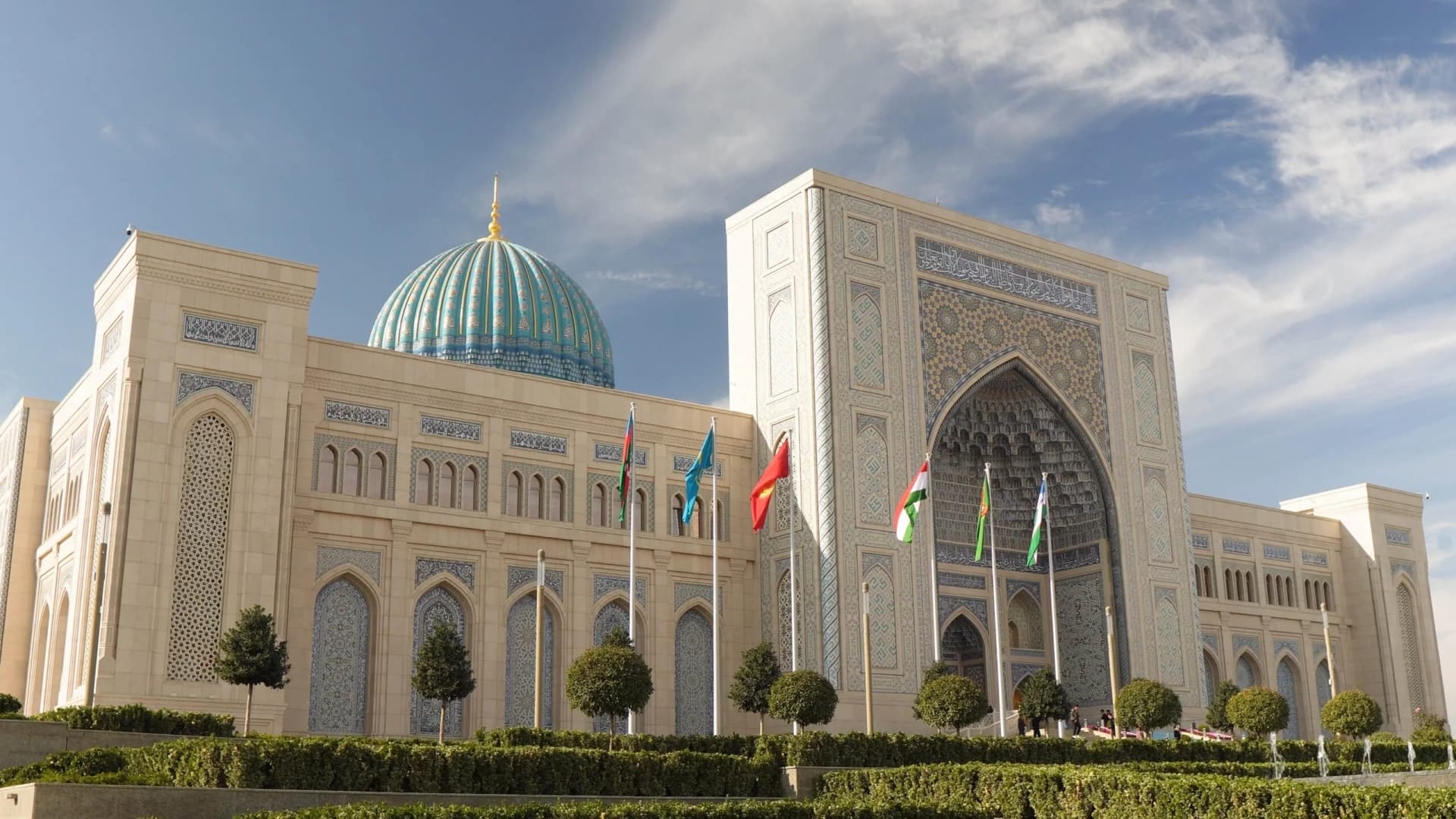
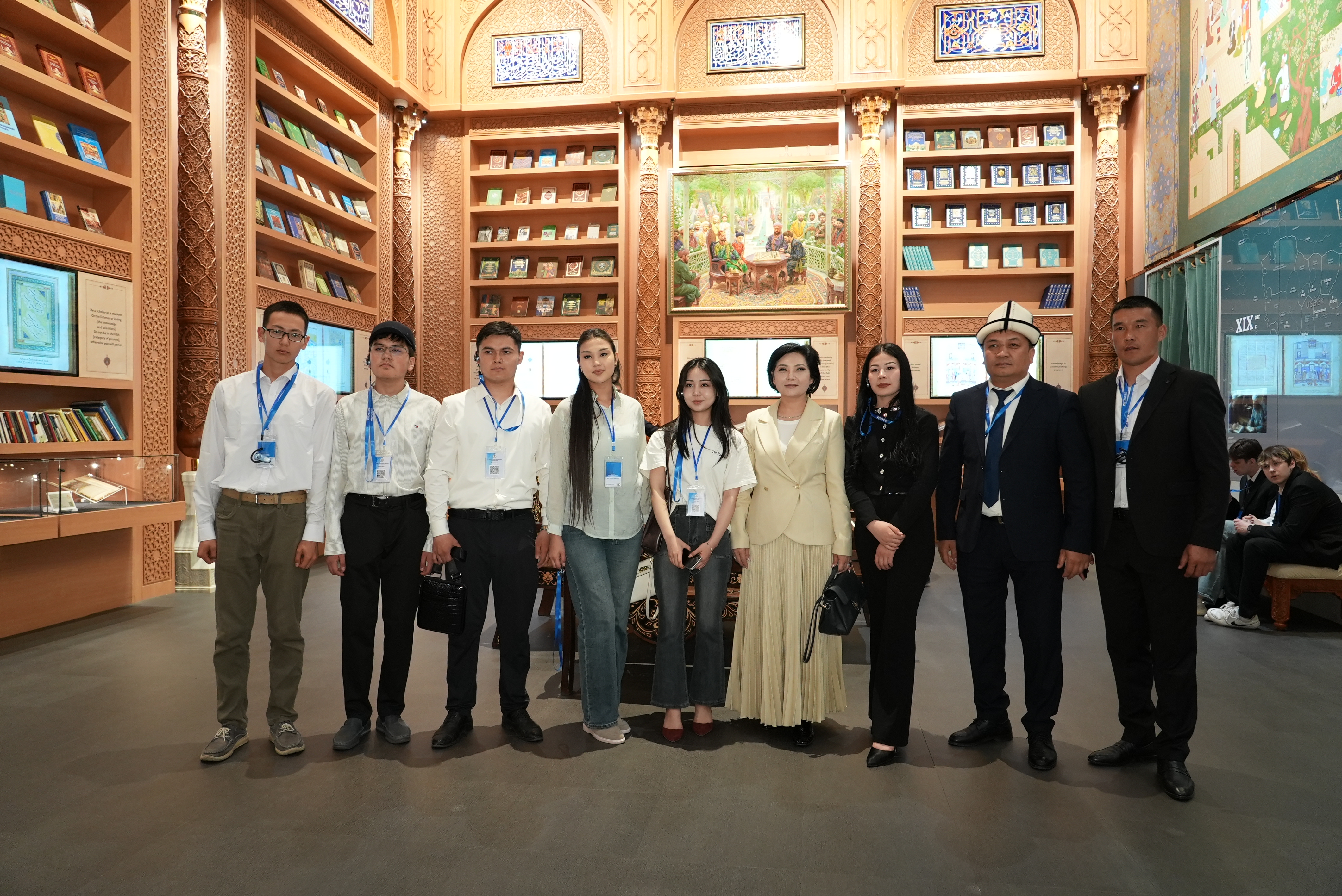 The scientific and cultural image of New Uzbekistan is steadily strengthening. The Islamic Civilization Center in Uzbekistan, built on the initiative and idea of President Shavkat Mirziyoyev and recently officially opened, plays an important role in this regard. Representatives of delegations from several countries currently visiting Uzbekistan within the framework of the first “Central Asia – European Union” Inter-Parliamentary Cooperation Forum have repeatedly acknowledged this during their visit to the Center.
In particular, Saltanat Amanova, a deputy of the Jogorku Kenesh of the Kyrgyz Republic, who is in Uzbekistan as part of the forum held in Tashkent, described the Center as one of the most advanced and innovative museums in Central Asia.
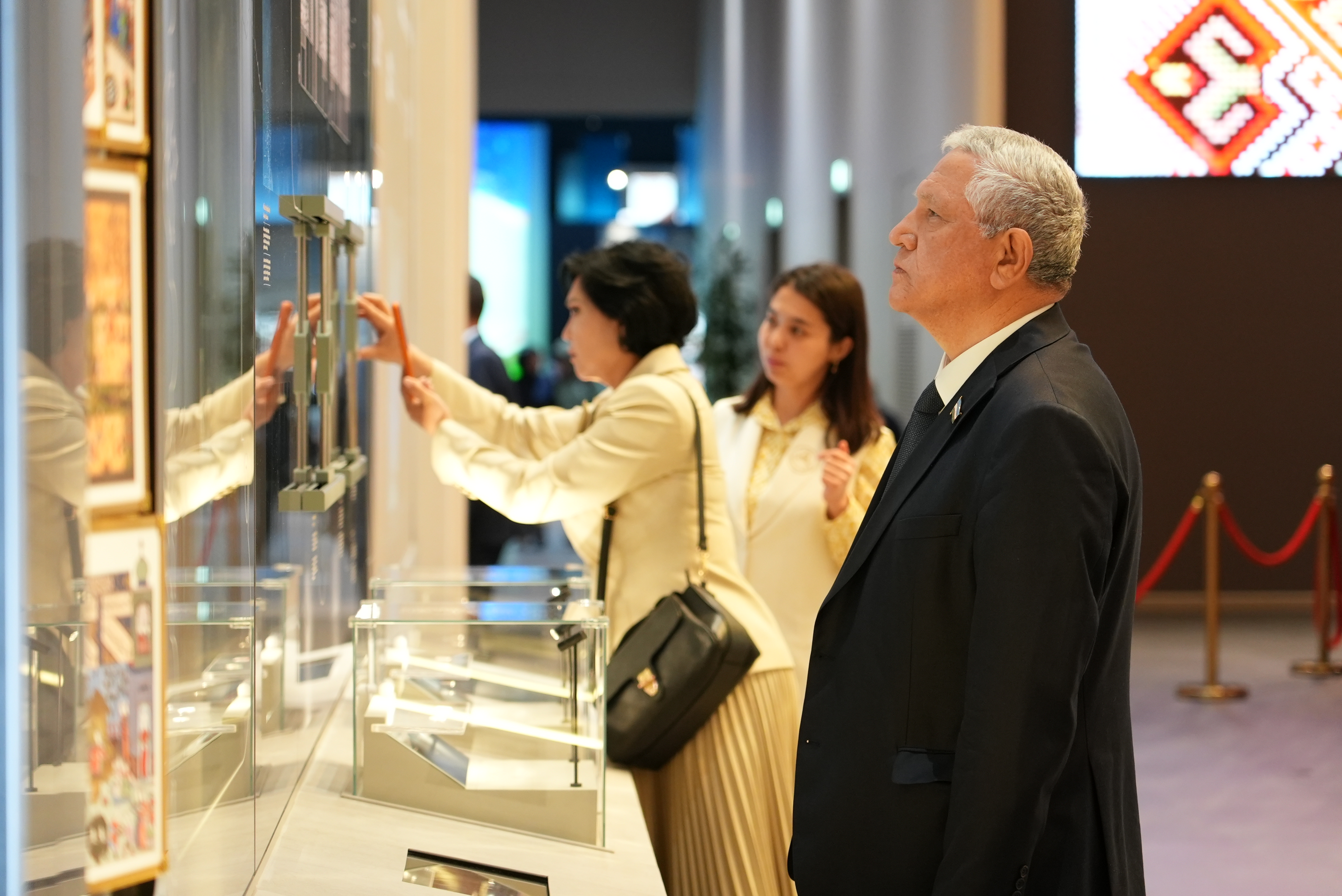 During her visit, Saltanat Amanova became thoroughly acquainted with all exhibition halls of the Center’s museum. The “Gallery of Great Figures” attracted her particular interest. In this gallery, the lives and scientific heritage of scholars who made significant contributions to Islamic civilization and world science are presented in a modern format through mosaic art across 14 arches, leaving a strong impression on the guest.
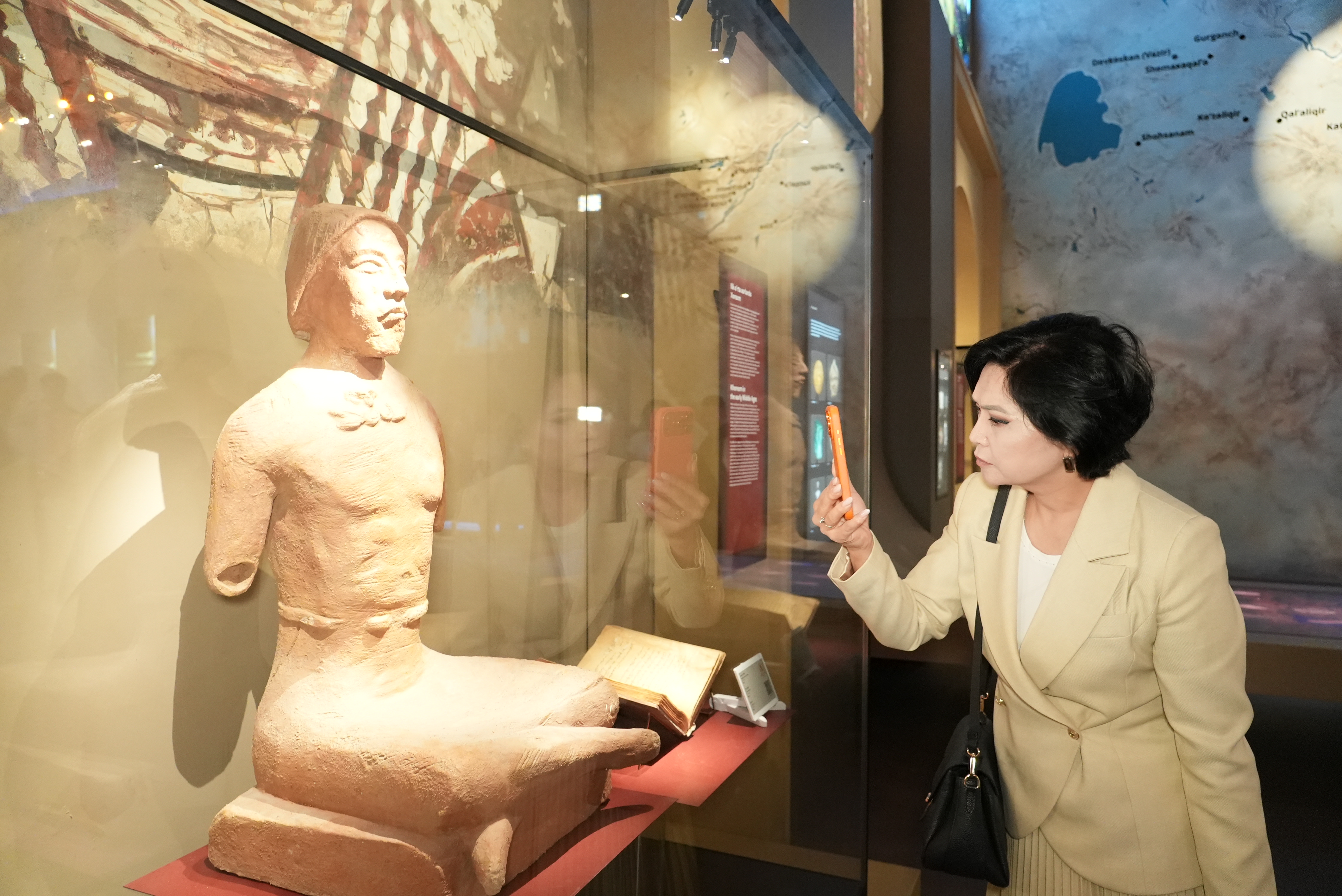
She also paid special attention to the section dedicated to pre-Islamic civilizations, where unique exhibits such as traces of ancient caravans, the Great Silk Road, the Lapis Lazuli Route, the Royal Road, the Silver Road, and the Great Indian Road, as well as processes of interaction and cultural exchange between civilizations, are presented through interactive projects. Among the highlights were the earliest chess pieces from the 2nd–3rd centuries discovered in Dalvarzintepa and Sogdian garments. The artifacts placed in special capsules within the First Renaissance exhibition also drew great interest.
In the section dedicated to the Second Renaissance, particular impressions were made by the map of the Timurid Empire, works written by European scholars, the avatar of Amir Temur, a giant Qur’an manuscript copied by the calligrapher Umar Aqta, the model of Mirzo Ulugbek’s observatory, and its 3D presentation.
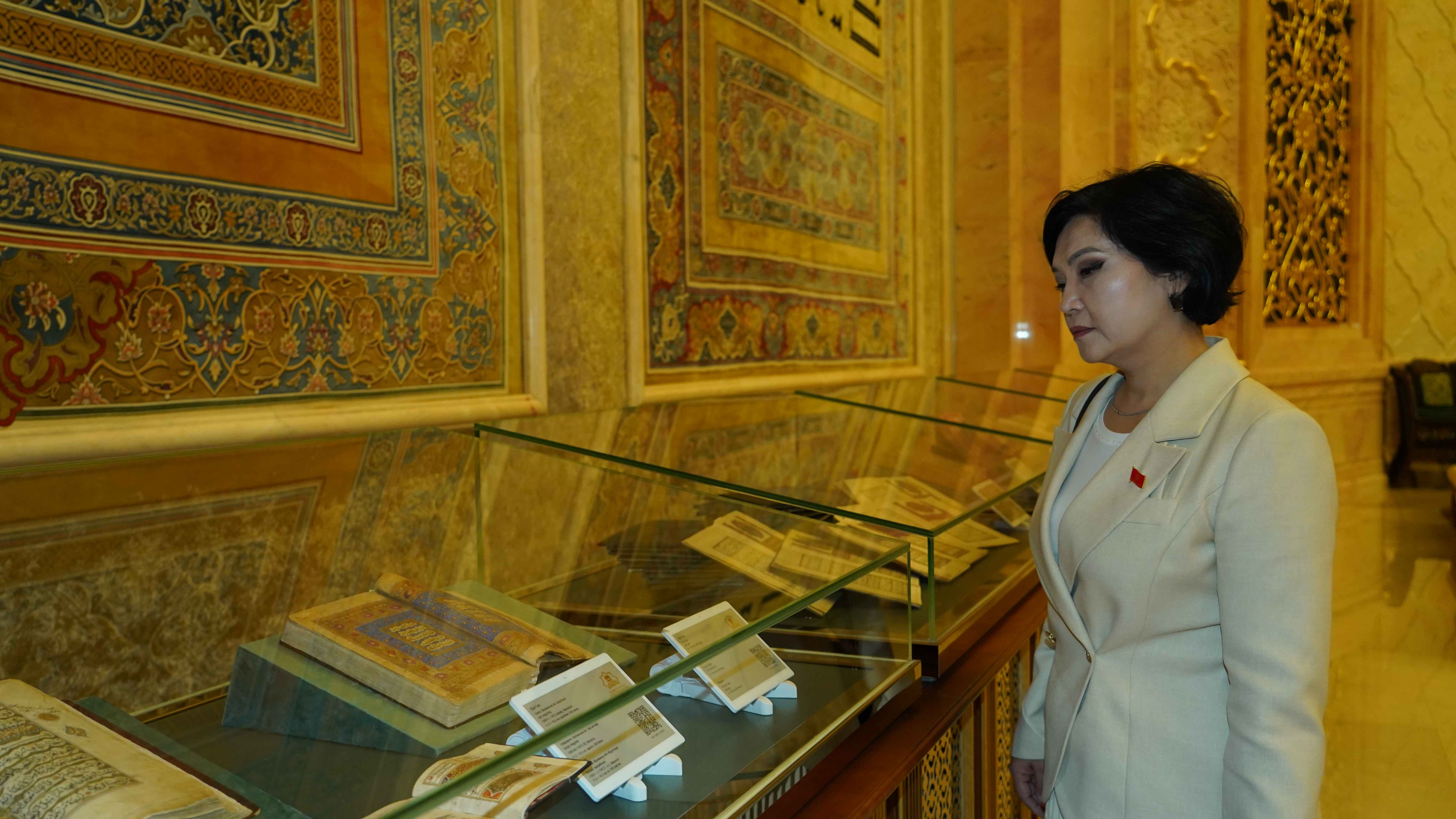 At the end of the visit, Saltanat Amanova shared her impressions and highly praised the Center:
As part of an official delegation, we visited the capital of Uzbekistan, Tashkent, and witnessed the large-scale historical efforts carried out on the initiative of President Shavkat Miromonovich Mirziyoyev. I realized that the Islamic Civilization Center is not just a museum, but an entire scientific and educational complex. Entering the museum left a profound impression on me.
First, the content and concept here are developed very thoroughly and based on modern approaches. Most importantly, the traditional museum format has been replaced with an interactive environment created through holograms, electronic platforms, and artificial intelligence technologies. In particular, the hands-on miniatures are both engaging and educational.
Second, the integration of art and technology is achieved at a very high level. Works by sculptors, painters, and masters of graphic and fine arts are presented professionally. This not only provides knowledge but also creates an aesthetic experience for visitors.
This Center is extremely important for all age groups — from young children to school students and university learners. Today, scientific technologies are rapidly developing. If we do not present information to the younger generation in a format they understand, they will not be interested in traditional museums. Here, however, everything is presented in a modern and accessible way.
Most importantly, the information is translated into 10 languages, allowing every visitor to access content in their own language. Previously, we had seen such holographic and interactive technologies in European museums, particularly in Paris, but today it is truly gratifying to witness such a high-level museum here in Central Asia, in Uzbekistan.
Taking this opportunity, I would like to express my gratitude for such large-scale and meaningful initiatives being implemented in Uzbekistan. The Kyrgyz and Uzbek peoples have long been close, brotherly nations. Our religion, language, and culture are shared. We are peoples who breathe the same air. The way you are presenting culture, history, Islamic civilization, and the heritage of Turkic peoples at such a high level is truly commendable. May Uzbekistan continue to develop and prosper, and may the friendship between our peoples be eternal.
It should be noted that this visit is important not only for familiarizing with cultural heritage but also for strengthening cultural and humanitarian ties between the countries of Central Asia.